About Sternotherus odoratus (Latreille, 1802)
Common Names and Taxonomy
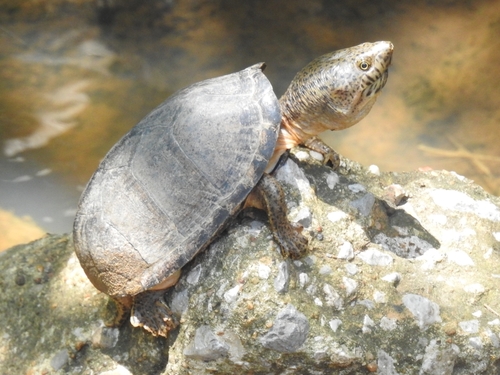
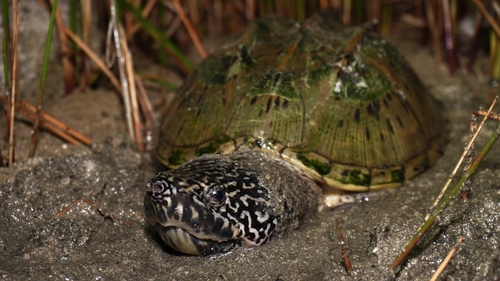
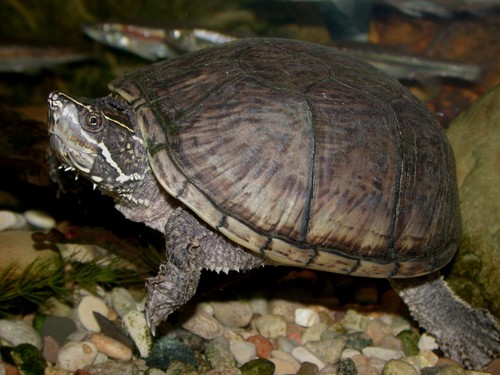
Commonly called the stinkpot or eastern musk turtle, Sternotherus odoratus is a small turtle species.
Carapace Color and Size
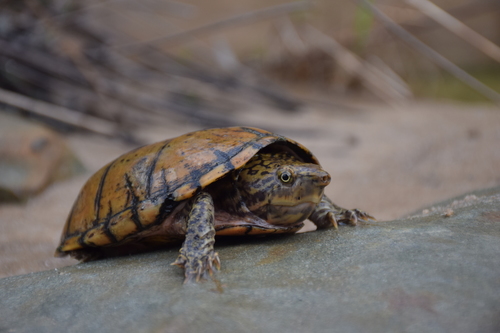
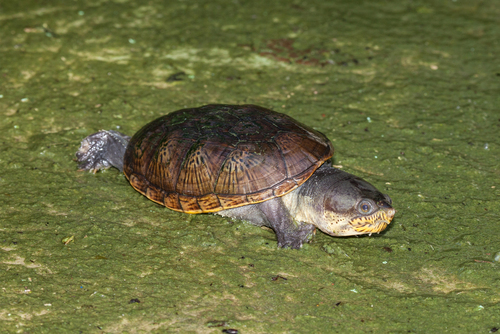
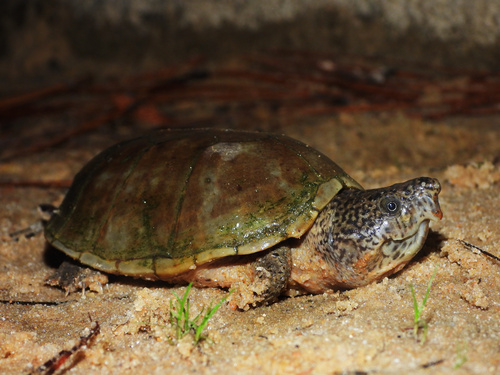
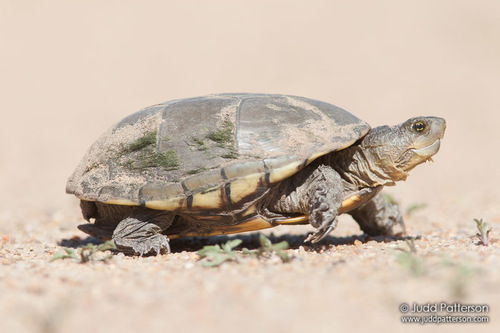
Most individuals have black, grey, or brown highly domed shells, and reach a straight carapace length between 5.1 and 14 cm (2.0 to 5.5 in).
Head and Limb Morphology
This turtle has a long neck, relatively short legs, and a vaguely triangular head with a pointed snout and sharp beak.
Body Striping Pattern
Distinctive yellow lines run along the neck, a clear field marker that is often visible from above when the turtle is swimming; yellow-green striping also extends from the tip of the nose down to the neck.
Facial Sensory Structures
Small barbels are present on the chin and throat.
Plastron Morphology
Its plastron (lower shell) is relatively small, providing minimal protection for the legs, and has only a single transverse anterior hinge.
Carapace Epibionts
Algae very commonly grow on the species' carapaces.
Underwater Breathing Adaptation
The tiny tongue of this turtle is covered in bud-shaped papillae that let it breathe underwater.
Buoyancy Regulation Mechanism
This species is less buoyant than free-swimming species, and regulates buoyancy by changing the volume of air in its lungs.
Buoyancy Structure Absence
It does not have the cloacal bursae—internal pouch-shaped structures—that some similar species use to help regulate buoyancy by storing water.
Canadian Geographic Range
The geographic range of Sternotherus odoratus covers southern Ontario and southern Quebec in Canada, and the Eastern United States.
United States Geographic Range
In the U.S., it extends from southern Maine in the north, south to Florida, and west to central Texas, with a separate disjunct population located in central Wisconsin.
Typical Habitat Preferences
Sternotherus odoratus occurs in a wide range of wetland habitats and littoral zones, especially shallow watercourses with slow current and a muddy bottom.
Basking Behavior
While it is more fully aquatic than many other turtle species, it can still climb, and is often seen basking on fallen trees and woody debris.
Basking Habitat Requirements
Fallen trees and coarse woody debris are important parts of its wetland habitat, and are especially useful for basking.
Nesting Threat from Development
Like all turtle species, stinkpots must lay their nests on land, so shoreline development for real estate is harmful to the species.
Road Mortality Risk
During nesting season, S. odoratus is frequently found on roads, and many individuals are killed by road traffic, particularly after heavy rainfall.
Hibernation Behavior
It hibernates buried in mud under logs, or inside muskrat lodges.