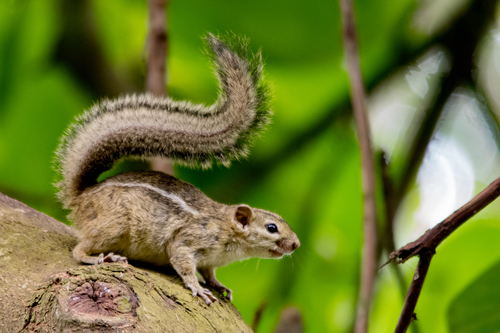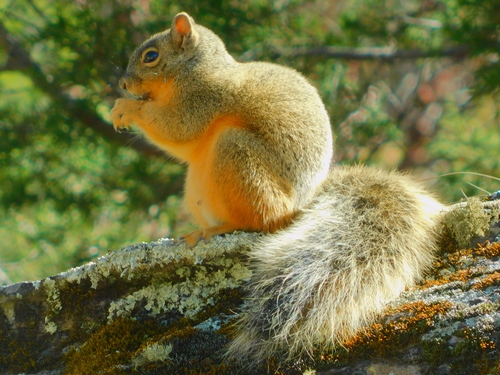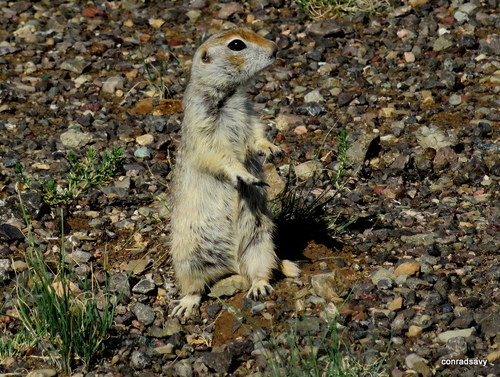
About Spermophilus erythrogenys Brandt, 1841
Taxonomy and Body Structure
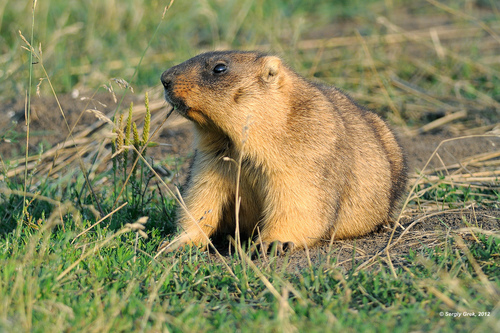
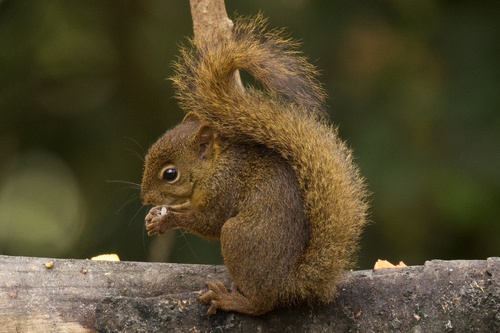
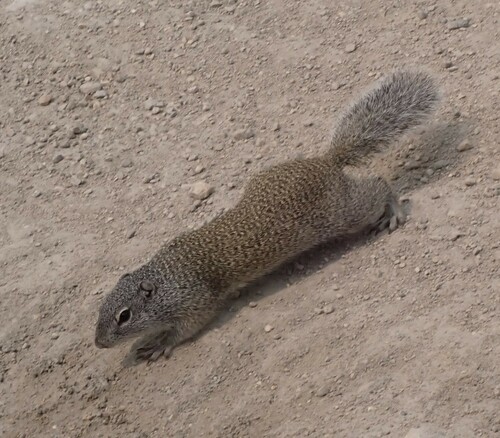
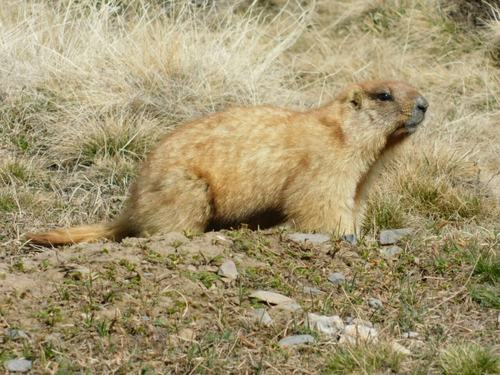
The red-cheeked ground squirrel, scientifically named Spermophilus erythrogenys Brandt, 1841, has a stout, low-slung body supported by short legs, and a well-furred tail that measures approximately one-third of the animal’s body length.
It has internal cheek pouches that it uses to carry food.
Coloration
The head, neck, and body come in varying shades of grayish brown, with a distinct reddish-ochre patch on the bridge of the nose.
Geographical Distribution
This ground squirrel is distributed across the territory of the former Soviet Union, including Kazakhstan, Altai, and Western Siberia, and also occurs in Mongolia and Xinjiang province, China.
Habitat Types
It inhabits steppes, forest-steppes, deserts, and semi-deserts, and favors pastures, fallow lands, roadsides, and uncultivated land.
Elevation Range
In mountainous regions, this species can be found at elevations up to 2,100 metres (6,890 ft) above sea level.
Activity Patterns
Patterns of behaviour and daily activity vary greatly across the species’ distribution range.
Hibernation takes place in some areas, while aestivation occurs in others.
Diet
This is a diurnal species that feeds on the green parts of plants, seeds, and roots.
Burrow Characteristics
Its burrows have permanent vertical entrances and temporary slanting entrances, and can reach up to 2.8 metres (9 ft) in depth, with total combined tunnel length reaching up to 4.75 metres (16 ft).
Population Density
Up to 100 burrow holes and 15 to 20 individual squirrels have been recorded on a single hectare (2.5 acres).
Reproduction
Reproduction rates vary based on weather conditions, and decrease during prolonged cold springs.
A single litter contains 2 to 12 young, most commonly 7 to 9.
Conservation Status and Human Interactions
The red-cheeked ground squirrel is abundant, and is considered a pest in parts of its range.
It is hunted for meat and skins for local trade, but its population remains stable, and the IUCN Red List of Threatened Species assesses it as a species of least concern.