About Sigmoidotropis speciosa (Kunth) A.Delgado
Scientific Name
The scientific name of this species is Sigmoidotropis speciosa (Kunth) A.Delgado.
Floral Keel Trait
The keel of Sigmoidotropis speciosa flowers is asymmetrical and strongly curved; this trait gives the species its common name, snail-vine.
Shared Snail-Vine Common Name
Multiple other species in the tribe Phaseoleae also have asymmetrical, curved keels, and some share the common name snail-vine.
Horticultural Misidentification
This has created significant confusion in the horticultural trade, where S. speciosa is very often misidentified as Cochliasanthus caracalla.
S. speciosa Basic Floral Characteristics
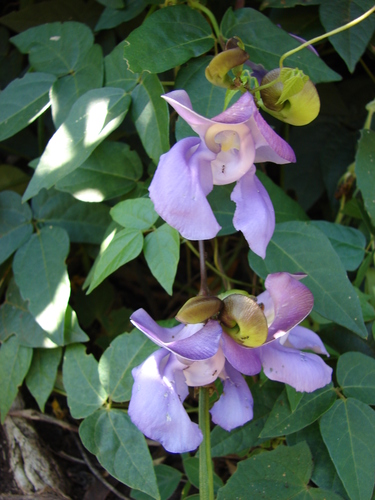
In S. speciosa, flowers are solid pale purple, non-fragrant, and inflorescences bear only a small number of flowers.
S. speciosa Keel and Banner Structure
The keel curves in a single full circle, and the flower banner is largely symmetrical.
C. caracalla Floral Contrast
By contrast, C. caracalla produces multicolored, fragrant flowers, has long inflorescences with many flowers, a keel curved in multiple circles, and a strongly asymmetrical banner.
Foliage Identification Limitation
While some sources note differences in leaf color and size between the two species, it is not possible to reliably distinguish the two plants by foliage alone.
Delayed Species Differentiation
There are many recorded cases where the two species were grown side-by-side for years, and their difference was only recognized when the less mature plant finally flowered.
Wild Pollinator
Like many other Phaseoleae with asymmetric flowers, S. speciosa is most likely pollinated by large bee species in its wild habitat.
Cultivated Pollinator
Some horticulturists report that flower-visiting ants can also pollinate cultivated S. speciosa.
Flower Color
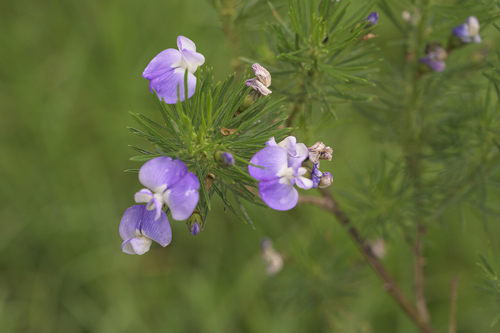
Flowers of Sigmoidotropis speciosa are solid pale purple.
Flower Arrangement and Petal Structure
They grow alone or in small groups rather than in dense clusters, and each flower has five petals: one large wavy half-circle at the top called the banner, two tear-drop shaped inward-pointing petals called wings, and two keel petals that together form the thin, erect, curled keel.
Wing Petal Appearance
Depending on the viewing angle, the two wings can look like a single petal strongly resembling the banner.
Visible Petal Shape
When this occurs, the three main visible petals form a shape like an open clam.
Minor Floral Color Markings
The center of the flower and the tip of the keel may have a small patch of yellow and/or white, but this coloration is usually faint and only visible when examined closely.
Immature Bud Characteristics
Immature flower buds typically form thick half-crescents; unlike corkscrew vine buds, these buds are green, yellow, or brown.
Growth Rate and Rooting Habit
Multiple growers note this plant grows very rapidly, and vines that touch the ground can take root.
Invasive Status
This growth habit makes Sigmoidotropis speciosa an invasive species, often compared to kudzu.
Pest Susceptibility
It is also reported that the plant may be more susceptible to aphids.
Frost Tolerance
Sigmoidotropis speciosa can regrow even after all above-ground foliage is killed by frost.