About Senna covesii (A.Gray) H.S.Irwin & Barneby
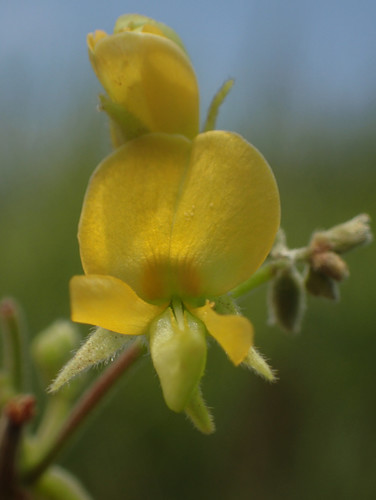
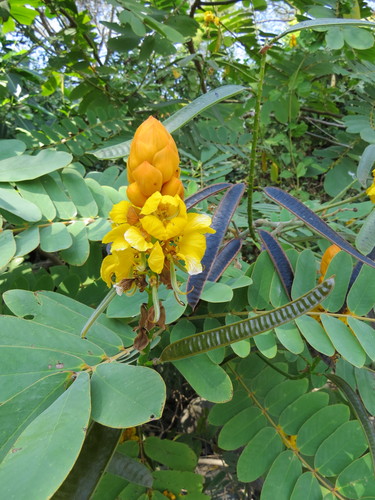
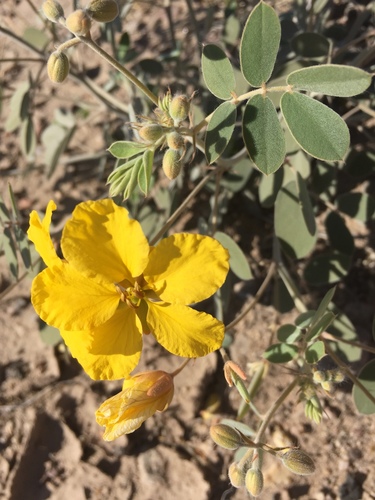
Senna covesii, commonly known as desert senna, Coues' senna, rattleweed, rattlebox, dais, or cove senna, is a perennial subshrub in the legume family Fabaceae. It is native to the Mojave and Sonoran Deserts, occurring in southeastern California, southern Nevada, and Arizona in the United States, and northern Baja California in Mexico. It grows on desert plains and in sandy washes at elevations between 305 and 914 meters above sea level, and it is very common in Joshua Tree National Park. Its specific epithet was named to honor ornithologist Elliott Coues. This plant reaches 30 to 60 centimeters in height, and remains leafless for most of the year. When present, its leaves are pinnate, 3 to 7 centimeters long, and bear two or three pairs of leaflets with no terminal leaflet. The leaflets are elliptical, and measure 1.0 to 2.5 centimeters long. Its flowers are yellow, with five rounded petals approximately 12 millimeters long. Senna covesii is often planted by landscapers and included in roadside wildflower programs. Carpenter bees and bumblebees visit its flowers, and sulphur butterflies use the plant as a food source for their larvae.