All Species Plantae

Senna reticulata (Willd.) H.S.Irwin & Barneby is a plant in the Fabaceae family, order Fabales, kingdom Plantae. Not known to be toxic.

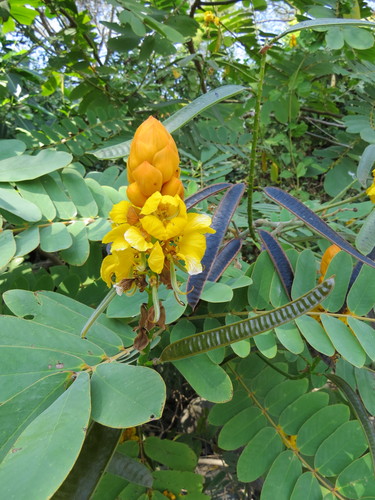
Photo of Senna reticulata (Willd.) H.S.Irwin & Barneby (Senna reticulata (Willd.) H.S.Irwin & Barneby)
Plantae 💊 Medicinal

Senna reticulata (Willd.) H.S.Irwin & Barneby

Senna reticulata (Willd.) H.S.Irwin & Barneby

Senna reticulata is a South American floodplain pioneer tree, used in folk medicine but considered a noxious weed by farmers.

Identify with AI — Offline
Family
Genus
Senna
Order
Fabales
Class
Magnoliopsida
⚠️ Toxicity Note

Insufficient toxicity evidence; avoid direct contact and ingestion.

About Senna reticulata (Willd.) H.S.Irwin & Barneby

Common Names and Native Range

Senna reticulata, known as mangerioba grande or maria mole in Portuguese, is a pioneer tree species that grows on highly fertile floodplains in South America. This species has documented medicinal uses, but farmers consider it a noxious weed.

Common Name Etymology

It is called matapasto, which translates to meadow killer, because it grows quickly and outcompetes neighboring plants by shading them out.

Folk Medicine Applications

In local folk medicine, Senna reticulata is used to treat liver problems and rheumatism.

Wood Extract Compounds

Alcoholic extracts made from the wood of this plant contain 1,3,8-Trihydroxyanthraquinone, along with a number of other compounds: chrysophanol (1,8-dihydroxy-3-methylanthraquinone), physcion (1,8-dihydroxy-3-methyl-6-methoxyanthraquinone), aloe-emodin (3-carbinol-1,8-dihydroxyanthraquinone), lunatin (3-methoxy-1,6,8-trihydroxyanthraquinone), emodin (6-methyl-1,3,8-trihydroxyanthraquinone), and chrysophanol-10,10'-bianthrone.

Additional Chemical Constituents

The xanthonoid cassiaxanthone and the anthraquinone rhein can also be found in Senna reticulata.
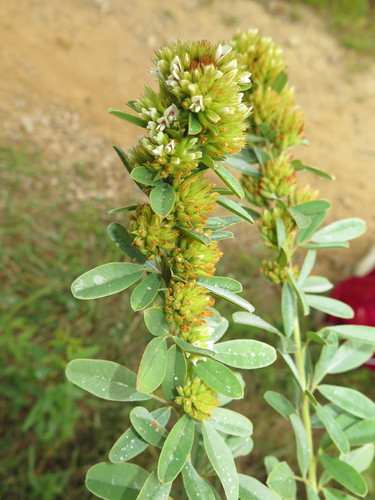
Photo: (c) Edith Belén Jiménez Díaz, some rights reserved (CC BY-NC), uploaded by Edith Belén Jiménez Díaz · cc-by-nc

Taxonomy

Plantae Tracheophyta Magnoliopsida Fabales Fabaceae Senna

More from Fabaceae

Sources: GBIF, iNaturalist, Wikipedia, NCBI Taxonomy · Disclaimer

Start Exploring Nature Today

Download iNature for free. 10 identifications on us. No account needed. No credit card required.

App Store
Scan to download from App Store

Scan with iPhone camera

Google Play
Scan to download from Google Play

Scan with Android camera