About Selaginella ciliaris (Retz.) Spring
Scientific Name and Growth Form
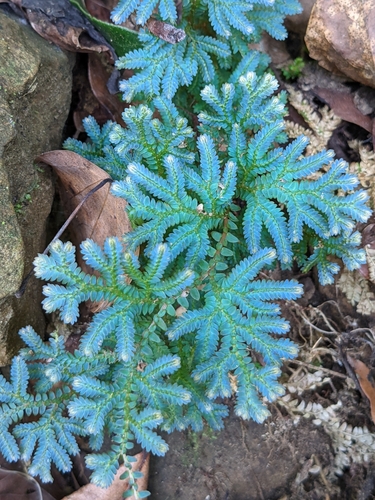
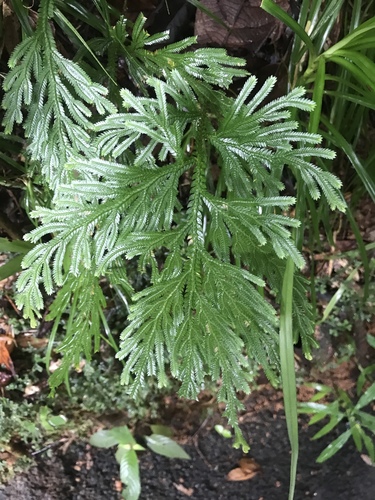
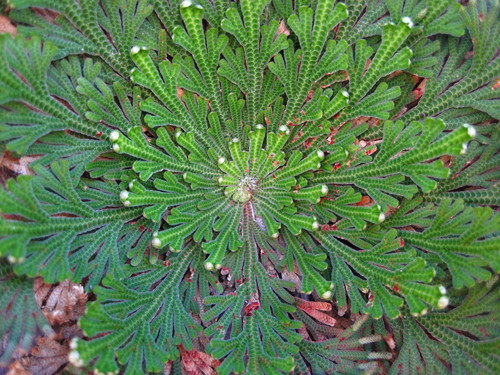
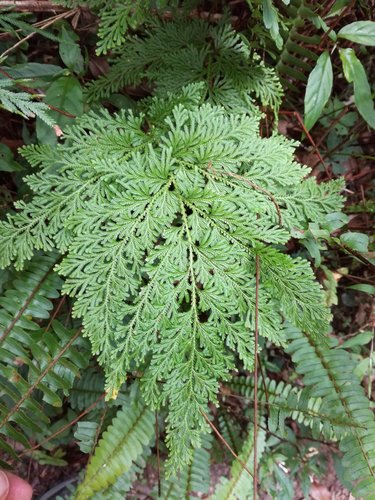
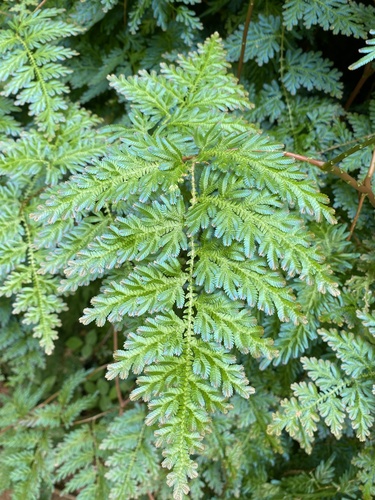
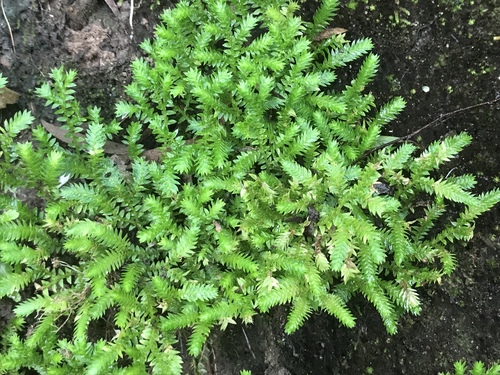
Selaginella ciliaris (Retz.) Spring is a tiny, low-growing herbaceous plant that forms small tufts at the bases of fallen trees and boulders.
Stem Characteristics
Its creeping stem grows up to 10 cm (3.9 in) long and produces roots along its entire length. It produces ascending branches that reach up to 5 cm (2.0 in) in length.
Leaf Characteristics
The leaves of this species are very small, growing no longer than 2 mm (0.08 in).
Reproductive Structure
Sporangia are produced in the axils of the plant's upper leaves.
Global Native Range
According to Plants of the World Online, this species is native to the Andaman Islands, Assam, Bangladesh, the Caroline Islands, South-Central China, Southeast China, East Himalaya, Hainan, India, Java, Malaya, Maluku, the Marianas, Myanmar, Nepal, New Guinea, the Nicobar Islands, the Northern Territory of Australia, the Philippines, Queensland, the Solomon Islands, Sri Lanka, Sulawesi, Sumatra, Taiwan, Thailand, Vietnam, West Himalaya, and Western Australia.
Australian Distribution
Within Australia, Selaginella ciliaris is restricted to northwestern Western Australia, Arnhem Land in the Northern Territory, and northeastern Queensland.
Habitat
It grows in wet habitats dominated by eucalypts.