About Sebastes serranoides (Eigenmann & Eigenmann, 1890)
Body Shape
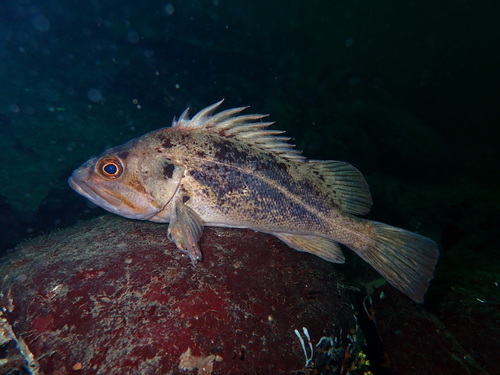
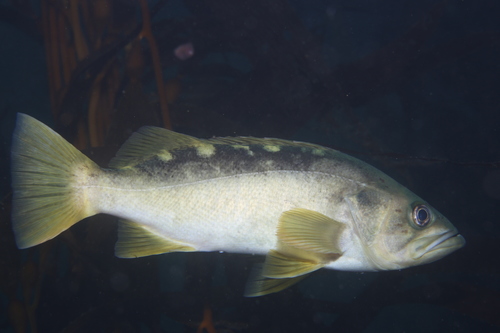
Sebastes serranoides has a slender, elongate, streamlined body, with body depth that measures just under one-third of its standard length. It has a medium-sized head with no spines, and a small terminal mouth. Its caudal fin is truncate.
Fin Structure
The dorsal fin has 12 or 13 spines and 15 to 17 soft rays, while the anal fin has 3 spines and 8 to 10 soft rays.
Size and Weight
This species reaches a maximum total length of 61 cm (24 in) and a maximum published weight of 1.6 kg (3.5 lb).
Coloration
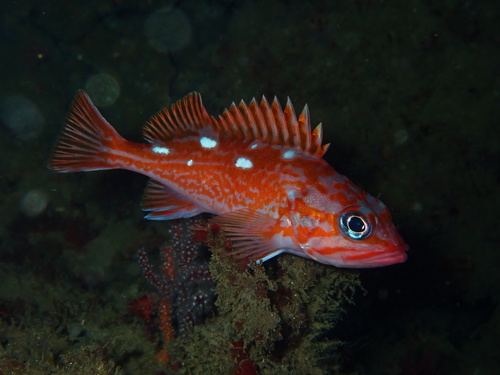
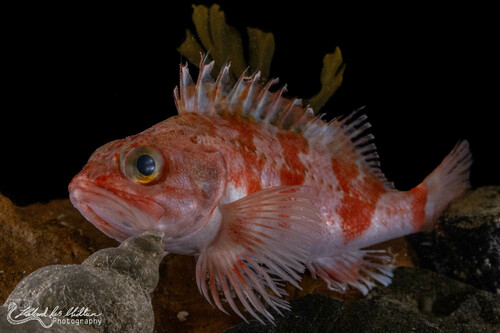
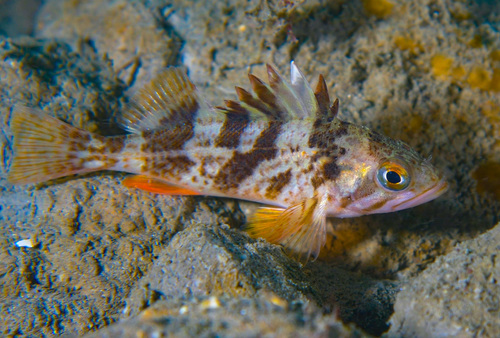
The upper body is dark greenish-brown or brown, fading to lighter greenish-brown, brown or gray on the lower body. Greenish or pale blotches sit immediately underneath the dorsal fin base, and the fins are dark olive with some yellow.
Geographic Range
This species occurs from southern Oregon to Guerrero Negro in Baja California.
Depth Range
It can be found at depths down to 146 m (479 ft), but is most typically encountered at depths less than 30 m (98 ft).
Larval Stage
Like other rockfishes, the larval stage of the olive rockfish is planktonic.
Larval Settlement Habitat
Larvae settle within a year in and around kelp beds, oil platforms, Phyllospadix beds and other shallow water structures.
Mature Habitat
As they mature, they move to live over high-relief reefs, as well as in the midwaters around oil platforms.
Shallow Water Habitat
In shallow areas, this species can be found throughout the water column within and near kelp beds, and individuals have also been recorded resting on the bottom.