About Sebastes chrysomelas (Jordan & Gilbert, 1881)
Common Name & Base Coloration
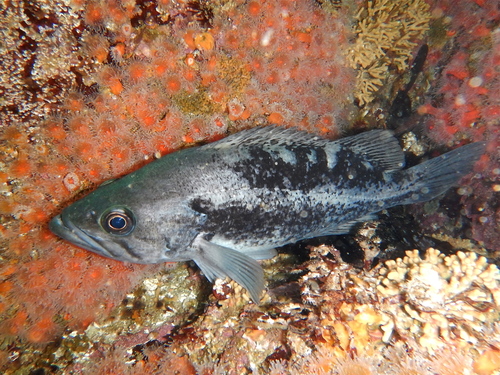
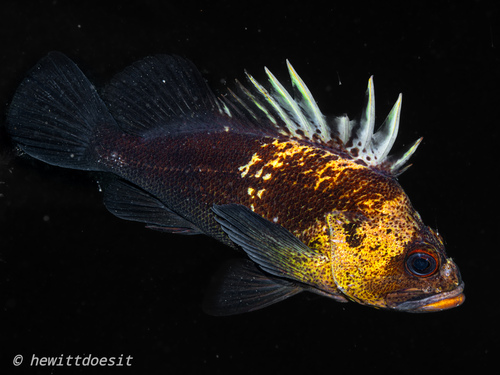
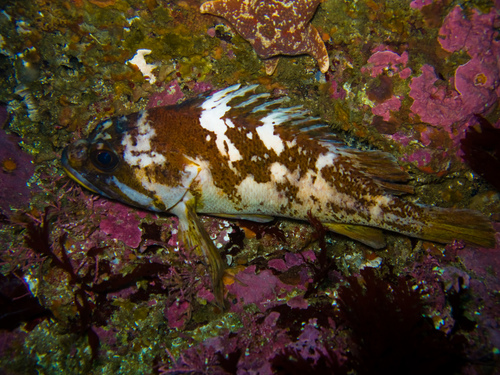
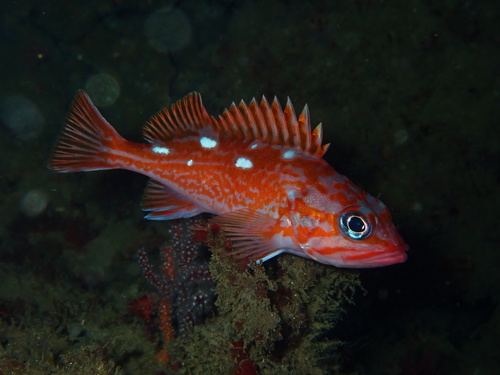
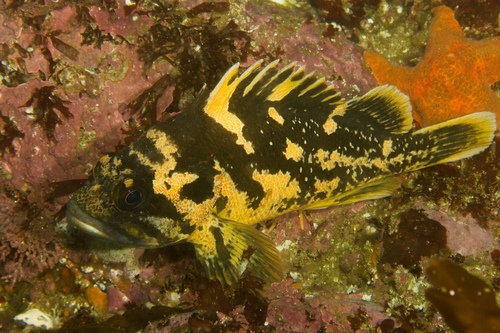
Sebastes chrysomelas, commonly called the black-and-yellow rockfish, has a body that is primarily black or brown, with yellow to orange spots on its back and a pale underbelly.
Body Shape & Head Spines
Its body is usually squat, compact, and covered in spines, and it has 5 pairs of large spines on its head.
Head Markings
Faint dark stripes are present around its eyes, and its lower lip is dark grey.
Species Distinguishing Feature
The yellow spots on the back are the main feature that distinguishes this species from other rockfish.
Fin Ray Counts
Its anal fins have 3 spines and 6–7 soft rays, while its pectoral fins have 17–18 rays and a flesh-like appearance.
Fin Venom Properties
The anal and dorsal fins are mildly venomous, and wounds from these spines are typically painful.
Adult Size
The average adult size of this fish is 39 cm.
Geographic Range
Sebastes chrysomelas occurs in coastal waters from northern California, United States, south to central Baja California, Mexico.
Habitat Temperature Range
The waters it inhabits usually have temperatures ranging from 11.0 to 21.4 degrees Celsius.
Depth & Habitat Preference
It lives in intertidal zones and shallow waters up to 37 meters deep, and is commonly found around rocky areas, reefs, near kelp beds, often hiding in holes and cracks in rocky terrain.
Reproductive Mode
Sebastes chrysomelas is a viviparous species that gives birth to live young.
Sexual Maturity Age
Females reach sexual maturity between 3 and 6 years of age, while males mature between 3 and 4 years.
Mating & Spawning Periods
Mating takes place from late January to February, and spawning occurs between February and July.
Egg Incubation & Larval Release
Females typically begin carrying fertilized eggs in October, and hold them for 1–2 months before releasing them as pelagic larvae.
Juvenile Settlement
The first young settle in kelp beds in June.
Maximum Lifespan
This species has an estimated maximum life expectancy of 30 years.