About Sebastes dallii (Eigenmann & Beeson, 1894)
Scientific Name and Common Name
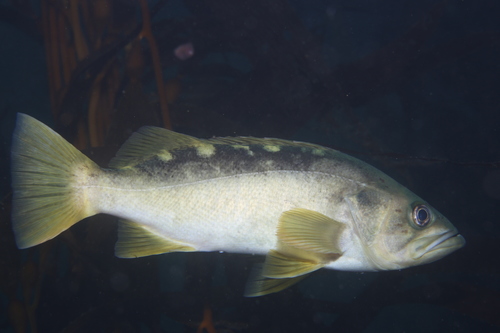
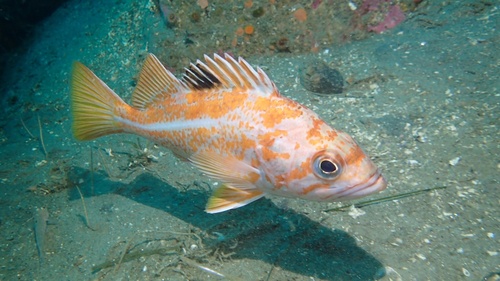
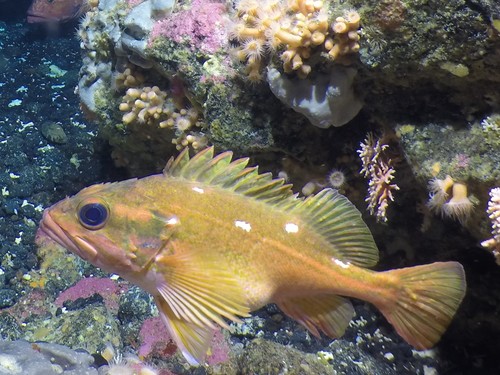
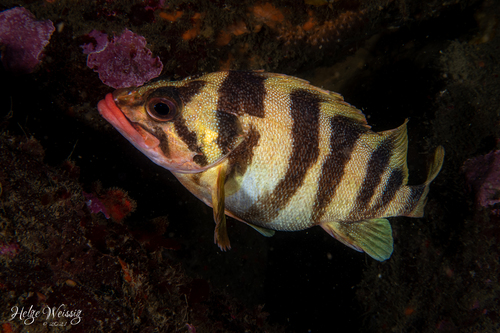
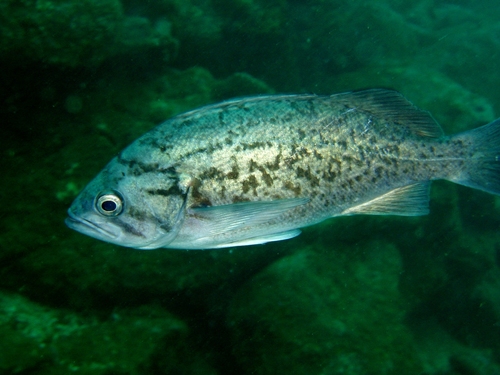
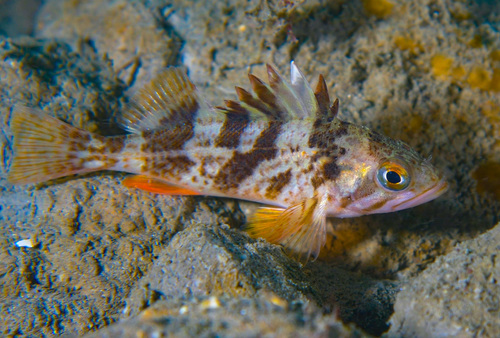
Sebastes dallii (Eigenmann & Beeson, 1894), commonly called the calico rockfish, has an oval, elongated, rather broad body.
Body Shape and Scalation
Its body depth accounts for 32% to 36% of its standard length, and its body is covered in scales.
Head Morphology
The head features a sharp snout, large eyes, and a large mouth positioned at the terminal end of the head.
Fin Structure
The dorsal fin has 12 to 14 spines and 12 to 14 soft rays, while the anal fin has 3 spines and 6 to 7 soft rays.
Body Coloration
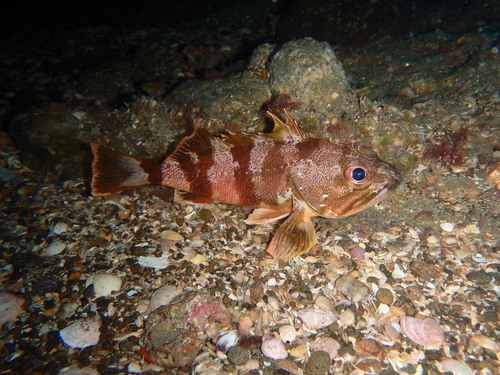
The overall body color is greenish-yellow, with diagonal reddish-brown bars on the flanks.
Post-Mortem Color Change
Living individuals have mottled brown spotting that fades quickly after death.
Fin Coloration
The caudal fin rays are dark brown. The anal and pelvic fins are transparent with a red tinge; the caudal and dorsal fins are dark, and the pectoral fins are orange and red.
Size and Weight
It is one of the smallest rockfish species, reaching a maximum total size of 25 cm (9.8 in) and maximum weight of 0.5 kg (1.1 lb).
Distribution Range
Sebastes dallii is distributed in the central eastern Pacific, along the west coast of North America from San Francisco, California south to Punta Rompiente in Baja California Sur.
Depth Range
It is a demersal fish that occurs at depths between 18 and 256 m (59 and 840 ft).
Habitat Preferences
It inhabits areas where rocky substrates mix with softer, fine-sediment substrates, as well as structured habitats including natural and man-made reefs.
Reproductive Mode
Sebastes dallii is ovoviviparous: fertilization is internal, larvae develop inside the female and receive nutrients from her before the female gives birth to live larvae.
Sexual Maturity Age
Males reach sexual maturity at 7 years old, while females reach sexual maturity at 9 years old.
Breeding Season
The breeding season runs from January to May, with a peak in February.
Larval Fecundity
A single female can give birth to between 3,900 and 18,000 larvae per breeding season.
Early Life Habitat
The larvae are planktonic, and juvenile fish are pelagic.
Lifespan
This species can live up to 12 years.
Diet
Calico rockfish are carnivorous, and prey on crustaceans, cephalopods, bivalves, and smaller fish.
Natural Predators
They are preyed upon by larger fish, seals, and seabirds.