About Scomberoides lysan (Forsskål, 1775)
Nomenclature and Classification
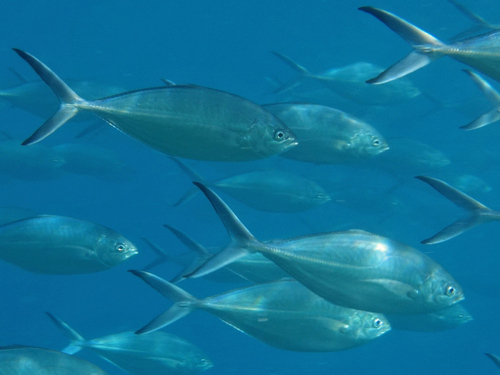
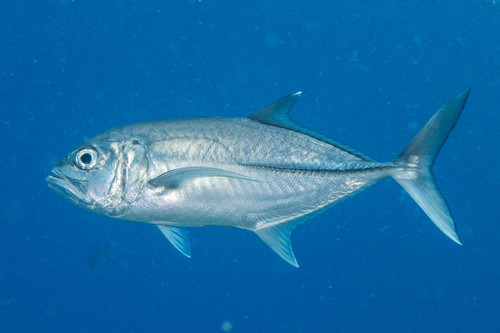
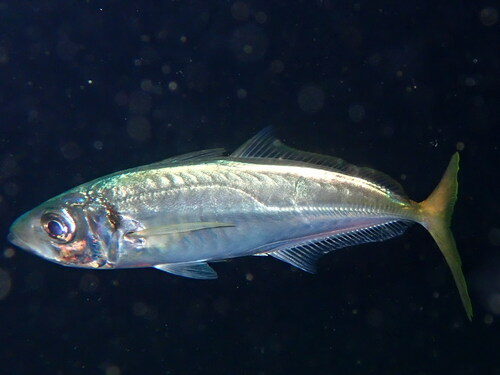
The doublespotted queenfish, with the scientific name Scomberoides lysan (Forsskål, 1775), is a tropical game fish belonging to the jack family Carangidae.
Habitat and Distribution Overview
It is associated with reef habitats and has a wide distribution across the Indian and Pacific Oceans.
Common Names
Other common names for this species include giant dart, large-mouthed leatherskin, leatherskin, queenfish, skinny fish, skinnyfish, St. Peter's leatherskin, white fish, and whitefish; it is called イケカツオ (生鰹, Ikekatsuo) in Japanese.
Size
Doublespotted queenfish can reach a maximum total length of 110 cm and a maximum mass of 11.0 kg (24.3 lb).
Body Coloration
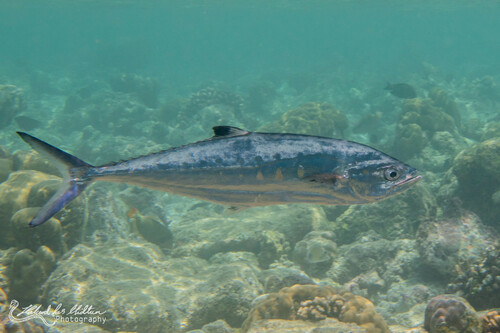
Their base body color is primarily silver, with dark coloration on the dorsal and caudal fins, and a row of dark spots along each side of the lateral line.
Scale Characteristics
Their scales are needle-like and embedded in tough skin. Breast scales are sharply lanceolate, and scales are embedded in the middle of the body below the lateral line, but this species lacks the scutes found in some other jacks.
Geographic Range
This species' range extends eastward from the Red Sea and eastern Africa to Hawaii, the Marquesas, and the Tuamotu Islands. It can be found as far north as southern Japan, and as far south as New South Wales and Rapa Iti.
Depth Range
It lives in relatively clear waters from the surface down to around 100 m (330 ft).
Life Stage Habitat Differences
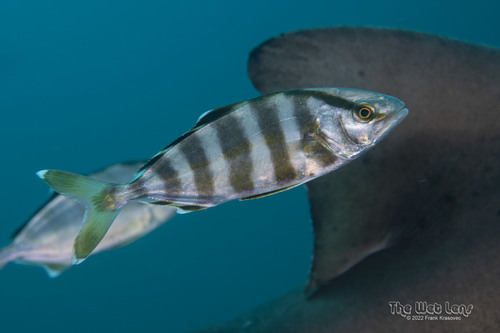
Juveniles live in shallow nearshore waters, including brackish areas. Adults are associated with reefs.
Social Behavior
This species is primarily solitary.
Diet
Juveniles feed on the scales of schooling fish. Similar to most jacks, adults hunt fish and crustaceans for prey.
Venom Characteristics
This species is venomous; its venom is located on the spines of its dorsal and anal fins.