About Sclerophrys regularis (Reuss, 1833)
Species Introduction
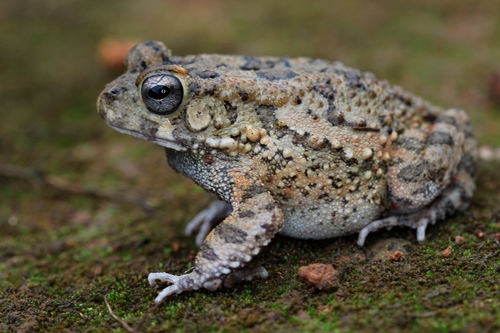
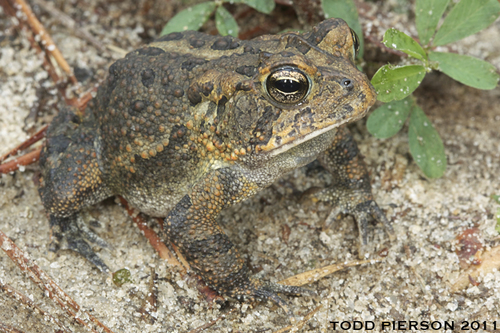
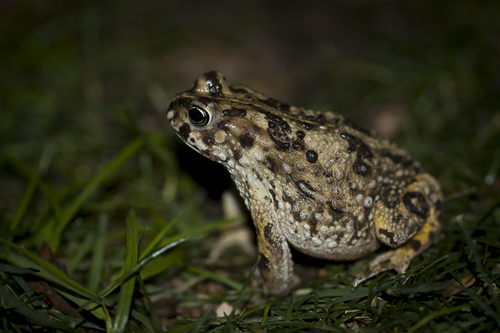
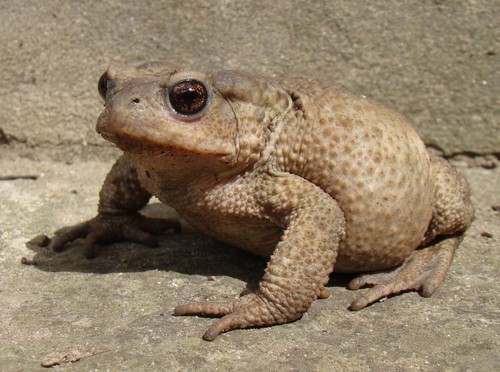
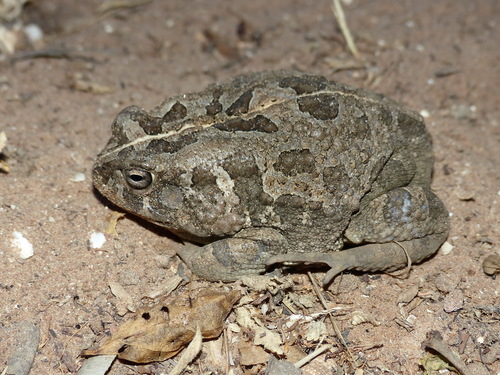
The African common toad, Sclerophrys regularis, is a large, sturdy toad with warty skin.
Size
Males reach a snout-to-vent length of 62 to 91 mm (2.4 to 3.6 inches), while females grow to 70 to 130 mm (2.8 to 5.1 inches).
Gland and Vocal Sac Structure
It has large paratoid glands that are either parallel or kidney-shaped, and males have a single vocal sac under the chin.
Dorsal Coloration
Its dorsal surface is dark olive-brown with dark patches on the back, which are often arranged fairly symmetrically.
Juvenile Markings
Young individuals have a paler band running along the spine.
Facial and Flank Markings
Smaller dark blotches appear on the upper lip and eyelids, and the warts on the flanks are often separated by dark markings.
Underpart Coloration
Male toads have black throats, and the underparts of both sexes range from white to beige.
Call Characteristics
The call of this species is a rattling sound made of two pulses that lasts approximately 0.9 seconds.
Anti-Predator Behavior
When threatened, this toad bounces to confuse predators or escape, and it will also move through water.
Hind Foot Structure
It has webbed hind feet to help propel it through water.
Habitat Range
The African common toad is an abundant species that occurs in moist and dry savanna, montane grassland, forest margins, and agricultural habitats.
Breeding Habitat
It is often found near rivers, where it also breeds.
Forest Zone Occurrence
It is not a true forest species, but it can still be found in degraded habitats and towns (including gardens) within the forest zone.
Regional Replacement Species
In drier regions, it is replaced by other species such as Amietophrynus garmani and Amietophrynus xeros.