About Vandijkophrynus angusticeps (Smith, 1848)
Common Name & Morphological Similarity
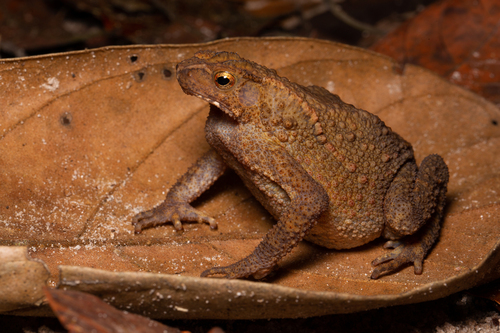
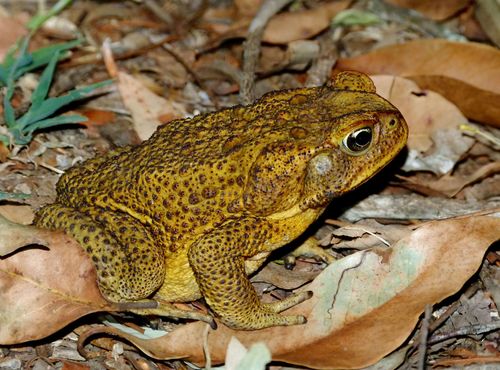
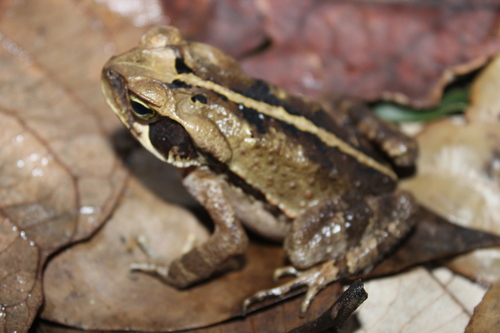
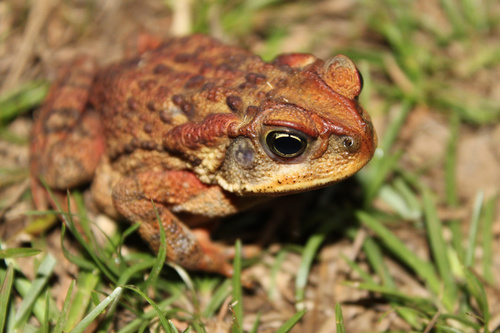
This species, commonly known as the sand toad, is morphologically similar to other species in the genus Vandijkophrynus.
Distinguishing Features
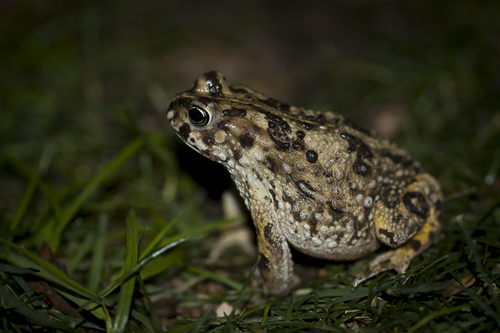
It can usually be distinguished from related species by its unspotted white ventrum and the bright yellow flush that covers the dorsal surfaces of its feet.
Habitat
Sand toads naturally inhabit fynbos heathland, and can sometimes also survive in agricultural areas.
Threat Drivers
The species is threatened by habitat loss and deterioration, which is driven by coastal development, encroachment by alien plants, and wetland drainage for urbanization and agriculture.
Population Status
It has disappeared from some portions of its former range, but populations are believed to be stable and the species remains common across most of its current range.
Breeding Emergence Period
Sand toads may emerge from their refuges to breed during winter, between May and September.
Breeding Trigger Conditions
Breeding occurs after heavy rains have saturated the soil and created pools that persist for many weeks.
Breeding Site Characteristics
They breed in temporary depressions located in both sandy areas and clay soils.
Male Breeding Behavior
Males call from exposed sites near the edge of the water.
Reproductive Morphology
This species has unusually large testes, a trait that suggests intense male-male competition for mates.