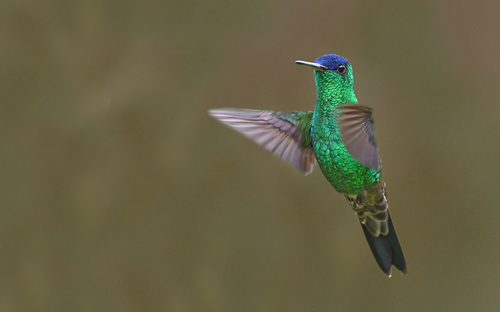
About Saucerottia cyanifrons (Bourcier, 1843)
Taxonomy and Basic Measurements
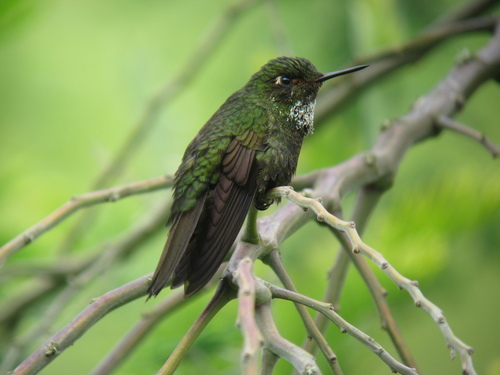
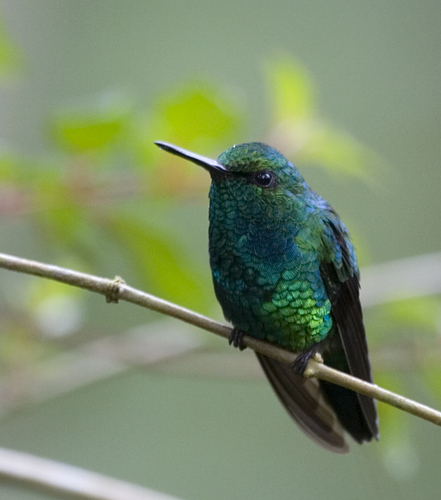
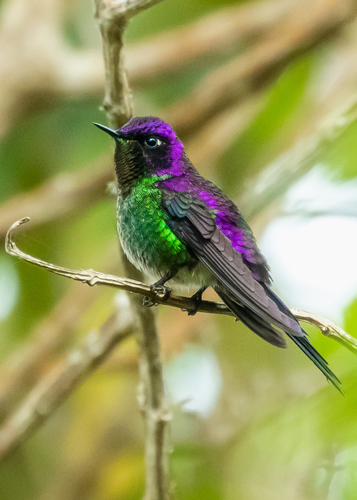
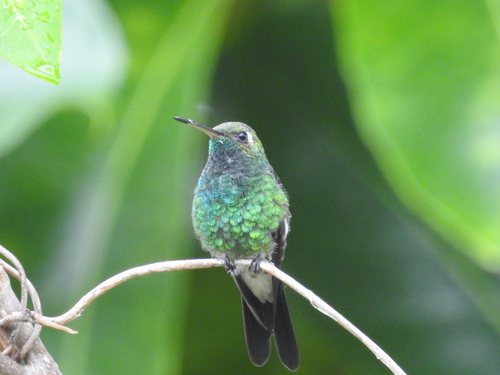
The indigo-capped hummingbird, scientifically named Saucerottia cyanifrons (Bourcier, 1843), measures 7 to 10 cm (2.8 to 3.9 in) in length and weighs approximately 5 g (0.18 oz). Both males and females have a black bill with a red base on the lower mandible.
Adult Male Plumage
The adult male has an indigo-blue crown, shiny green upperparts with a bronze to coppery sheen on the rump, and bronze to bluish black uppertail coverts. Its tail is a deep steel blue, and its underparts are glittering golden green, while its undertail coverts range from bronze-green to dark bluish with whitish edges.
Adult Female and Juvenile Plumage
The adult female has a turquoise-blue crown toward its rear, and its throat feathers have a grayish bar near the tip. Juveniles resemble adult females but have a grayer belly.
Distribution Range
This hummingbird is native to northern and central Colombia, where it occurs mainly in the Norte de Santander Department, the Magdalena River valley, and the upper Cauca River valley.
Habitat Types
It lives in semi-open to open landscapes, including wet forest edges, savannas, shrubby areas, plantations, and gardens, most of which are fairly dry.
Elevation Range
It is most common at elevations between 1,000 and 2,000 m (3,300 and 6,600 ft), but it regularly occurs as low as 400 m (1,300 ft) during the breeding season, and sometimes reaches near sea level. It has also rarely been found at elevations up to 3,000 m (9,800 ft).