About Salvia lycioides A.Gray
Nomenclature and Native Range
Salvia lycioides, commonly called Canyon sage, is a perennial plant native to a broad range extending from west Texas and New Mexico in the United States, south through Mexico to the state of San Luis Potosi.
Habitat
It typically grows on dry limestone hills and canyons located over 5,000 feet in elevation.
Taxonomic History
It was formally described and named in 1886 by Asa Gray, the most respected American botanist of the 19th century.
Etymology of Epithet
Its specific epithet "lycioides" comes from Greek, chosen because the plant resembles Lycium, a genus of nightshades commonly known as boxthorn.
Size and Growth Form
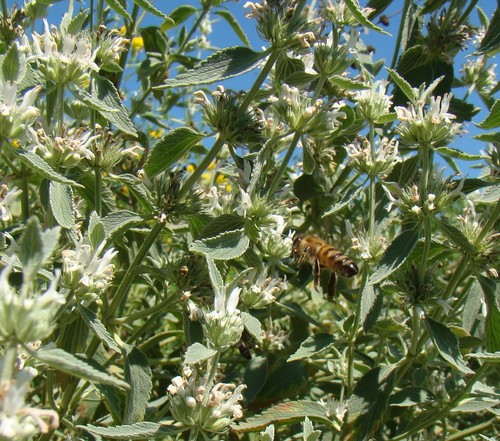
Salvia lycioides grows to about 1–1.5 feet in both height and width, forming a gracefully sprawling shape with many branches that grow upward and outward from its base.
Foliage Characteristics
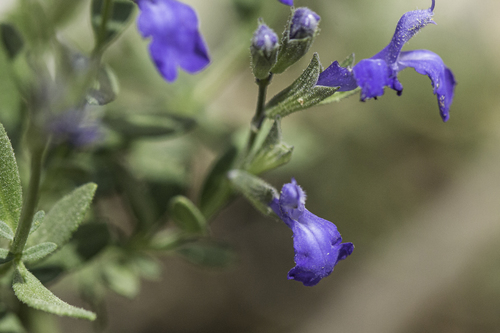
It is covered in small mistletoe-green leaves that are less than 1 inch long and 0.5 inch wide, and remain evergreen in mild climates.
Flowering Pattern
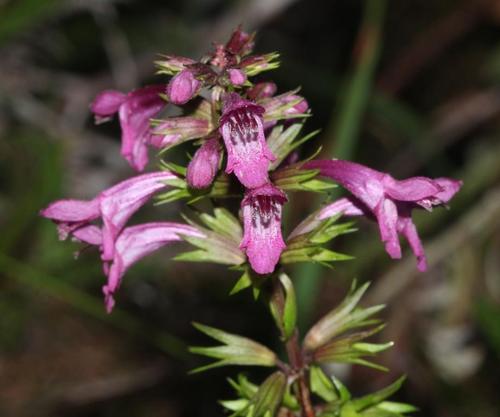
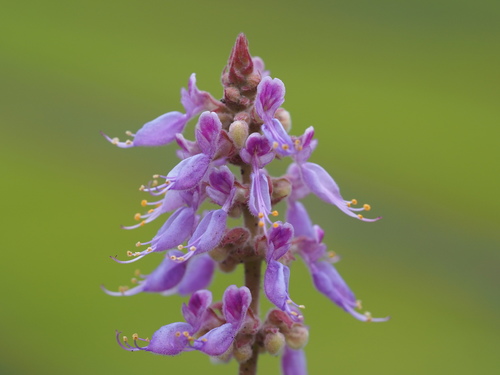
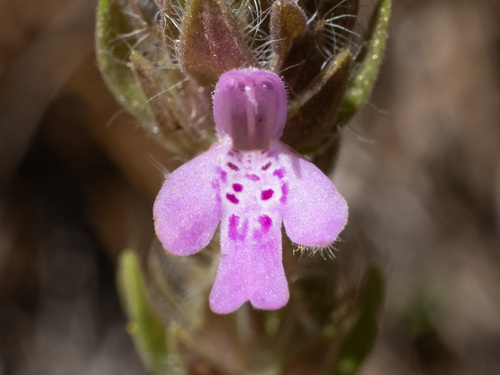
Its bright cornflower-blue flowers bloom primarily in spring and fall when nights are cooler, with only sparse blooming during the summer.
Horticultural Status
This species is relatively unknown in horticulture.
Cultivated Form
A selected cultivated form called "Guadalupe Mountain Form" has smaller leaves and deep delphinium blue flowers.