About Salvia columbariae Benth.
Height
Salvia columbariae Benth. grows 10 to 50 cm (3.9 to 19.7 in) tall.
Stem Hairs
It generally has short, sparsely distributed stem hairs.
Basal Leaf Morphology
Its basal leaves are oblong-ovate, 2 to 10 cm (0.79 to 3.94 in) long, pinnately dissected, with irregularly rounded lobes.
Inflorescence Structure
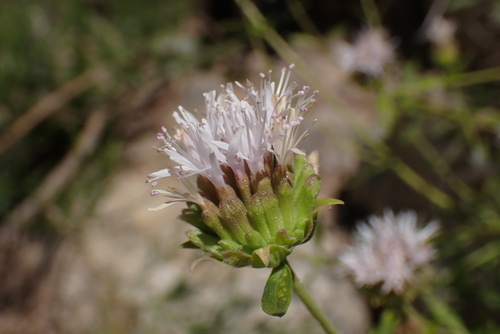
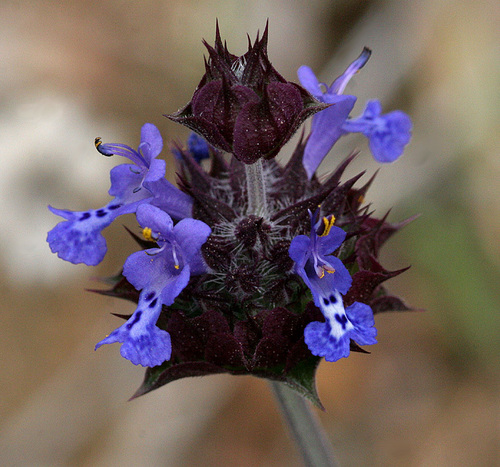
The inflorescence is more or less scapose, meaning it has a long peduncle that arises from ground level and bears bracts; the bracts are round with awned tips.
Flower Clusters
The inflorescence usually contains 1 to 2 clusters of flowers.
Calyx Morphology
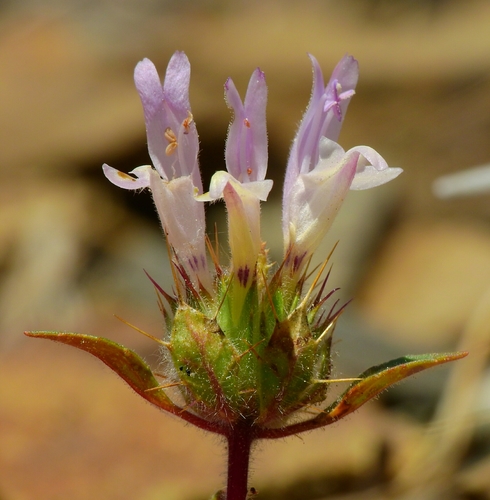
The calyx is 8 to 10 mm (0.31 to 0.39 in) long: its upper lip is unlobed but holds 2, sometimes 3, awns, while the lower lip is approximately twice the size of the upper lip.
Flower Color
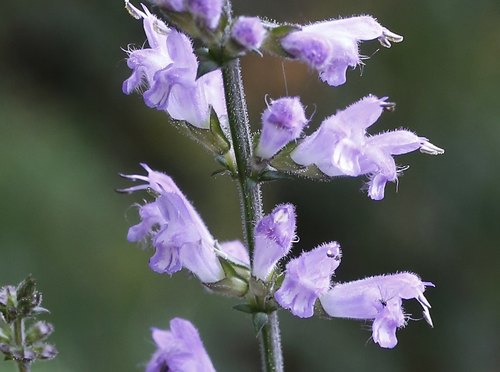
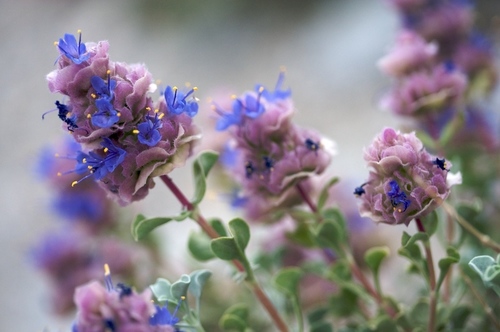
Flowers can range in color from pale blue to solid blue, with purple tips.
Stamen Characteristics
The plant’s stamens are slightly exserted.
Fruit Traits
The fruit is a tan to grey nutlet, 1.5 to 2 mm (0.059 to 0.079 in) long.
Wild Habitat
In the wild, Salvia columbariae grows in dry undisturbed sites, chaparral, and coastal sage scrub, most often at elevations below 2,500 m (8,200 ft).
Cultivation Preferences
When cultivated, it prefers full sun, good drainage, and dry conditions.
Medicinal Use Overview
Multiple Indigenous groups have used this plant for medicinal purposes.
Cahuilla Disinfectant Use
The Cahuilla used Salvia columbariae var. columbariae as a disinfectant: they ground the seeds into a mush and applied it as a poultice to infections.
Eye Treatment Use
The Cahuilla, Ohlone, Kawaiisu, and Mahuna used the plant’s gelatinous seeds to remove foreign matter from the eye.
Additional Eye Applications
They placed seeds in the eye to treat infections and inflammation, and tucked seeds under the eyelids during sleep to dislodge sand particles.
Oral Medicinal Uses
The Ohlone also consumed the seeds to reduce fevers, and the Kumeyaay chewed the seeds during overland journeys to boost strength.
Food Use Overview
Many Indigenous groups also use this plant as food.
Seed Beverage Preparation
The Cahuilla, Kawaiisu, Mohave, Tohono O'odham, Chumash, and Akimel O'odham grind the seeds and mix them with water to make a thick beverage; the Cahuilla remove alkali salts from the water to improve the flavor.
Seed Cake and Mush Preparation
They also dry the seeds to make cakes or mush.
Pinole Preparation
The Ohlone, Mohave, and Pomo use the seeds to make pinole.
Wheat Flavoring Use
The Kumeyaay add the seeds to wheat to enhance its flavor.
Porridge Preparation
The Mahuna, Paiute, and Akimel O'odham process the seeds into a gelatinous material, then cook it into porridge.
Staple Food Reliance
The Luiseno, Tubatulabal, and Yavapai relied on this plant extensively as a food source.