About Rusa unicolor (Kerr, 1792)
Taxonomic Background
The sambar (Rusa unicolor (Kerr, 1792)) varies widely in appearance and size across its range, which caused significant past taxonomic confusion: over 40 different scientific synonyms have been used for this species.
Shoulder Height
In general, sambar stand 102 to 160 cm (40 to 63 in) high at the shoulder.
Weight Range
They can weigh as much as 546 kg (1,204 lb), but more typically weigh between 100 to 350 kg (220 to 770 lb).
Body and Tail Length
Head and body length ranges from 1.62 to 2.7 m (5.3 to 8.9 ft), with a tail that measures 22 to 35 cm (8.7 to 13.8 in) long.
Size Variation
Western subspecies of sambar tend to be larger than eastern subspecies, and females are smaller than males. Among all living cervid species, only moose and elk can reach larger sizes than sambar.
Male Antler Structure
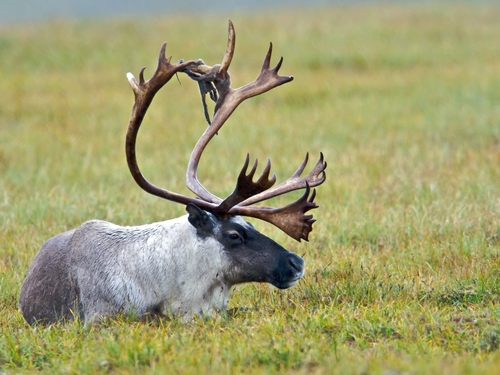
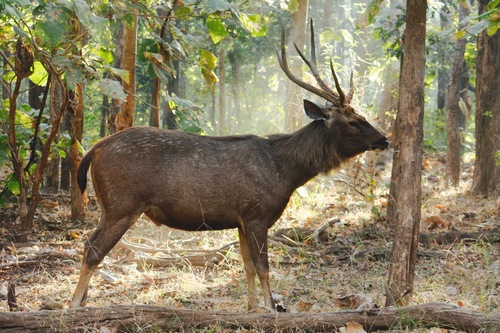
Male sambar have large, rugged antlers that follow a typical rusine structure: the brow tines are simple, and the beams fork at the tip, resulting in only three tines total. Fully adult antlers are typically up to 110 cm (43 in) long. As with most deer, only males grow antlers.
Coat Coloration
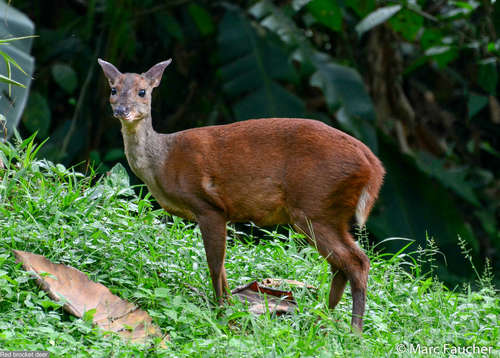
Sambar have a shaggy coat that can range in color from yellowish brown to dark grey. While the coat is usually uniform in color, some subspecies have chestnut markings on the rump and underparts.
Mane and Tail Features
Sambar also have a small, dense mane that is more prominent in males. Their tail is relatively long for a deer, and is generally black on the upper side with a whitish underside.
Throat Gland
Adult males and pregnant or lactating females have an unusual hairless, blood-red spot about halfway down the underside of their throats. This spot sometimes oozes a white liquid, and is apparently glandular tissue.
Geographical Distribution
Sambar are distributed from the south-facing slopes of the Himalayas in Nepal, Bhutan and India, through Myanmar, Thailand, Malaysia, Indochina, and southern China, to the Indonesian islands of Sumatra and Borneo. Individuals sometimes cross the border from India into Pakistan.
Elevation Range
Their range extends up to elevations of 3,500 m (11,500 ft). On Sumatra, sambar are generally more abundant in lowlands.
Habitat Types
Sambar inhabit tropical dry forests, tropical seasonal forests, subtropical mixed forests with conifer stands and montane grasslands, forests with broadleaved deciduous trees, and forests with broadleaved evergreen trees, all the way to tropical rainforests, and they seldom move far from water sources.
Singapore Reintroduction
In 2023, a study confirmed that sambar deer had returned to Singapore after multiple escapes from zoos, following a period where the species was believed to be extirpated from the island country.
Habitat Preferences
Sambar prefer dense cover from deciduous shrubs and grasses, though the exact nature of their habitat varies widely across their broad Asian range.
Home Range Size
Home range sizes are similarly variable, but studies in India have recorded home ranges of 1,500 ha (3,700 acres) for males and 300 ha (740 acres) for females.
Activity Pattern
Sambar are nocturnal or crepuscular.
Social Structure
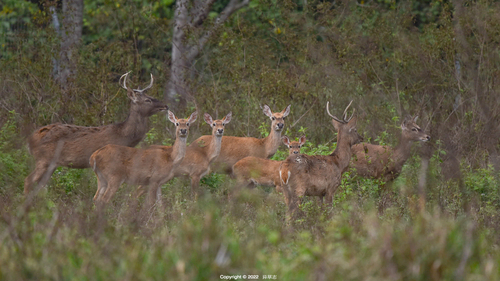
Males live alone for most of the year, while females live in small herds of up to 16 individuals. In some areas, the average herd has only three or four individuals, typically consisting of an adult female, her most recent young, and sometimes a subordinate, immature female. This social pattern is unusual for deer, which more commonly live in larger groups.
Swimming Behavior
Sambar often congregate near water, and are strong swimmers.
Diet Composition
Sambar feed on a wide variety of vegetation, including grasses, foliage, browse, fruit, and water plants, depending on their local habitat. They also consume a broad diversity of shrubs and trees.
Protected Area Occurrence
Large herds of sambar have been observed congregating in protected areas such as national parks and reserves in India, Sri Lanka, and Thailand.
Antler Farming
In Taiwan, sambar along with sika deer are raised on farms for their antlers, which are dropped annually between April and May. These antlers are highly prized for use as knife handles and handgun grips.
Rut Marking Behavior
During rut, stags wallow and dig their antlers in urine-soaked soil, then rub the antlers against tree trunks. Sambar are capable of remarkable bipedal movement for a deer species; stags will stand to mark tree branches above them with their antlers. A stag will also mark himself by spraying urine onto his own face using a highly mobile penis.
Female Offspring Defense
Despite lacking antlers, female sambar readily defend their young from most predators, a behavior that is relatively unusual among deer.
Anti-Predator Behavior (Dogs)
When confronted by pack-hunting dholes or feral domestic dogs, a sambar lowers its head with an erect mane and lashes at the dogs. Sambar prefer to attack predators in shallow water. Multiple sambar may form a defensive formation, standing touching rumps and vocalizing loudly at the dogs.
Alarm Behavior
When sensing danger, a sambar stamps its feet and makes a ringing call called "pooking" or "belling".
Tiger Predation
Sambar deer are the favorite prey of the Bengal tiger and Asiatic lion. In India, sambar can make up nearly 45% of the biomass consumed by Bengal tigers. Anecdotal reports note that tigers may even mimic the sambar's call to deceive them while hunting.
Other Predators
Sambar can also be preyed on by crocodiles, most commonly sympatric mugger crocodiles and saltwater crocodiles. Leopards and dholes largely prey only on young or sickly deer, though they are capable of attacking healthy adults as well.
Breeding Seasonality
Though sambar mate and reproduce year-round, calving peaks seasonally. Female oestrus lasts around 18 days.
Male Breeding Territory
A male establishes a territory to attract nearby females, but does not form a harem. The male stomps the ground to create a bare patch, and often wallows in mud, possibly to enhance the darkness of his coat, which is typically darker than a female's.
Rut Vocalization
While rutting stags can be heard making loud, coarse bellows, they are generally not very vocal.
Male Breeding Alliances
Large, dominant stags defend nonexclusive territories surrounded by several smaller males; dominant stags form bonded alliances with these smaller males through sparring.
Male Sparring Behavior
When sparring with rival males, sambar lock antlers and push like other deer, but uniquely they also sometimes rear up and clash downward in a manner similar to goat-antelope species.
Female Aggression
Females also fight on their hind legs and use their forelegs to strike each other in the head.
Courtship Behavior
Courtship relies more on tending bonds than on males advertising themselves through vocalization. Females move widely between breeding territories searching for males to court.
Mating Mechanics
When mounting, males do not clasp females. The male's front legs hang loosely, and intromission occurs in the form of a "copulatory jump".
Gestation and Birth
Gestation lasts approximately 8 months, though some studies suggest it may be slightly longer. Normally, only one calf is born at a time, though twins have been reported in up to 2% of births.
Calf Characteristics
Newborn calves initially weigh 5 to 8 kg (11 to 18 lb). Calves are usually not spotted, though some subspecies have light spots that disappear shortly after birth.
Juvenile Development
Young sambar begin taking solid food at 5 to 14 days old, and start ruminating after one month.
Lifespan
Sambar can live up to 28 years in captivity, though they rarely survive more than 12 years in the wild.