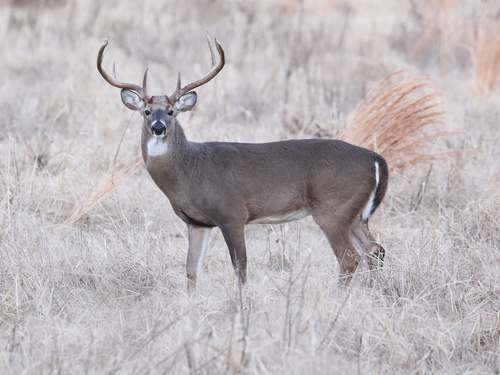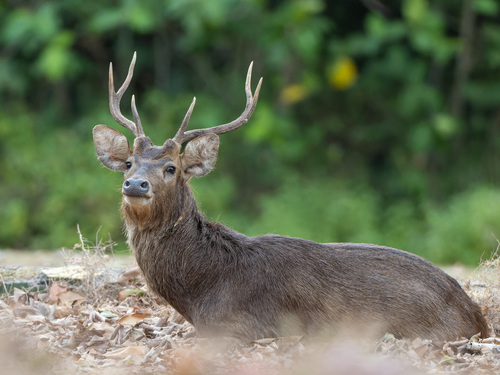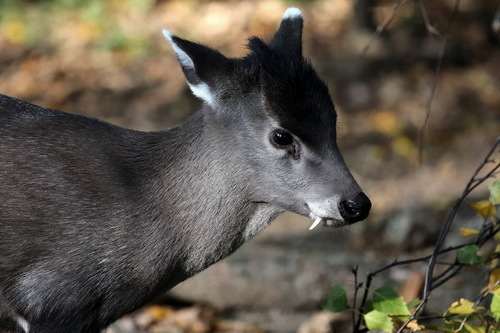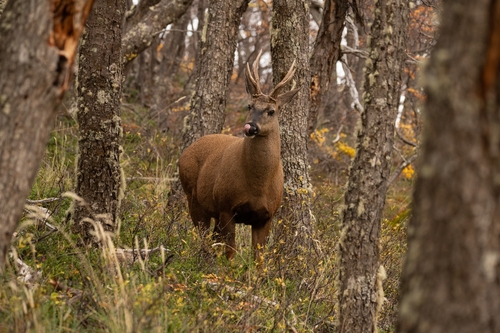
About Rucervus eldii (M'Clelland, 1842)
Common Names
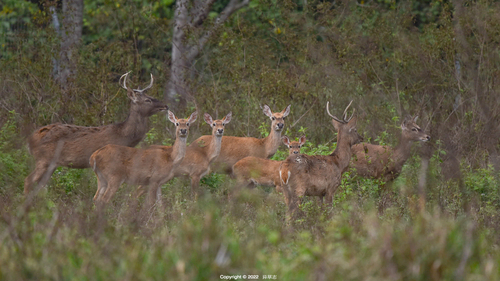
Eld's deer (scientific name Rucervus eldii, sometimes referred to as Panolia eldii) is also commonly called thamin or brow-antlered deer.
Conservation Status & Range
This is an endangered species of deer that is endemic to South Asia and Southeast Asia.
Habitat & Activity & Mating Season
Eld's deer lives in wetlands and marshlands, is active during the daytime, and its mating season runs from October through the end of December.
Subspecies Threats
Three subspecies of Eld's deer are currently recognized, and all three face threats from hunting and deforestation.
Subspecies Habitat Distribution
Each of the three subspecies occupies a distinct habitat.
R. e. eldii Habitat Specifics
The nominate subspecies R. e. eldii, found in Manipur, India, is tied to wetland environments, specifically the boggy marshland phumdis.
R. e. eldii Hoof Adaptations
It has hoof adaptations that let it move easily through this soft habitat.
R. e. eldii Divergent Traits
Compared to the other two subspecies, R. e. eldii lives in a significantly different ecosystem and has divergent physical characteristics.
Antler Growth Pattern
Like other deer in this species, its antlers are shed annually, and antlers grow to their largest size during the breeding season.
R. e. thamin Range & Habitat Type
R. e. thamin, found in Burma and Thailand, is not associated with wetlands.
R. e. thamin Forest Habitats
It lives in three forest types: indaing forest (dominated by Dipterocarpus tuberculatus, which corresponds to the deciduous dipterocarp forests of Indochina and Thailand; dipterocarp trees are part of the family Dipterocarpaceae, a group of resinous trees native to Old World tropics), dry deciduous thandahat forests, and mixed teak forests.
R. e. siamensis Range & Habitat
R. e. siamensis, distributed across Thailand, Laos, Cambodia, and Vietnam, is also not associated with wetlands, and occurs in deciduous dipterocarp forests.