About Rhinolophus megaphyllus Gray, 1834
Common Name and Taxonomy
Rhinolophus megaphyllus Gray, 1834, commonly called the eastern horseshoe bat, is a small rhinolophid bat.
Body Size Measurements
It has a combined head and body length of 44–53 millimetres, and a forearm length of 44–52 millimetres, an approximately equal measurement. Adult body mass ranges from 7 to 13 grams.
Ear Characteristics
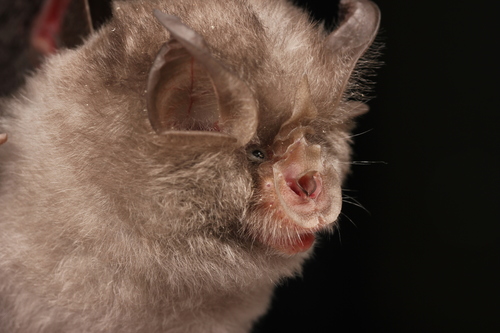
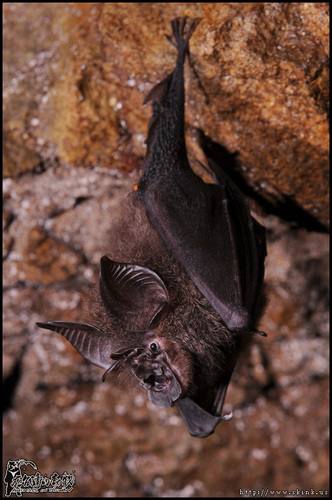
This species has large, simple ears that measure 12–21 millimetres from their base to a finely pointed tip.
Head and Facial Features
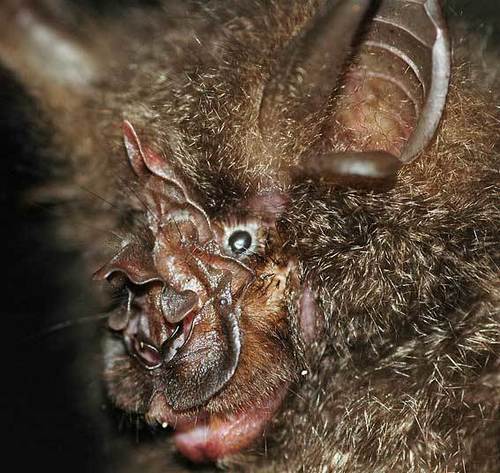
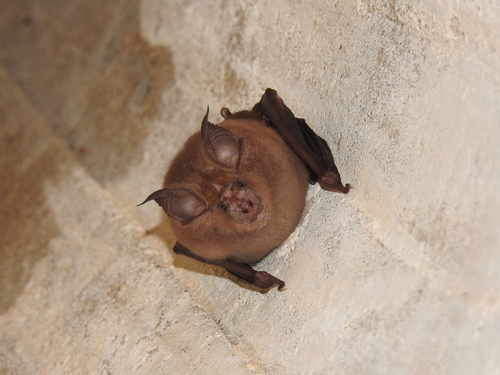
It has very small eyes, and its snout bears a distinctively shaped nose-leaf.
Fur Coloration
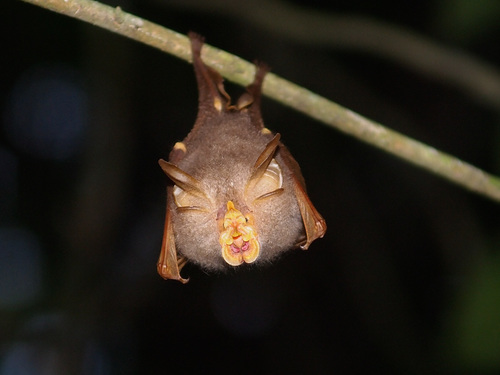
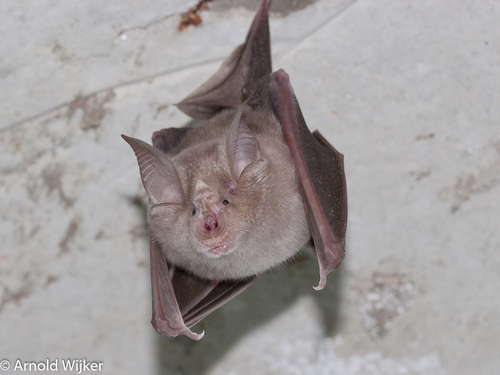
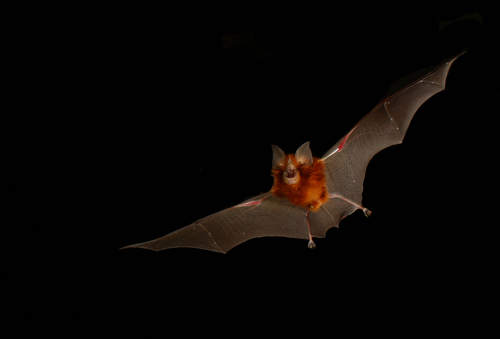
Its fur is darker on the upper side, usually a grey-brown shade that is paler on the ventral side; populations recorded in Queensland have rufous to orange coloration across their entire fur coat.
Genus Nose-Leaf Trait
As a member of the genus Rhinolophus, this species shares the genus' characteristic horseshoe-shaped fleshy nose-leaf structure, which is used for echolocation.
Nose-Leaf Appearance
R. megaphyllus can be readily identified by its pink nose-leaf, which has ridges on its upper-facing sections that align to form a triangular point. An additional structure protrudes from the midpoint of the nose-leaf, above the horseshoe-shaped protuberance found on the lower part. The overall pinkish tone of the nose-leaf is edged with grey, and its structure is relatively simple.
Taxonomic Status Query
Although researchers have suspected that this taxon actually represents two separate species, the nose-leaf and all other external characteristics are indistinguishable between the northern and southern forms.
Congeneric Species Comparison
A congeneric species found east of the Cape York peninsula, the large-eared horseshoe bat Rhinolophus philippinensis, has an ear length longer than 25 millimetres, a larger wingspan paired with a forearm measurement longer than 50 millimetres, and a more elaborately shaped nose-leaf.
Echolocation Signals
The ultrasonic echolocation signals emitted by R. megaphyllus are easily distinguishable from those of other bats in the southern part of its range, though geographic variation in these calls has not been determined; acoustic surveys conducted in New Guinea cannot distinguish this species from the similar call of Rhinolophus arcuatus.
Distribution Range
Following taxonomic revisions that separated out other populations, the distribution of Rhinolophus megaphyllus is currently recognized as restricted to geographically isolated populations in eastern Australia and New Guinea.
Altitudinal Range
The species occurs at altitudes up to 1600 metres above sea level.
Australian Distribution
It is common in suitable habitat across eastern Australia, ranging from the tropical regions of Cape York Peninsula along the east coast and inland to the Great Dividing Range, extending as far south as the temperate climate of Victoria.
Range Expansion
The range of R. megaphyllus expanded westward in Victoria during the twentieth century, aided by the species' colonization of abandoned mine adits.
Roost Dependency
Local populations depend on the availability of suitable daytime refuges and maternity roosts.
Roost Habitat and Colony Size
The species prefers caves and similar sites that provide sufficient warmth and high humidity; such sites may be inhabited by groups of up to two thousand bats, but most colonies contain between five and fifty individuals.
Maternity Roost Timing
Separate maternity sites are used for the birth and rearing of young, starting in September or October.
Mating Period
After the rearing period, individuals leave these sites to rejoin males for mating in March or April.