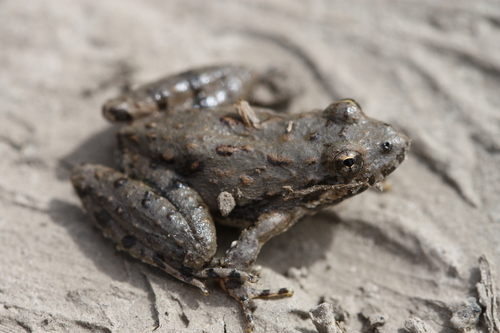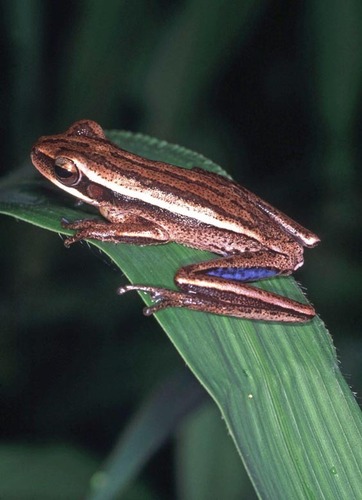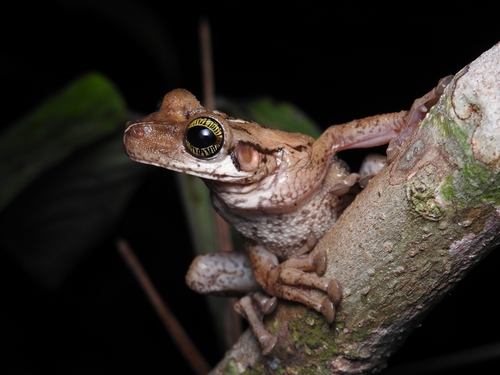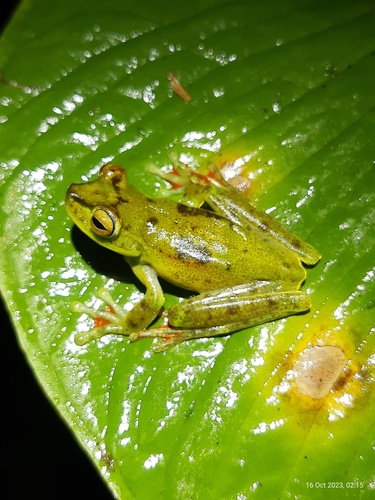
About Rheohyla miotympanum (Cope, 1863)
Adult Size
Males of Rheohyla miotympanum reach up to 38 mm (1.5 in) in snout–vent length, while females can grow to 51 mm (2.0 in).
Tympanum Characteristics
The tympanum is distinct but is dorsally obscured by a well-developed supratympanic fold.
Webbing Morphology
Fingers are about one-third webbed, and toes are about three-fourths webbed.
Dorsal Skin Texture
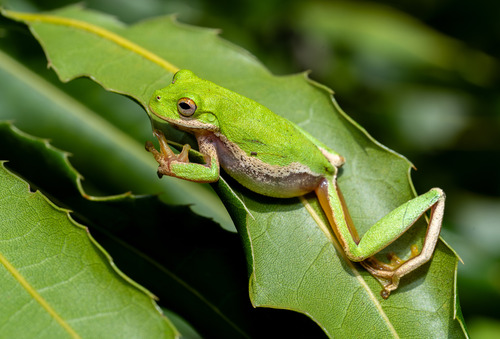
Dorsal skin is smooth.
Coloration
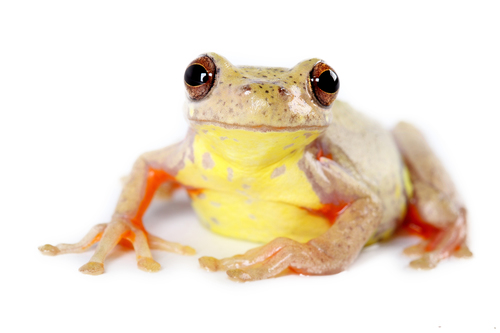
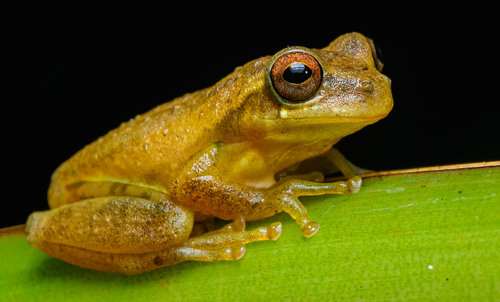
Dorsal coloration is pale green, and ventral coloration is creamy white.
Tadpole Oral Disc
Tadpoles of this species have a relatively small oral disc.
Distribution Range
Rheohyla miotympanum lives in a variety of habitats and vegetation zones in the Sierra Madre Oriental, Sierra Madre de Oaxaca, and Sierra de los Tuxtlas, at elevations from 350 to 2,000 m (1,150 to 6,560 ft) above sea level.
Microhabitat
It is often associated with bromeliads or elephant-ear plants, but can also be found on the ground, in bushes, or on small plants.
Reproduction Habitat
Reproduction occurs in streams and ponds.
Breeding Contrast With Related Genera
This sets it apart from related genera: Ecnomiohyla breeds in tree holes, while Charadrahyla, Plectrohyla, and Sarcohyla breed in cascading streams.
Interspecific Amplexus Observation
Despite this difference in breeding habitat, amplexus between Rheohyla miotympanum and Charadrahyla taeniopus has been observed.
Population Status
Rheohyla miotympanum is a fairly common species. While its overall population is estimated to be stable, the species faces threats.
Primary Threat
The most important threat is habitat loss and degradation caused by small-scale agricultural development and logging.
Other Potential Threats
Other potential threats include collection for human consumption, collection for the pet trade, chytridiomycosis, and pesticides.
Protected Areas
Several protected areas lie within this species' range.