About Ranunculaceae
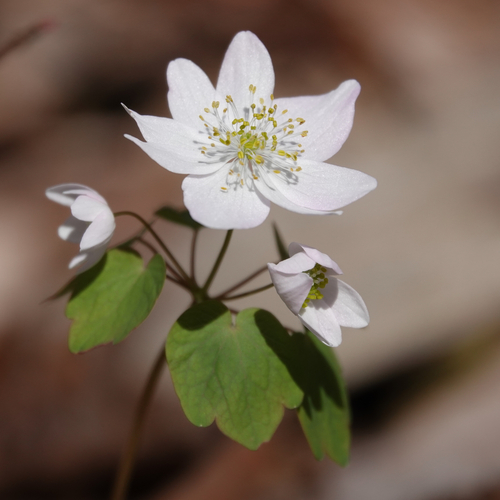
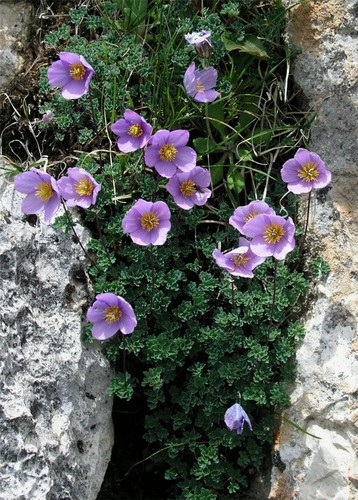
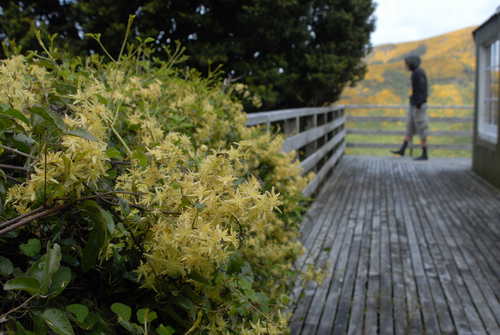
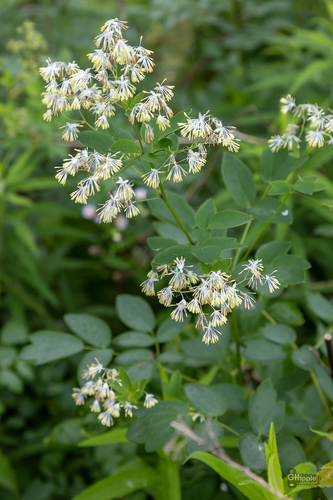
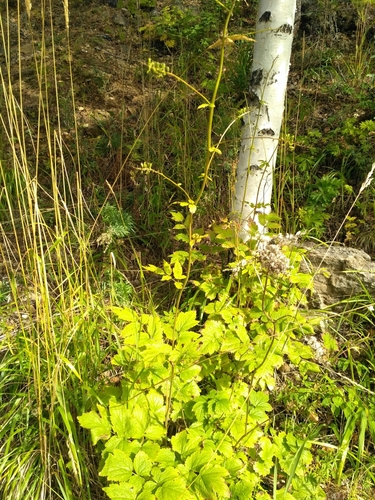
Ranunculaceae, the buttercup family, consists mostly of herbaceous annual and perennial plants, though some members grow as woody climbers like Clematis or woody shrubs such as Xanthorhiza. Most species in this family produce bisexual flowers, which may be either showy or inconspicuous. These flowers can grow solitary, or clustered into aggregated inflorescences including cymes, panicles, or spikes. Most flowers are radially symmetrical, but genera Aconitum and Delphinium have bilaterally symmetrical flowers instead. In general, all sepals, petals, stamens, and carpels are free and unfused, and the outermost floral segments typically number four or five. Outer stamens may be modified to only produce nectar, which occurs in Aquilegia, Helleborus, and Delphinium. In some genera, such as Thalictrum, sepals are colored and petaloid, while petals are either inconspicuous or absent entirely. All stems of Ranunculaceae species are unarmed. Leaf form and arrangement across the family is highly variable. Most species bear both basal leaves and cauline stem leaves; these leaves are usually compound or lobed, but may also be simple. Leaves are typically arranged alternately on stems, though they can occasionally be opposite or even whorled. Many species, especially perennials, form rhizomes that produce new roots each year. Ficaria verna can reproduce asexually via root tubers that form in leaf axils. Within the genus Thalictrum, some species are wind-pollinated anemophilous while others are insect-pollinated entomophilous. Flowers of the entomophilous genus Papaver, which belongs to the same Ranunculales order as Ranunculaceae, produce only pollen. Until recently, it was widely thought that all species in the genus Anemone also do not produce nectar. Fruits of Ranunculaceae are most commonly made up of free, unfused achenes such as those produced by Ranunculus and Clematis, or follicles such as those produced by Helleborus, Eranthis, and Nigella; the genus Actaea produces berry fruits instead. More than 30 species from this family are used in traditional medicine, including Aconitum napellus, Actaea racemosa, Clematis recta, Clematis virginiana, Hydrastis canadensis, Ranunculus bulbosus, Helleborus niger, Delphinium staphisagria, and Pulsatilla nigricans. Many genera of Ranunculaceae are common cultivated ornamental plants for flower gardens, including Aconitum monkshood, Clematis, Aquilegia, Consolida larkspur, Delphinium, Helleborus Christmas rose, and Trollius globeflower. The seeds of Nigella sativa are used as a spice in Indian and Middle Eastern cuisine.