About Ranoidea cyclorhynchus (Boulenger, 1882)
Congener Similarity
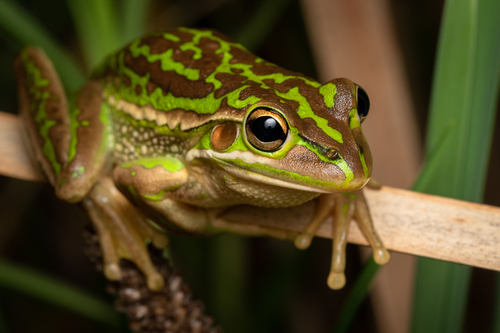
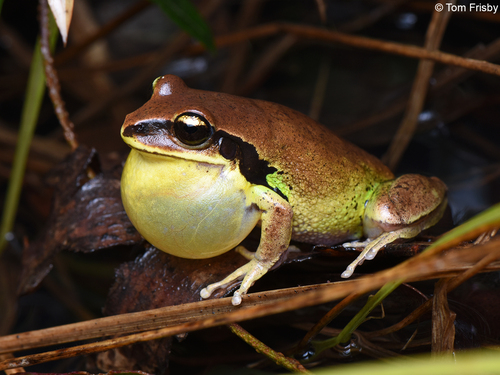
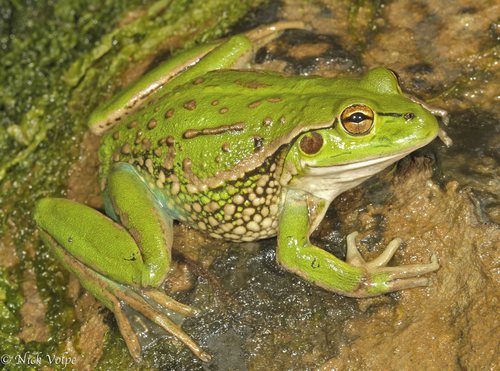
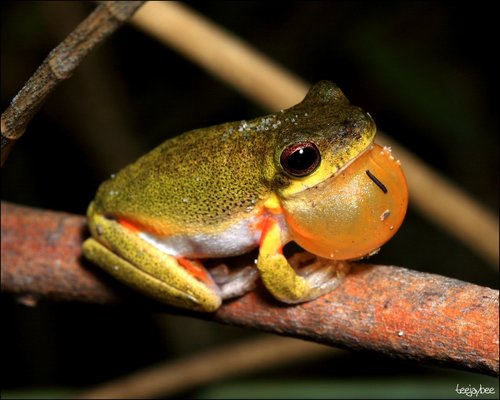
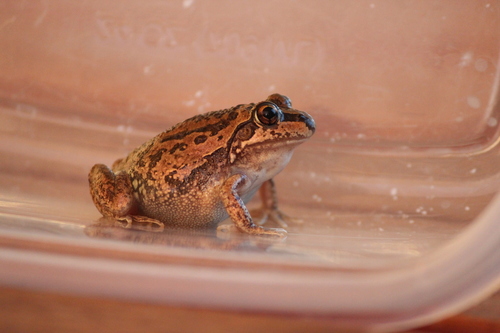
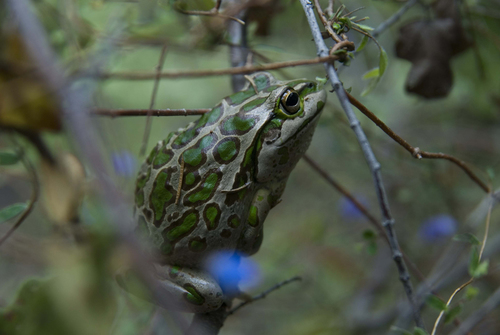
This frog species is visually similar to its congener Ranoidea moorei. It has dark green or brownish patches with bronze or gold highlights on its back.
Identification From Ranoidea moorei
This species can be distinguished from Ranoidea moorei by the numerous yellowish spots on the underside of its rear legs.
Size
Males can reach a maximum length of 65 mm, while females can reach 85 mm.
Foot Morphology
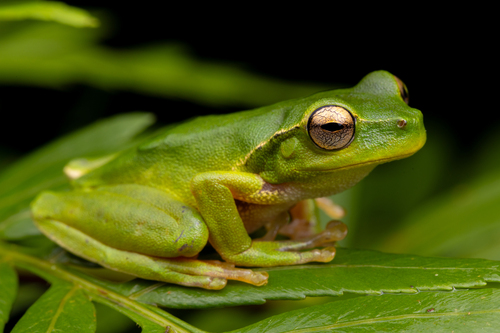
The feet are unwebbed and have a prominent disc at each toe.
Common Name Confusion
The common name Copland's rock frog is sometimes mistakenly used for this species; the true Copland's rock frog is Litoria coplandi.
Endemic Range Context
This species is endemic to Southwest Australia, and is one of only four members of its diverse genus that occurs in the region.
Habitat Preference
It is found in southern coastal areas, where it favors permanent water and granite outcrops. At its northernmost range extent, it can also be found in agricultural dams.
Recorded Sightings
Confirmed sightings have also been recorded at Middle Island in the Archipelago of the Recherche, and at Coragina Rock.
Natural Habitats
Its natural habitats include rivers, swamps, freshwater lakes, and freshwater marshes.
Conservation Status
While habitat loss poses a threat to this species, it is currently classified as least concern for extinction.
Non-Native Establishment
There are documented concerns that this species, the spotted-thighed tree frog, has recently become established on the Eyre Peninsula of South Australia.
Potential Invasive Impacts
It may spread further east into the Murray-Darling Basin, where it could interbreed with or displace local threatened species.