About Nyctimystes brevipalmatus (Tyler, Martin & Watson, 1972)
Taxonomic History
Nyctimystes brevipalmatus, commonly called the green-thighed frog, was first formally described by Tyler, Martin & Watson in 1972.
Dorsal Coloration
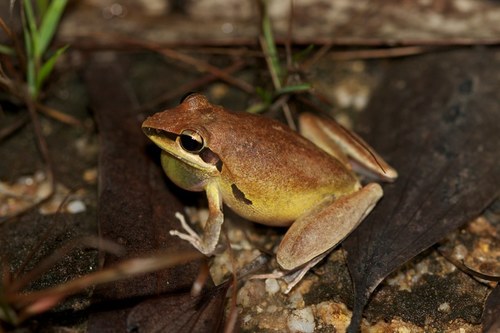
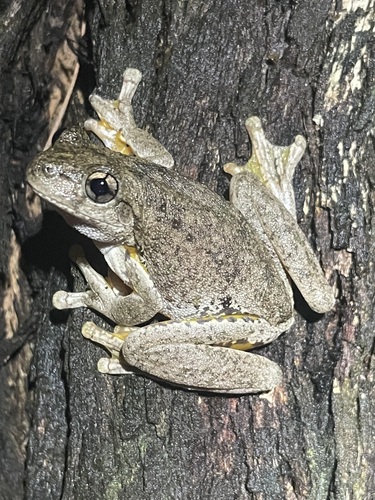
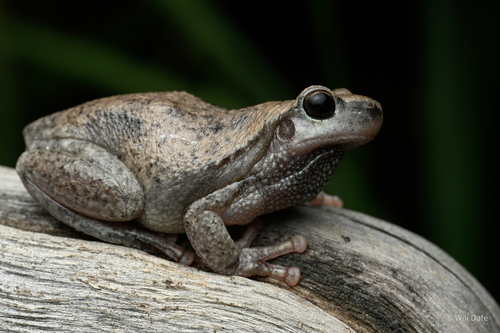
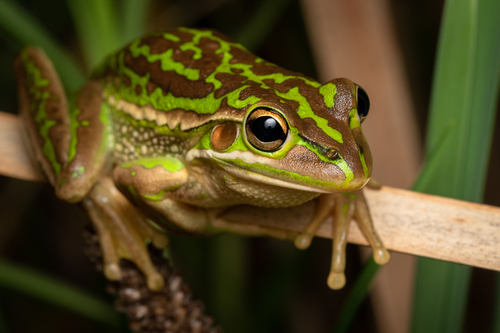
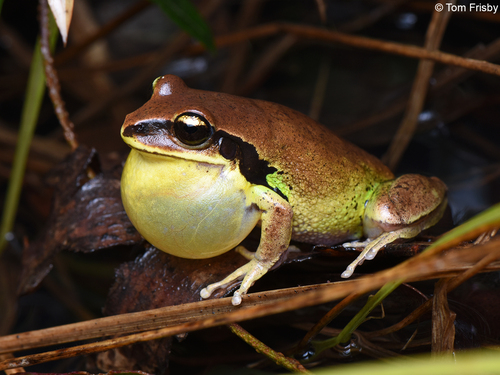
Its dorsal surface is chocolate brown with darker flecks.
Ventral Coloration
The ventral surface is white or pale yellow, covered in fine dark spots across the throat.
Lateral Head Markings
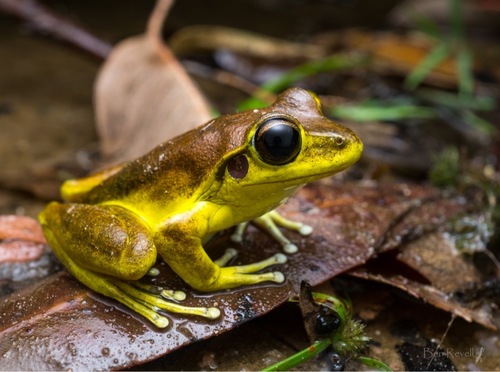
A thick stripe extends from the snout, across the eye and tympanum, then breaks into blotches on the sides.
Jaw and Armpit Markings
The edge of the upper jaw has a white marking that continues as a stripe to the base of the arm. Armpits are marked with lime green or yellow.
Thigh and Groin Coloration
The backs of the thighs and groin are bright blue, green, or blue-green, with black mottling.
Tympanum and Limb Pads
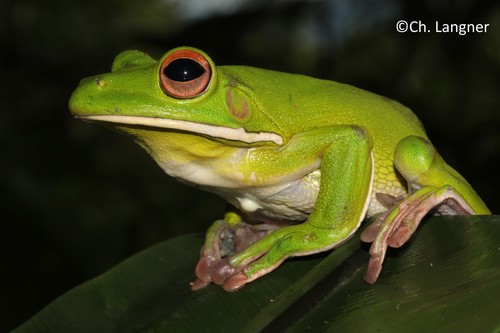
This species has a distinct tympanum, and medium-sized finger and toe pads.
Webbing Structure
Its fingers lack webbing, while its toes are one-third webbed.
Iris Characteristics
The iris is dark brown, with a golden crescent in the upper half.
Leg Morphology
Compared to other ground-dwelling hylids, this species has shorter legs.
Native Range
The green-thighed frog is native to the east coast of Australia. Its range extends from Cordalba State Forest in south-eastern Queensland to Ourimbah in New South Wales, and populations within this range are severely fragmented.
Erroneous Distribution Records
Multiple records of this species from Darkes Forest, south of Sydney, are confirmed to be erroneous.
Population Trends
Population numbers have decreased at Ourimbah, but there have been no recorded declines or local extinctions at other locations within its range.
Conservation Status
The total area this species is believed to occupy is less than 500 km², which has resulted in its listing as endangered on the IUCN Red List of Threatened Species.
Habitat
This frog inhabits rainforest, wet sclerophyll forest, and open forest areas.
Breeding Period
Breeding takes place from September to May, following heavy rain.
Oviposition Details
Females lay between 300 and 600 eggs in temporary pools and flooded areas, in clumps attached to water weeds at the surface of the water.