About Rana draytonii Baird & Girard, 1852
Species Name and Size
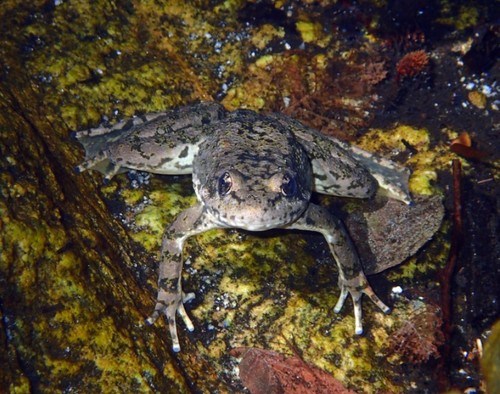
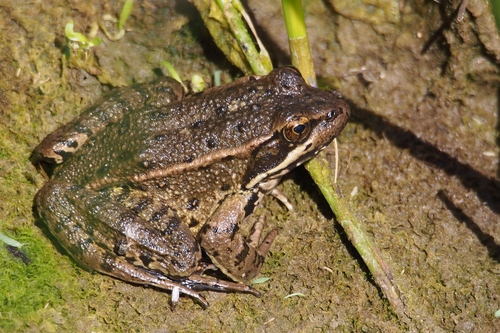
Rana draytonii (commonly known as the California red-legged frog) is a moderate to large frog, reaching 4.4–14 cm (1.7–5.5 inches) in length, and is the largest native frog species in the western United States.
Dorsal Coloration and Texture
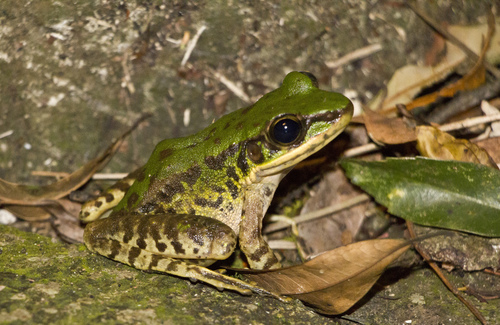
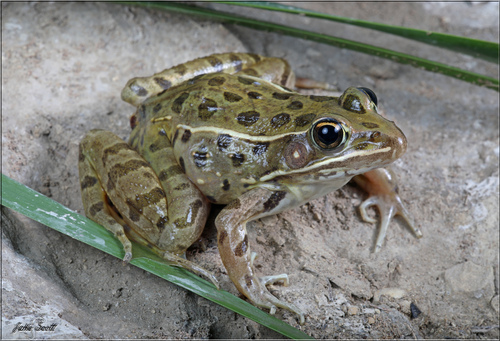
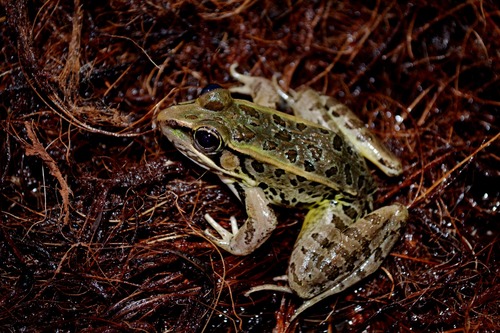
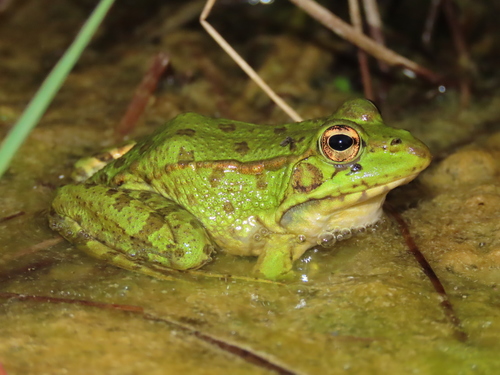
Its back is coarsely granular, and ranges in color from brown, gray, olive, to reddish, marked with black flecks and dark, irregular blotches that have light centers.
Head and Groin Markings
A dark mask with a whitish border runs above the upper jaw, and the groin has black mottling mixed with red or yellow.
Ventral Coloration
The lower abdomen and undersides of the hind legs are typically red.
Male Sexual Characteristics
Males can be identified by their large forelimbs, thumbs, and webbing; only part of the toes are webbed, and males use vocal sacs to produce grunts during the breeding season.
Juvenile Markings
Juveniles have more prominent dorsal spotting, and may have yellow instead of red markings on the undersides of their hind legs.
Dorsolateral Fold Feature
A characteristic feature of this species is the dorsolateral fold, visible on both sides of the body that extends roughly from the eye to the hip.
Similar Species
Rana draytonii looks very similar to the northern red-legged frog.
General Distribution
This species is found in California and extreme northern Baja California, northwestern Mexico.
Current Common Range Areas
It now occurs most commonly along the northern and southern Coast Ranges, and in isolated areas in the foothills of the Sierra Nevada mountains.
Southernmost California Populations
The current southernmost populations in California are on the Santa Rosa Plateau in Riverside County, and within the Upper Las Virgenes Canyon Open Space Preserve in the Simi Hills in eastern Ventura County, near the community of West Hills.
Santa Monica Mountains Introduction
In 2015, egg masses from the nearby Simi Hills were introduced to two streams in the Santa Monica Mountains; juvenile frogs were found living at these locations one year later.
Historic Range Decline
This species has disappeared from an estimated 70% of its historic range, and is now found only in about 256 streams or drainages across 35 counties of California.
Population Decline Locations
It remains common along the coast, with most population declines occurring in the Sierra Nevada and Southern California.
Prey Status for Garter Snake
The California red-legged frog is an important food source for the endangered San Francisco garter snake in San Mateo County.
Habitat Association with Newts
California newts often share habitat with this species because they have overlapping habitat requirements, and newts eat the frog's eggs.
Primary Diet
California red-legged frogs primarily eat earthworms, beetles, flies, and other winged insects.
Recorded Larger Prey
There have been recorded instances of the species preying on juvenile snakes, small mammals such as mice, and other frogs and tadpoles.
Breeding Season
Breeding takes place from late December to early April.
Male Advertisement Call
The male's advertisement call is a series of a few small grunts, usually given while swimming underwater.
Breeding Chorus Characteristics
Male breeding choruses are weak and easily overlooked.
Activity Patterns
Adult California red-legged frogs are nocturnal, while juveniles are active both at night and during the day.
Aquatic Habitat Requirements
The species lives in dense, shrubby, or emergent riparian vegetation, and still or slow-moving perennial and ephemeral water bodies that also act as breeding sites.
Upland Habitat Use
Adult individuals use upland habitats near aquatic areas such as creeks; they often use these zones for basking and foraging.
Egg Laying Site Preference
They prefer tall plants such as cattails for protection and as sites to lay eggs.
Metamorphosis Timeline
Tadpoles (larvae) of this species may metamorphose into frogs around 7 months after hatching, or may overwinter and take up to 13 months to complete metamorphosis.
Management Implications of Metamorphosis Variation
This recently discovered variation may have implications for management of the species, especially when aquatic habitats are modified.
Predator Response Behaviors
When approached by predators, California red-legged frogs will either stay motionless, quickly leap into nearby vegetation in upland habitat or a nearby water source, or (rarely) produce an alarm call to signal danger.
Capture Response Behavior
When captured, they have also been observed performing the unken reflex.