About Odorrana swinhoana (Boulenger, 1903)
Size
Odorrana swinhoana are medium to large-sized frogs, reaching a maximum snout-vent length of 12 cm (4.7 in). They can live up to 11 years.
Geographic size variation
Body size varies across different locations: for males, average snout-vent length from low-lying locations was 58 and 73 mm (2.3 and 2.9 in) respectively, and from highland locations was 73 and 85 mm (2.9 and 3.3 in) respectively.
Dorsal coloration
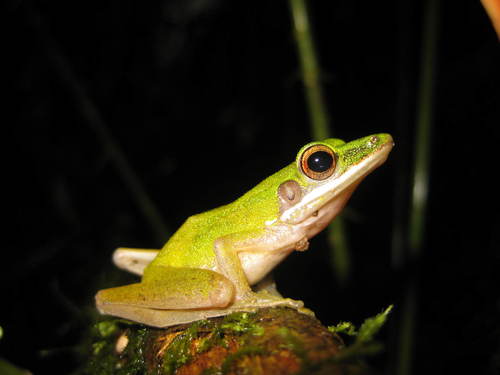
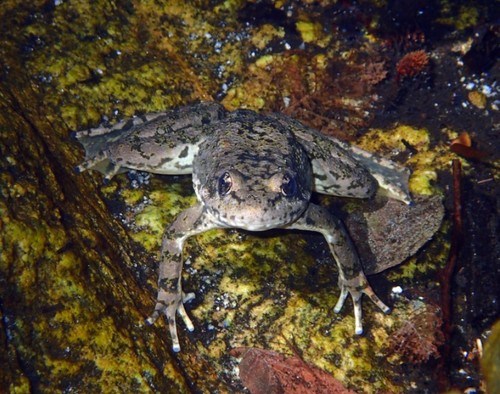
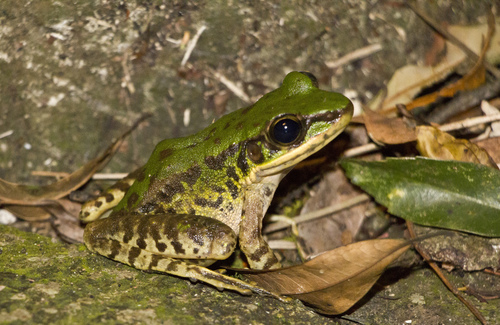
The dorsum is bright green, while the flanks are brown or green, marked with white or dark mottling.
Skin texture
The dorsal skin has a fine pebbled texture.
Venter coloration
The venter is white.
Limb morphology
Well-developed discs are present on the finger tips, and the toes have well-developed webbing.
Tadpole characteristics
Tadpoles of this species are adapted to running water and have a ventral sucking disc, with a green back.
Habitat
Odorrana swinhoana live in hill streams within broadleaf forests.
Diet
They forage on both terrestrial and aquatic prey: their diet consists primarily of insects and arachnids, and also includes gastropods, crustaceans, and chilopods.
Breeding habitat
Breeding occurs in small, shady, rocky mountain creeks.
Male breeding behavior
Males call both day and night, usually while hidden in rock crevices.
Egg laying
Their eggs are attached to underwater rocks.
Threat status
This is a common species not facing serious threats, although agriculture and infrastructure development do pose some threats.
Conservation presence
It can be found in a number of protected areas.