About Pterodroma macroptera gouldi (Hutton, 1869)
Taxonomic Identification
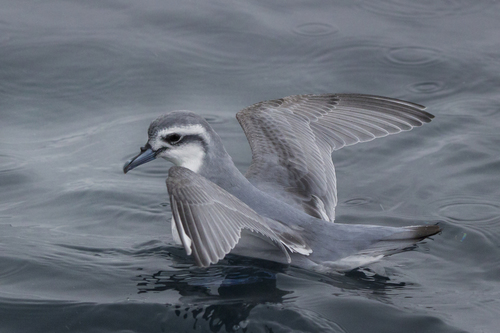
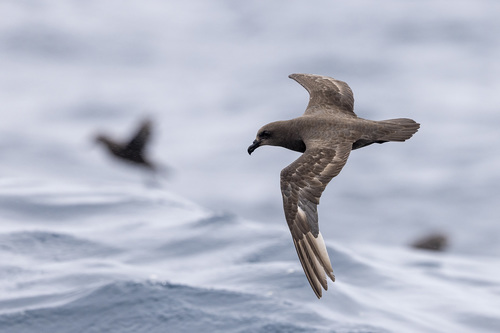
Pterodroma macroptera gouldi (Hutton, 1869), the great-winged petrel, is a large seabird with a body length of 42–45 cm.
Body Size
Its entire body is dark brown except for a variable-sized white patch near the base of its black bill.
Plumage and Bill Features
It can be distinguished from sooty shearwater and short-tailed shearwater by its all-dark underwing, thick stubby bill, and different overall shape and behavior.
Similar Species Distinction
The similar flesh-footed shearwater has a light pinkish bill, while petrels of the genus Procellaria are larger and have less bounding flight.
Breeding Range
This species breeds in the Southern Hemisphere between 30 and 50 degrees south, with breeding colonies on Tristan da Cunha, Gough Island, the Crozet Islands, the Prince Edward Islands, the Kerguelen Islands, and on the coasts of southern Australia.
Vagrant Occurrence
It occurs as a rare vagrant in the Pacific Ocean off the coast of California, United States.
Diet Composition
The great-winged petrel feeds mostly on squid, and to a smaller extent on fish and crustaceans.
Feeding Behavior
It typically catches prey at night by dipping and surface-seizing.
Foraging Associations
It will occasionally follow whales and associate with other related bird species to feed.
Breeding Timing
Breeding takes place in the southern winter, starting in April.
Nesting Characteristics
Nests are either built singly or in small colonies, and are placed in burrows or above ground among boulders or low vegetation.