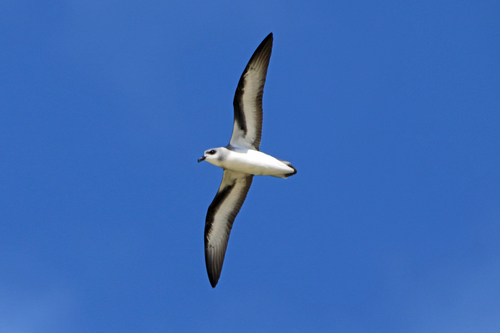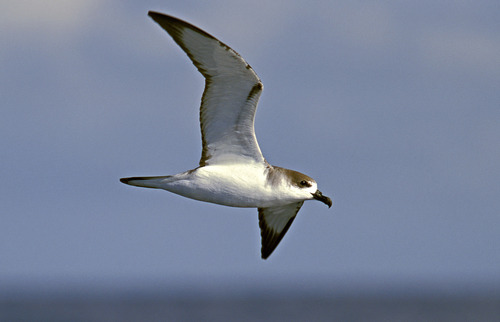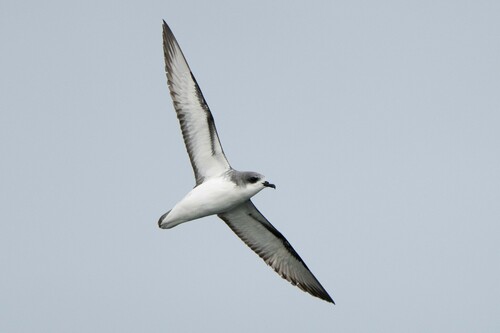
About Pterodroma cookii (G.R.Gray, 1843)
Nomenclature and Classification
Cook's petrel, scientifically named Pterodroma cookii (G.R.Gray, 1843), is one of the smallest petrel species.
Adult Size Measurements
Adults typically measure 25–30 cm (9.8–11.8 in) in length, have a 65–66 cm (26–26 in) wingspan, and weigh around 200 g (7.1 oz).
Plumage Characteristics
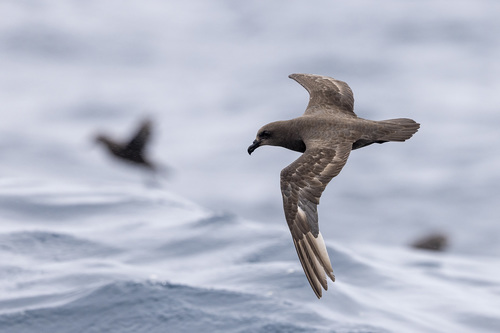
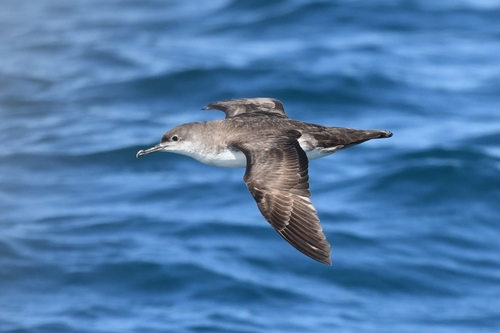
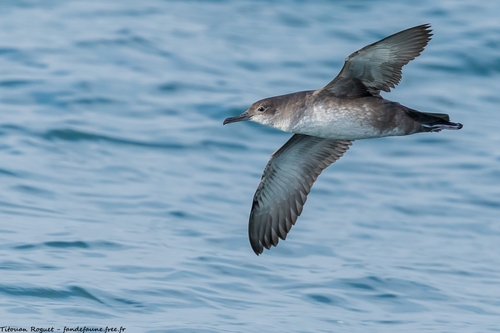
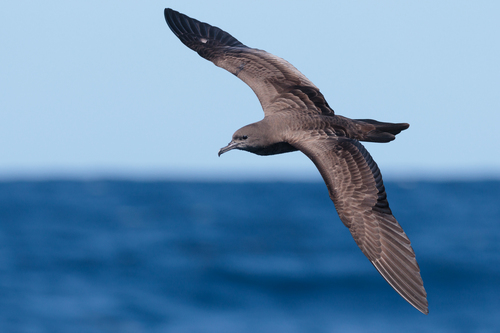
Its plumage matches the typical pattern for gadfly petrels: it has pale grey upperparts with a dark grey "M" marking across the wings, and white underparts.
Bill and Nostril Structure
It has a long, black bill with tubular nostrils positioned on both sides.
Sensory Adaptation
Like all members of the order Procellariiformes, this nostril structure gives the species an exceptionally sharp sense of smell, which the birds use to find food and locate nest sites in the dark.
Breeding Range
Cook's petrel only breeds in New Zealand, on three small islands: Little Barrier Island, Great Barrier Island, and Codfish Island.
Breeding Season Timing
Its breeding season falls during the southern hemisphere summer, running from October to May.
Nesting Habitat Preferences
It nests in burrows and rock crevices, and prefers nesting sites on thickly forested ridges.
Vocalization
Its call is a three-part sequence of kek, kek, kek.
Current Population Status
The species was once more common than it is today; the current estimated total population is 1,258,000 individuals and the population is declining.
IUCN Red List Classification
It is classified as vulnerable because it breeds on only three small islands.
Population Trends By Island
While the population on Little Barrier Island remains stable, the populations on the other two islands are decreasing.
Threats on Great Barrier Island
On Great Barrier Island, introduced pigs, dogs, rats, and cats attack nests and burrows, as does the native flightless rail the weka; these predators prey on eggs and nestlings, reducing the island's population from an estimated 20,000 to just 100.
Historical Breeding Range
Fossil evidence shows that before humans arrived in New Zealand, Cook's petrel bred on the mainland North and South Islands of New Zealand.
Non-Breeding Migration
When it is not breeding, Cook's petrel migrates from New Zealand to the Pacific Ocean.
Vagrant Sighting Records
It has occasionally been sighted off the west coast of the United States and off the west coast of tropical South America.