About Pterodroma hasitata (Kuhl, 1820)
Species Classification and Size
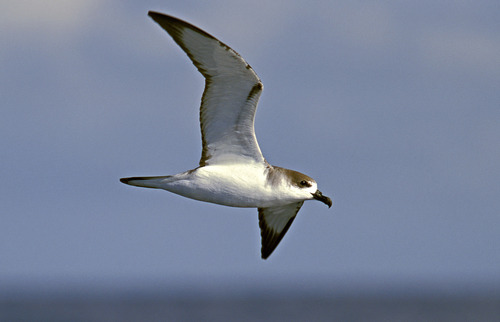
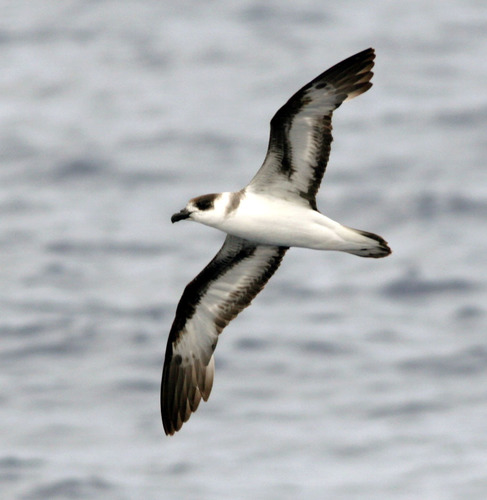
The black-capped petrel (Pterodroma hasitata) is a large gadfly petrel, measuring about 16 inches (40.5 cm) long with a 37-inch (94 cm) wingspan.
Similar Sympatric Species
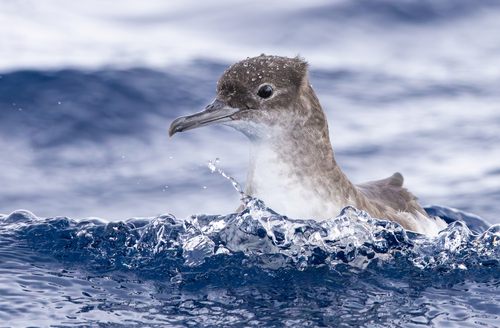
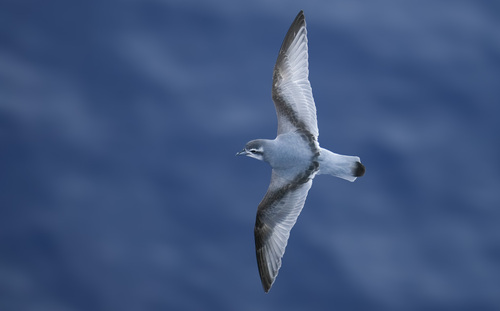
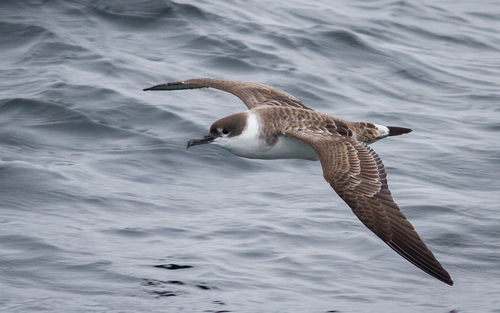
Within its range, the species that most resembles it is the smaller Bermuda petrel, which has a narrower white rump patch and an extensive gray cowl. The great shearwater is also superficially similar.
Related Taxon
The critically endangered or possibly extinct Jamaica petrel (P. caribbaea) was a related dark form.
Local Common Name
Its local Spanish name, Diablotín, translates to "little devil".
Etymology of Common Name
This name comes from its night-time habits and unusual mating calls, which led local people to believe evil spirits were present in the dark.
Foraging Vocalizations
Black-capped petrels will occasionally make other croaking sounds while foraging at sea.
Breeding Ground Activity Pattern
On their breeding grounds, black-capped petrels are nocturnal, possibly to avoid predation by gulls, hawks, or crows.
Locomotion Ability
Like most petrels, their walking ability is limited to a short shuffle to reach the nest burrow.
Historical and Current Breeding Range in Hispaniola
This seabird once bred on steep mountainsides across the Greater Antilles, but only three confirmed breeding areas remain in the high mountains of Hispaniola: these are Sierra de Bahoruco and Valle Nuevo National Park in the Dominican Republic, and Massif de la Selle and Massif de la Hotte in Haiti.
Confirmed Breeding in Dominica
In 2015, nesting was also confirmed on Dominica, a second island where historical nesting had long been suspected.
Eponymous Geographic Features
A mountain peak that this species formerly bred on in Haiti, as well as another in Dominica, are still named "Mont Diablotin" after the species' "little devil" nickname.
Primary Foraging Habitat
The warm waters of the Gulf Stream are the primary foraging area for black-capped petrels.
Non-breeding Distribution
During the non-breeding season, most individuals are concentrated off the coast of the United States between Florida and North Carolina, though the species is known to wander far to the north and east toward Europe.
Year-round Gulf Stream Presence
Black-capped petrels can be seen in the Gulf Stream year-round.
Breeding Season Foraging Individuals
Birds that visit these waters during the breeding season are either non-breeding individuals or making long foraging trips away from their nests.
Non-breeding Social Behavior
Away from breeding grounds, the black-capped petrel is almost strictly pelagic, and it is known to join loose flocks with other seabirds such as shearwaters and terns.