About Pterodroma externa (Salvin, 1875)
Taxonomy and Classification
The Juan Fernández petrel, with the scientific name Pterodroma externa (Salvin, 1875), is a large gadfly petrel.
Size and Measurements
It measures 43 cm (17 in) long, has a wingspan of 95–97 cm (37–38 in), and reaches a mass of 500 g (1.1 lb).
Upperbody Plumage
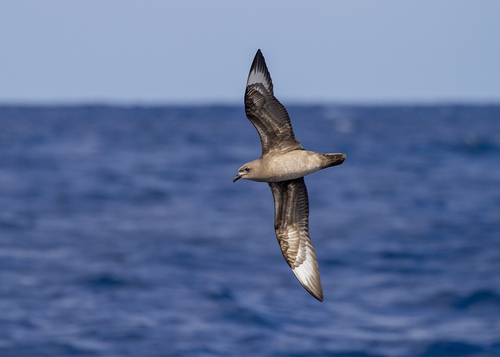
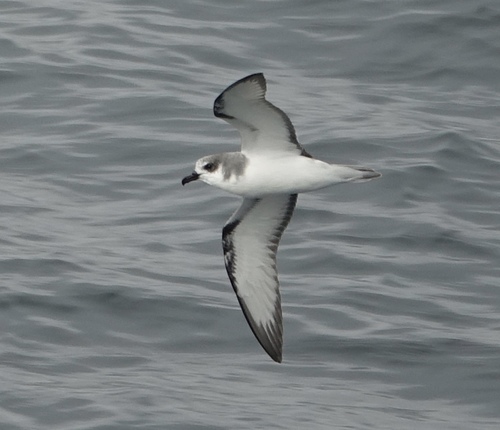
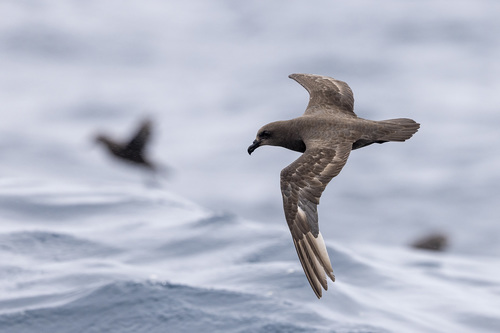
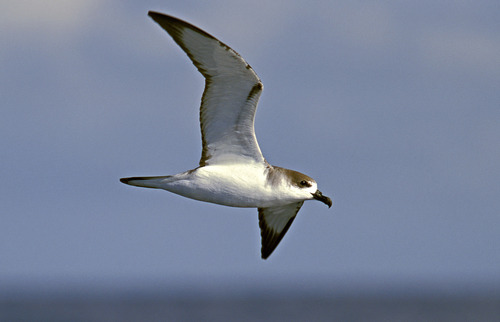
Its upperparts are dark brownish-grey, with a black M-shaped marking across its extended wings.
Underbody Plumage
The underparts are white, and the underside of the wing is edged in black.
Head Coloration
It has a white face with a black cap that extends below the eyes.
Appendage Morphology
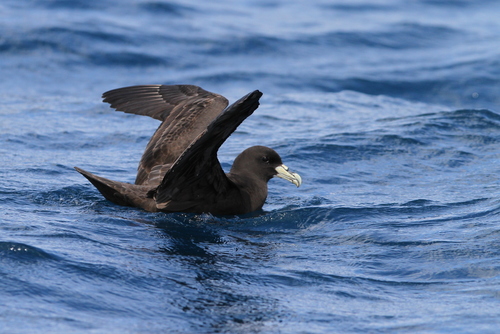
Its feet are yellow with dark brown tips, and its bill is black with a hooked tip, holding the tubular nostrils unique to the order Procellariiformes.
Breeding Season Foraging Range
During the breeding season, these petrels forage in waters surrounding Isla Alejandro Selkirk and Isla Robinson Crusoe (both part of Chile’s Juan Fernández Archipelago), as well as off coastal Chile.
Foraging Flocking Behavior
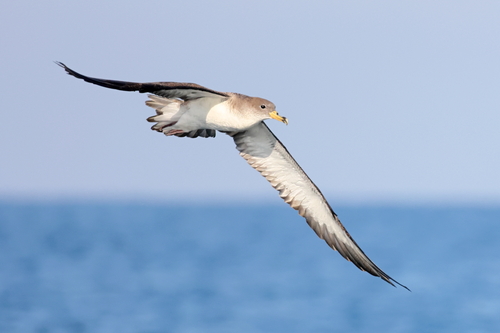
They often form flocks with pink-footed shearwaters and other seabirds.
Non-breeding Foraging Range
During the non-breeding season, they forage in equatorial currents and counter-currents, reaching as far north as the Hawaiian Islands.
Vagrant Records
The species has been recorded as a vagrant in Australia, the Chatham Islands of New Zealand, Fiji, and the United States (Arizona and Oregon).
Breeding Habitat
Juan Fernández petrels breed only on a single Chilean island, Isla Alejandro Selkirk.
Population Estimates
The breeding population was estimated at 1 million pairs in 1985–1986, and the global population may total up to 3–5 million individual birds.
Nesting Site Threats
The species is threatened at its nesting sites by predation from introduced species (cats and rats), and to a lesser extent by habitat loss caused by introduced herbivorous goats.
Conservation Status
The IUCN Red List classifies this species as Vulnerable, due to its restricted endemic range and threats from introduced predators.