About Pseudophryne bibronii Günther, 1859
Taxonomy Notes
Pseudophryne bibronii Günther, 1859 is a variable species that may actually represent more than one distinct species.
Adult Size
Adults grow to approximately 30 millimetres in length.
Dorsal Coloration
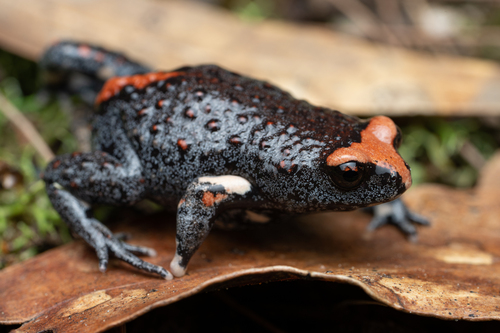
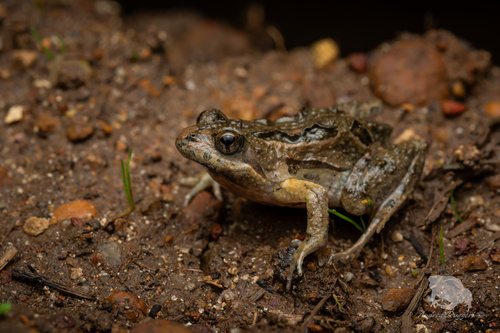
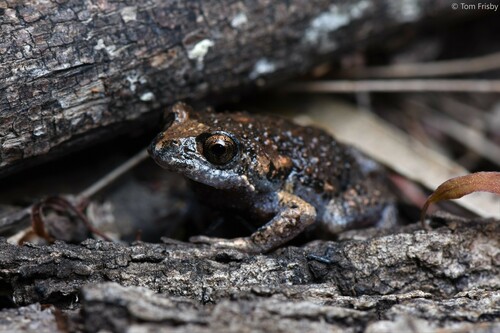
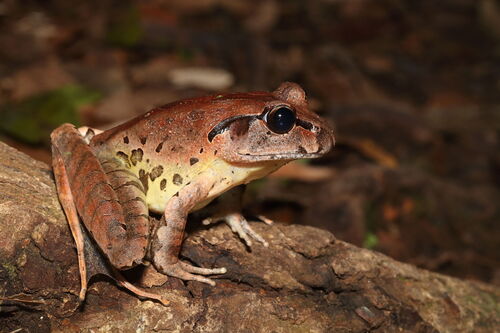
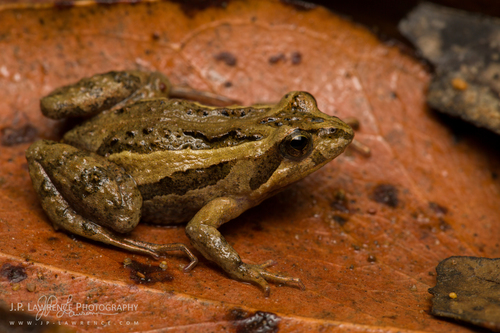
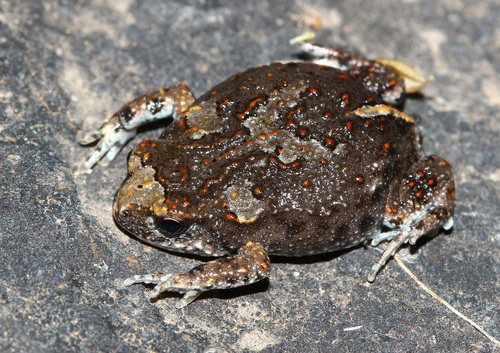
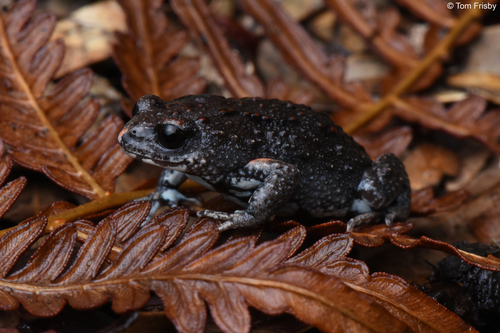
The dorsal (upper) surface is brown, grey, or black, and often marked with scattered red spots.
Ventral Coloration
The ventral (under) surface is normally strongly marbled with black and white, though this marbling can be faint in some populations.
Armpit Patch Characteristics
This species always has an orange, red, or yellow patch in the armpits; the colour of this patch ranges from yellow to orange across different sites.
Jervis Bay Population Armpit Patch
In the Jervis Bay region, this patch is always yellow, which may be caused by hybridization with Dendy's toadlet (Pseudophryne dendyi), a species that also has a prominent yellow armpit patch.
Thigh Marking
There is also a yellow to orange patch or raised bump on the back of the thigh.
Limb Morphology
The fingers and toes have no webbing and lack adhesive discs.
Eye Features
This species has horizontal pupils, and the iris is gold in colour.
Sexual Dimorphism in Size
Pseudophryne bibronii exhibits strong sexual dimorphism in body size: females are 14% longer and 15% heavier than males.
Size Difference Hypothesis
This size difference is hypothesised to come from a longer growing period in females.
Female Lifespan Speculation
The reason for the female's longer lifespan is not confirmed, but it is speculated to stem from lower predation risk and higher overall life expectancy.
Male Mating Call Behavior
For reproduction, males attract females from concealed positions in mud, under rocks, or within damp leaf litter by producing a grating "cre-eek" call.
Breeding Season Timing
Breeding season starts after heavy rains in the Australian autumn months of March, April, and May, and continues for four to five months.
Breeding Timing and Conditions
Most breeding and mating takes place at night, and can occur in cold temperatures.
Mating System
This species is polyandrous, meaning each female mates with multiple males.
Female Mating and Egg Deposition
A female may visit up to eight males, mate with each, and deposit eggs in the shallow nest each male has dug.
Fertilization Process
As the female releases eggs into the nest, the male holds her in inguinal amplexus and fertilizes the eggs as they are released.
Post-Laying Nest Guarding
After laying, the female leaves, and the male guards the nest.
Nest Structure and Flooding
Nests are lined with moist leaf litter or sphagnum moss, and flood during rain events.
Normal Egg Hatching Process
When flooded, the eggs hatch and tadpoles develop in the standing water.
Delayed Hatching Adaptation
If sufficient rain does not come soon after laying, the eggs can stay unhatched for many weeks, while tadpoles complete their development inside the egg.
Nest Moisture Requirements
Nests must remain wet enough to keep eggs moist, but not so wet that eggs are washed away.
Polyandry Survival Benefit
Females that mate with more males and lay eggs across more nest sites have a higher chance of some of their young surviving.