About Pseudophryne australis (Gray, 1835)
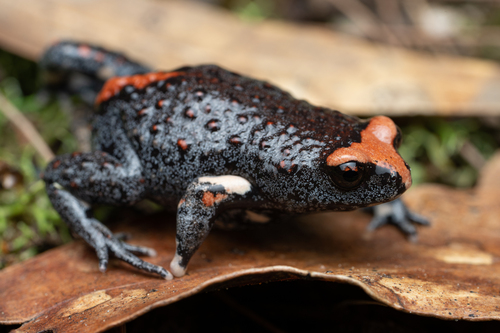
Pseudophryne australis is a small frog species that reaches a maximum length of 30 millimeters.
Head Marking
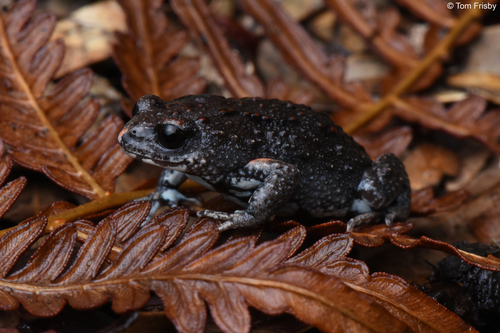
It can be identified by a distinct red T-shaped marking on its head.
Dorsal Features
The dorsal (upper) surface of the body is dark brown or black, marked with a red wash or scattered red spots, and it also has a red marking near the vent.
Body Side Features
The sides of the body are blue-grey, with a white marking present in the armpits and on the thighs.
Ventral Features
The ventral (underside) surface is heavily marbled in black and white, with bluish coloring in some areas between the black and white patches.
Habitat Range
This species occurs only around temporary creeks and soaks in sandstone habitats within woodland, heathland, and dry sclerophyll forest around the Sydney basin.
Male Calling Behavior
Males produce an "ark" call from nest sites located under leaf litter and rocks, in areas that are likely to be flooded; calling generally only occurs after heavy rain.
Egg Development
Eggs are laid under leaf litter, and tadpoles begin developing while still inside the egg.
Nest Attendance
The male stays with the eggs at the nest site.
Hatching Process
When heavy rain floods the nest, the eggs hatch; the already fairly developed tadpoles then finish their development in the temporary flood pools.
Sympatric Species
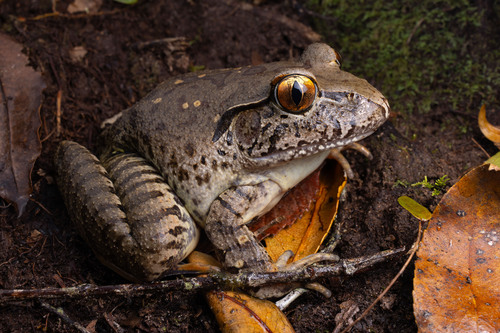
In the Sydney region, this species is often found sharing habitats with Giant Burrowing Frogs.
Conservation Threat
Populations of this species have declined as a result of urbanisation around Sydney.