About Pseudacris ocularis (Holbrook, 1838)
Species Identification and Size
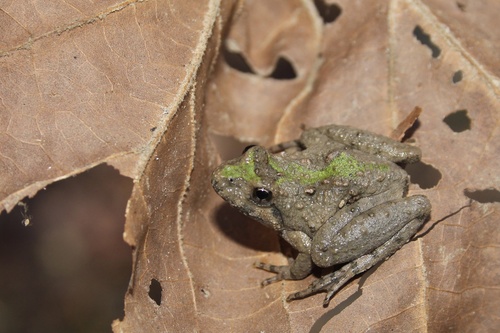
Pseudacris ocularis (Holbrook, 1838) is the smallest frog species native to North America, reaching a maximum head-body length of only 19 millimeters (0.75 inches).
Base Coloration
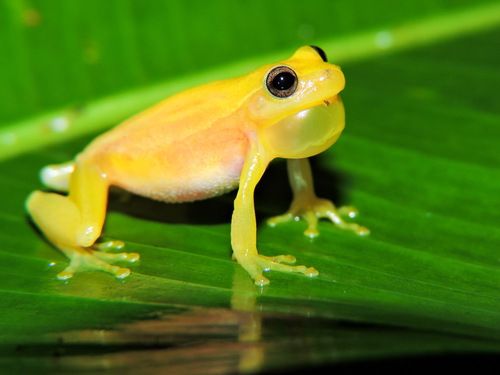
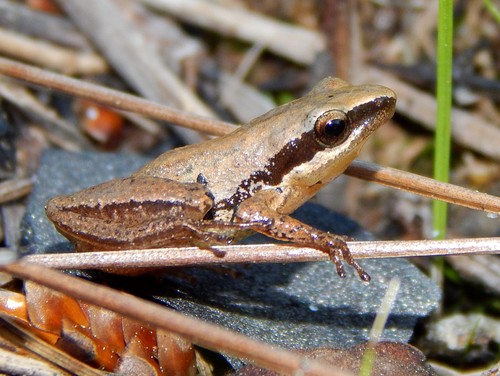
Its base coloration is normally pale brown, and it can also have a faint green or pink tinge.
Distinguishing Markings
A defining characteristic of this species is a variable dark stripe that runs through each eye and continues down the sides of the body. The species epithet ocularis, Latin for "of the eye", was chosen in reference to this prominent dark eye stripe.
Habitat and Distribution
This species inhabits a wide range of ephemeral and semi-permanent wetlands across the southeastern Coastal Plain of North America. It prefers grassy areas within and around cypress ponds and similar wetland sites.
Wetland Indicator Role
Pseudacris ocularis can act as an indicator of healthy wetlands, as it is noticeably absent from urbanized wetlands.
Perching Behavior
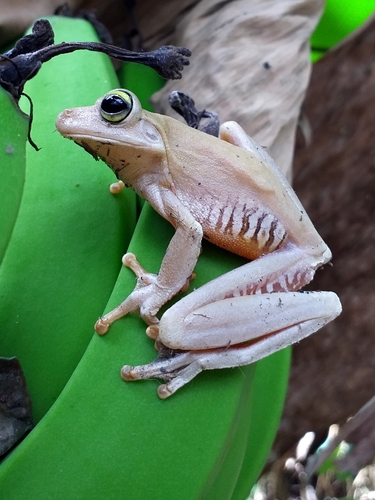
Individuals are commonly found on lower tree trunks and foliage up to 1 meter (3 feet) or more above ground; males use these spots as calling perches to attract mates. Despite this, the species spends a large portion of its foraging time on the ground.
Neck Flexibility
Due to unusual flexibility in its vertebral column, Pseudacris ocularis can rotate its head and neck more than most other frog species. This flexibility is thought to help the frog search for prey and assess potential perches before leaping.
Diet
Most of the prey this species consumes are small arthropods associated with leaf litter and soil, including springtails, ants, thrips, and palpigrades. Recorded observations confirm that adult individuals have also been documented feeding on large cockroaches, walking sticks, and mites.
Breeding Calls
During the breeding season, males stay perched on grass stems or tree trunks and call to attract females. Their calls are most often described as high, insect-like chirps.
Breeding Habitat
Breeding occurs in shallow, fish-free wetlands such as cypress domes, marshes, bogs, wet prairies, wet flatwoods, and floodplain forests.
Breeding Timing
Across most of the species' range, breeding generally takes place from January to September, but populations in Florida can breed year-round. Females are typically able to reproduce more than once per year.
Egg Laying
Eggs are usually laid either on the bottom of shallow water bodies or attached to vegetation in shallow water. Females can lay up to 200 eggs total, deposited in clusters of 1 to 5 eggs per cluster.
Development and Maturation
Eggs hatch 1 to 2 days after being laid, and tadpole larvae take between 7 and 70 days to complete metamorphosis into juvenile frogs. The average time for individuals to reach maturity is 7.31 days.