About Pronolagus saundersiae Hewitt, 1927
Taxonomy and General Traits
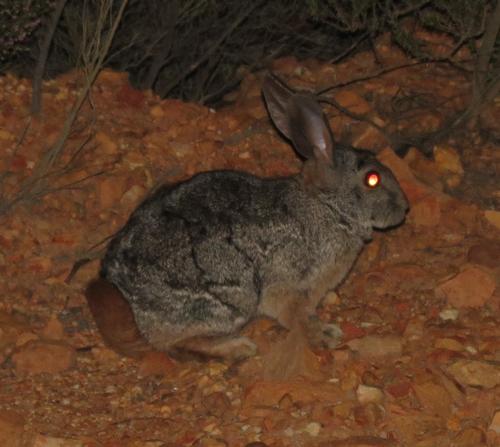
Pronolagus saundersiae Hewitt, 1927, or Saunders's red rock hare, is a medium-sized, densely furred red rock hare, with adults weighing 1.35–2.05 kg (3.0–4.5 lb).
Body and Tail Coloration
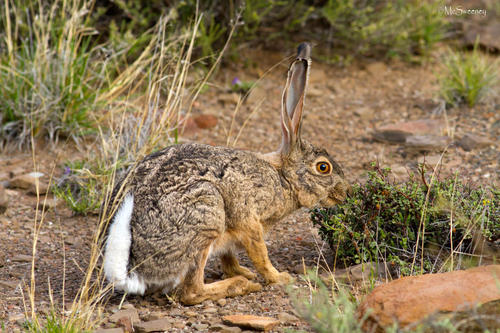
Its body is largely brown, with light rufous underparts and a tail that ranges from sandy to red in color. Its sides are slightly paler than its back, and its grayish-brown head has grayish-white cheeks.
Fur Color Variation
Fur color varies based on the hare's habitat.
Morphometric Measurements
Adult head-body length ranges from 380 to 535 mm (15.0 to 21.1 in), tail length from 50 to 115 mm (2.0 to 4.5 in), ear length from 80 to 110 mm (3.1 to 4.3 in), and hind foot length from 85 to 100 mm (3.3 to 3.9 in).
Country-Level Distribution
This species is distributed across South Africa, Eswatini, and Lesotho.
South African Provincial Range
Within South Africa, it occurs in the provinces of Western Cape, Eastern Cape, Free State, and KwaZulu-Natal.
Eswatini and Lesotho Range
It is found in the western half of Eswatini and throughout the whole of Lesotho.
Range Overlap with Jameson's Red Rock Hare
In some regions, its range overlaps with Jameson's red rock hare, and the two species occupy habitats that differ in elevation and rainfall.
Range Overlap with Natal Red Rock Hare
In other overlapping areas, it occurs alongside the Natal red rock hare, with the two species living in the same geographic range.
Core Habitat Characteristics
Its habitat is similar to that of other red rock hares: it occupies rocky escarpments, hillsides, and kopjes, and is particularly found on the tops of rocky outcroppings and in higher elevation areas overall.
Elevation-Based Habitat Segregation
This preference for higher elevations helps separate it from other red rock hare species where their ranges overlap.
Additional Habitat Types
It can also be found in elevated grassland and shrubland habitats.
Activity and Shelter Behavior
P. saundersiae is presumed to behave similarly to Smith's red rock hare: it is a nocturnal forager that shelters under boulders and in rock crevices.
Diet
It is likely a folivore, feeding primarily on grasses, herbs, and shrubs.
Known Predators
Documented predators of P. saundersiae and red rock hares more generally include Verreaux's eagle, Cape eagle-owls, and leopards.
Breeding Season and Litter Frequency
Breeding occurs during the warm season, and females produce three to four litters per breeding season.
Litter Characteristics
Each litter contains one to two altricial (underdeveloped at birth) young.