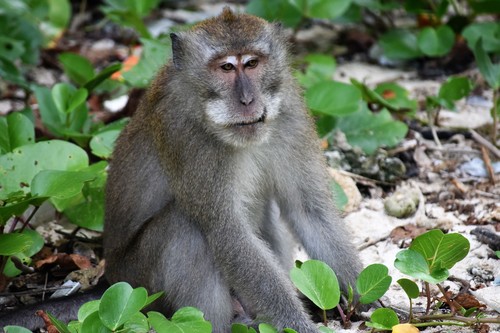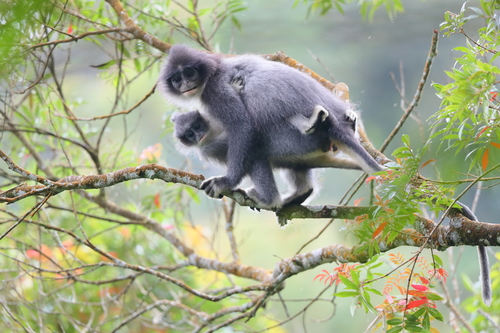
About Presbytis comata (Desmarest, 1822)
Nomenclature and Taxonomic Background
The Javan surili (scientific name Presbytis comata, first described by Desmarest in 1822) is a vulnerable Old World monkey species. It is endemic to the western half of Java, Indonesia, which is a biodiversity hotspot. Its other common names include gray surili, grizzled surili, Sunda Island surili, grizzled langur, stripe-crested langur, Javan grizzled langur, grizzled leaf monkey, Java leaf monkey, Javan leaf monkey, and langur gris.
Subspecies
There are two recognized subspecies of the Javan surili: Presbytis comata comata, which is found in western Java, and Presbytis comata fredericae, which is found in central Java.
Digestive Adaptation
As a colobine species, it has a sacculated stomach that helps break down the cellulose from the leaves it eats.
Physical Appearance
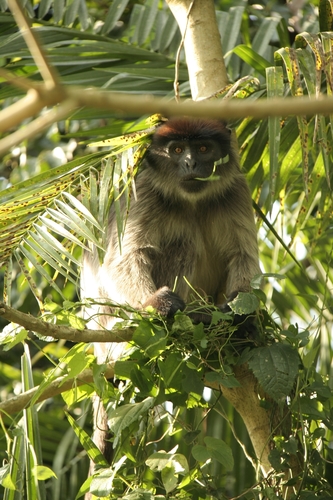
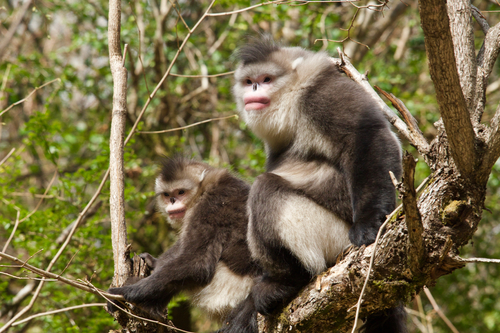
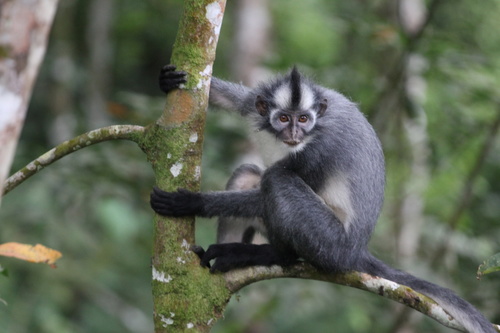
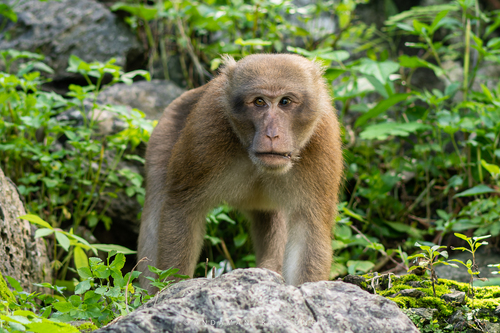
It has a small, slender face and tail, and large round stomachs. Its fur coloring ranges from dark gray to white.
Activity and Grooming Behavior
Like other leaf monkeys, Javan surilis are active during the day, and can spend up to 5 hours a day grooming themselves.
Geographic Range
The Javan surili is distributed across the western half of Java, Indonesia, with its range extending east as far as Mt. Lawu, which sits on the border with East Java. It is mostly confined to Sundaland, a pattern shaped by Pleistocene changes in geography, sea level, and vegetation, as well as the current types of vegetation and soil found in the region.
Habitat
Javan surilis live in primary and secondary lowland rainforests, at elevations up to 2,500 m (8,200 ft).
Diet Composition
The Javan surili’s diet is mostly made up of leaves, but it also eats flowers, fruits, and seeds. This species is more folivorous than any other member of the genus Presbytis. Over 62% of its total diet consists of young leaves, and mature leaves make up another 6% of its diet.