About Polyscias fruticosa (L.) Harms
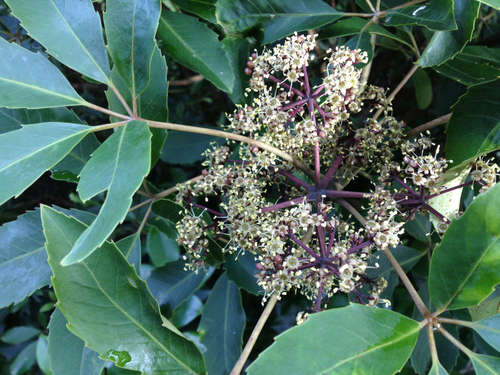
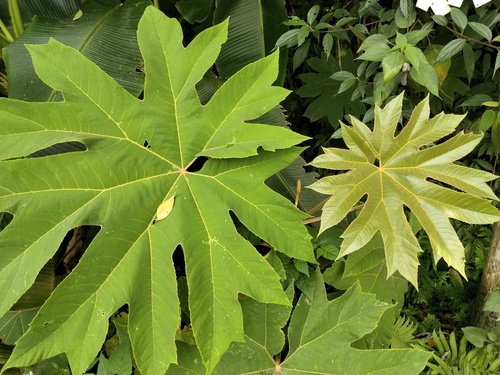
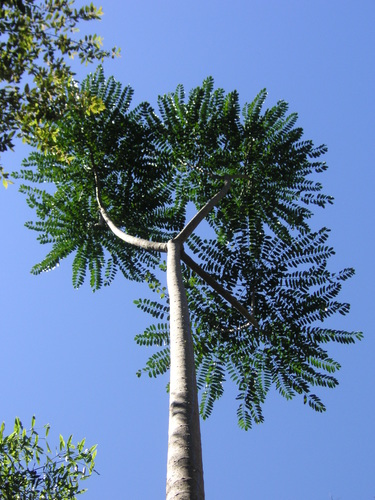
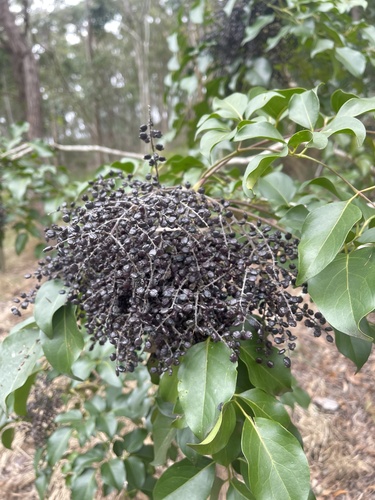
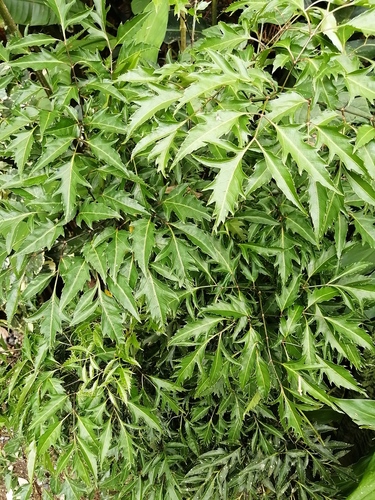
Polyscias fruticosa, commonly called Ming aralia, has a shrubby, fruticose growth habit with upright branches, which matches its specific epithet fruticosa. It bears compound leaves that are made up of many leaflets, which are themselves finely divided, creating the plant’s distinctive appearance. The upper surfaces of the leaflets are glossy dark green, while the lower surfaces are lighter. This two-toned foliage gives the genus its name Polyscias, which means "many-shaded"—a common feature of foliage across other species in this genus. The overall leaf structure is tripinnate, and sometimes reaches up to five-pinnate. Individual leaflets range from narrowly ovate to lanceolate in shape, growing around 10 centimetres (3.9 in) long, with serrated or lobed margins. Leaves are arranged alternately along the stem, and grow on slender, slightly woody stalks that are 5–15 centimetres (2.0–5.9 in) long. Petioles support compound leaves that hold up to seven or more opposite leaflets arranged along a central rachis. Some specimens have a reddish hue on their petioles, rachises, and petiolules. When grown in optimal conditions, Ming aralia produces dense, finely divided foliage, which has made it a popular ornamental houseplant and hedge. Its flowers are small, inconspicuous, and range from pale yellow to white. They typically grow in terminal or axillary umbels or panicles above or within the foliage. Each flower has five tiny petals and is actinomorphic, a characteristic trait of the Araliaceae plant family. The main pollinators of this species are small insects, particularly bees and flies. Flowering usually happens during warm, humid months in tropical regions. After pollination, the plant produces small spherical to ovate drupes, about 3–5 millimetres (0.12–0.20 in) in diameter. These fruits ripen from green to purplish-black or dark brown. Each fruit typically holds one or two seeds, which are dispersed by birds. In cultivated settings, Ming aralia is most often propagated by stem cuttings, because its seeds have low germination rates. Ming aralia grows primarily in the wet tropical biome. It is native to the Sulawesi and Maluku Islands of Indonesia, New Guinea, and northeastern Australia, and has been introduced to Bangladesh, Malaysia, Myanmar, Thailand, Vietnam, Tonga, the Caribbean, Ghana, and Mozambique. Ming aralia is mildly toxic to cats and dogs if ingested. Saponins found in the plant can cause gastrointestinal issues and drooling. Young leaves of the plant are eaten raw in Southeast Asia, served with meat dishes or dipped in spicy sauces such as nam phrik or sambal. It goes by different common names across regions: lep khrut (Thai: เล็บครุฑ) in Thailand, kuku garuda (literally "Garuda claws") in Malaysia and Indonesia, and đinh lăng in Vietnam. Leaves are also boiled in soups, stir-fried, added to curries, or beaten into eggs to make omelets. The taste and texture of the leaves are compared to celery and parsley. The leaves are used in traditional medicine to treat rheumatism, ischemia, and neuralgia. In Vietnam, leaves are additionally used to treat neurodegenerative diseases. The roots are used to treat fever, dysentery, neuralgia, and rheumatic pains, and are also used as a diuretic. In Ghana, the whole plant is used to treat asthma. Experiments have found that Polyscias fruticosa root extract can extend lifespan and improve cognitive function in rodents, though these results have not been tested or confirmed in humans.