About Podargus papuensis Quoy & Gaimard, 1830
Taxonomy and Size Ranking
The Papuan frogmouth, scientifically named Podargus papuensis Quoy & Gaimard, 1830, is the longest of all frogmouth species. By average size, it ranks third among the largest species in the order Caprimulgiformes, only surpassed by the Neotropical great potoo and the oilbird — if the oilbird is considered a true member of this order.
Length
On average, these birds measure around 53 centimeters (21 inches) in length, with a total length range of 50 to 60 centimeters (20 to 24 inches).
Body Mass
Specimens average 414 grams (14.6 ounces) for males and 314 grams (11.1 ounces) for females, with an overall body mass range of 290 to 570 grams (10 to 20 ounces).
Size Comparison to Tawny Frogmouth
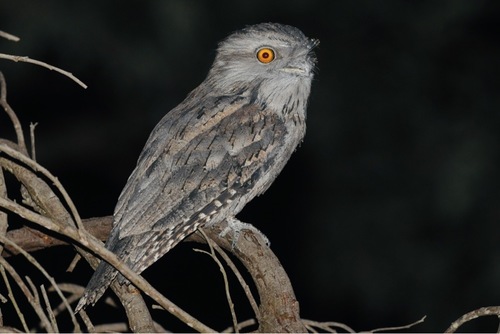
The tawny frogmouth, a related species, is smaller on average than the Papuan frogmouth, but can reach higher maximum weights.
General Morphology
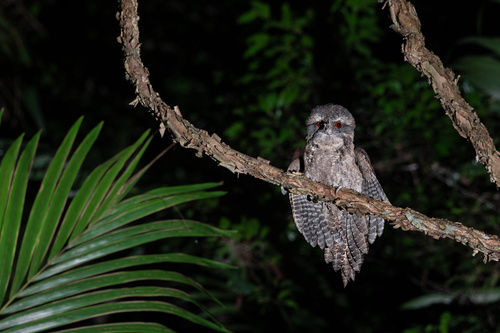
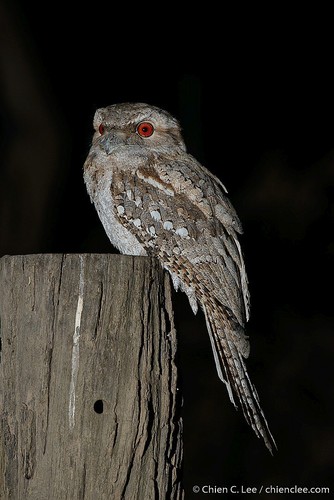
The Papuan frogmouth has a distinctive bulbous bill, red eyes, a cream-colored eyebrow, a long tail, and dark wings.
Sexual Dimorphism
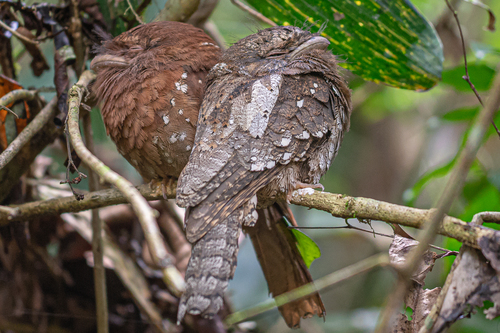
Males of the species are slightly larger, darker, and have a marbled plumage appearance, while females have more rufous colored plumage.
Subspecies Variation
Two recognized subspecies differ in size and coloration: P. p. baileyi is smaller and darker, while P. p. rogersi is larger and paler.
Distinguishing Features from Tawny Frogmouth
Compared to the similar tawny frogmouth, the Papuan frogmouth is larger, has red eyes, a longer tail, and darker wings.
Distribution
This species is distributed across the Aru Islands, New Guinea, and Cape York Peninsula.
Habitat
Its natural habitat is subtropical or tropical moist lowland forests.