About Podargus ocellatus Quoy & Gaimard, 1830
Taxonomy and Naming
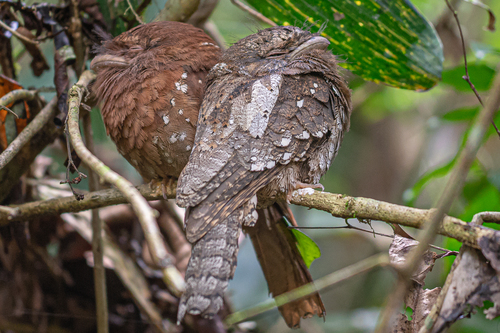
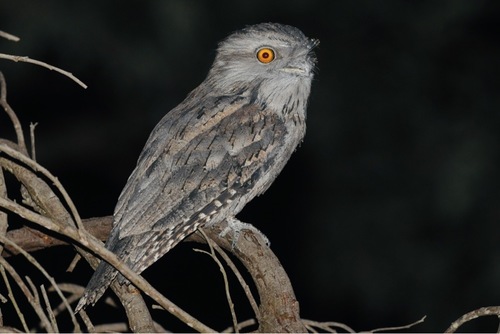
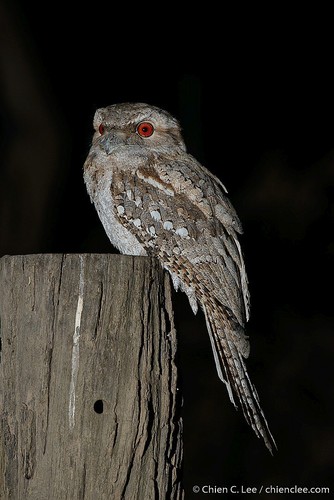
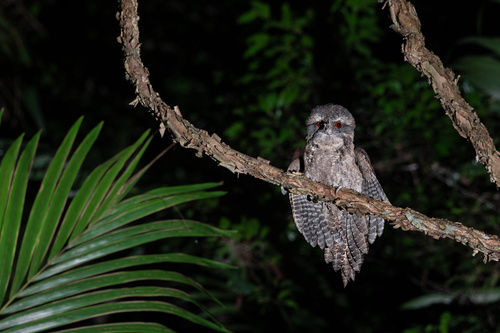
The marbled frogmouth (Podargus ocellatus, commonly referenced by its scientific name Podargus ocellatus Quoy & Gaimard, 1830) is a bird belonging to the family Podargidae. This species was first formally described by Jean René Constant Quoy and Joseph Paul Gaimard in 1830.
Geographic Distribution
It is distributed in the Aru Islands, New Guinea, and Queensland, Australia.
Natural Habitat Types
Its natural habitats are subtropical or tropical moist lowland forest and subtropical or tropical moist montane forest.
Queensland Population Stronghold
The Conondale Ranges on Queensland's Sunshine Coast is recognized as a stronghold for this species, with notable populations located within Conondale National Park.
Conservation Status and Altitudinal Range
The marbled frogmouth is a rare species, listed as vulnerable in Queensland, and occurs in subtropical rainforest and vineforest at altitudes ranging from 50 to 800 meters.
Roosting and Cryptic Traits
It roosts in forest canopies, is cryptic in coloration and behavior, and is extremely hard to find or study.
Existing Threats
Existing populations are threatened by land clearing, inappropriate fire regimes, and timber harvesting, with the future impacts of climate change adding additional risks.
Conondale Ranges Population Estimate
Current estimates place the population of the marbled frogmouth in the Conondale Ranges at around 800 pairs, and the species' current range there covers just under 2000 hectares.
Potential Future Habitat
Regenerating rainforest on previously logged land may create potential future habitat that could support population increases.
Vulnerability from Habitat Loss
Because the marbled frogmouth has specialized habitat requirements, needing unlogged pristine forest, it is considered extremely vulnerable following significant habitat reduction.
Proposed Future Timber Harvesting Risk
Proposed future harvesting of native timber in the Conondale region also poses an ongoing risk to the species.