About Pleurodeles waltl Michahelles, 1830
Common Name & Lateral Tubercles
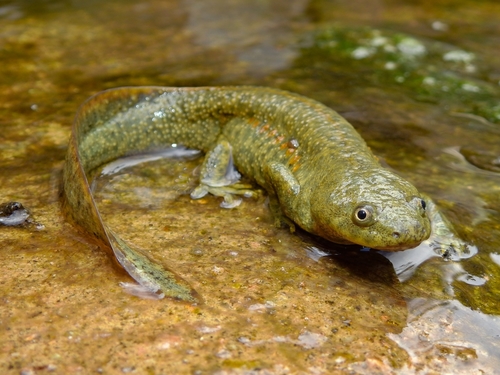
Pleurodeles waltl, commonly called the Iberian ribbed newt, typically has 8 to 10 orange wart-like tubercles running along each side of its body.
Rib Projection Mechanism
Its sharp, larger-than-average ribs for a salamander can puncture through its stretched skin via these tubercles. This rib projection acts as a defense mechanism that causes little harm to the newt itself.
Defense Response Priority
Iberian ribbed newts generally attempt to flee from predators first, only using this rib mechanism when escape is not possible.
Defense System Toxicity to Humans
This defense can be considered a primitive, rudimentary envenomation system, and it is completely harmless to humans.
Poison Secretion
When the newt pushes its ribs out, it also secretes a milky, viscous poison from special glands across its body. This poison is primarily found on the neck, dorsal and lateral trunk, and the tail.
Stinging Mechanism Function
Poison-coated ribs create a highly effective stinging mechanism that injects toxins through the thin skin of a predator’s mouth.
Skin Regeneration Ability
The newt’s immune system, collagen-coated ribs, and antimicrobial peptides released from specialized cutaneous glands allow its pierced skin to quickly regrow without infection.
Larval Phase Traits
Like most amphibians, Iberian ribbed newts hatch in water and breathe through gills during their larval phase.
Metamorphosis Changes
Once they begin growing limbs, they lose their gills and develop the ability to survive both on land and in water.
Aquatic Tendency
P. waltl is more aquatic than many other European tailed amphibians.
Typical Habitat Locations
While it is fully capable of walking on land, most individuals rarely leave water, typically living in ponds, cisterns, and ancient village wells that were once common across Portugal and Spain.
African Distribution
Populations have also been found living in parts of northwestern Africa.
Preferred Water Conditions & Diet
The species prefers cool, quiet, deep waters, where it feeds on insects, aquatic molluscs, worms, and tadpoles.
Dry Season Migration
During warmer seasons, many of these water sources dry out, so the newts migrate to moist areas under rocks or in vegetated spots.
Adaptive Plasticity
Iberian ribbed newts have been found to have physiological and behavioral plasticity to adapt to different stimuli across varying habitats.
Size Range
In the wild, this amphibian reaches a total length including the tail of 30 cm (12 in), but captive individuals rarely grow larger than 20 cm (7.9 in).
Coloration
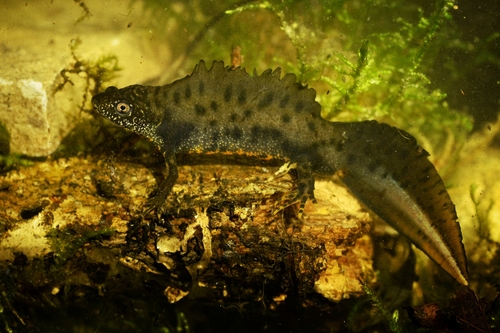
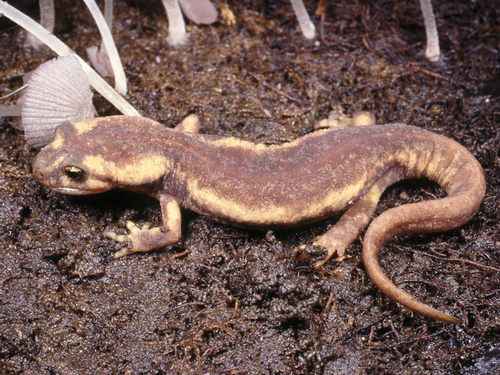
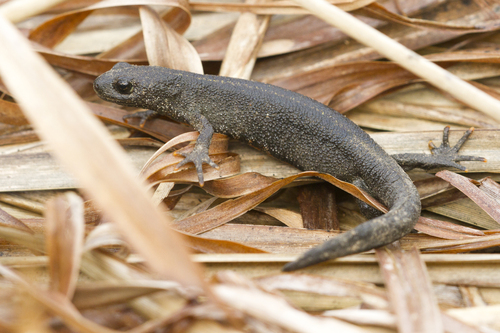
Its dorsal side is dark gray, while its ventral side is a lighter gray, with small rust-colored spots at the sites where its ribs can protrude.
Head & Tail Morphology
This newt has a flat, spade-shaped head and a long tail that makes up about half of its total body length.
Sexual Dimorphism
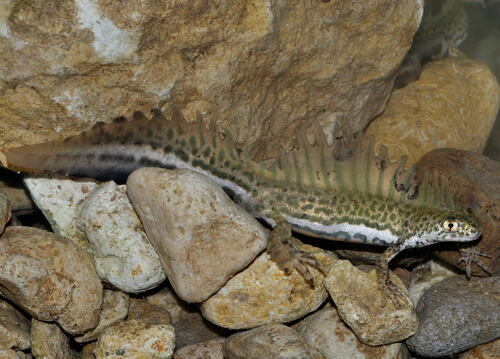
Males are more slender and usually smaller than females.
Larval Traits
Larvae have bushy external gills and typically paler color patterns than adult newts.