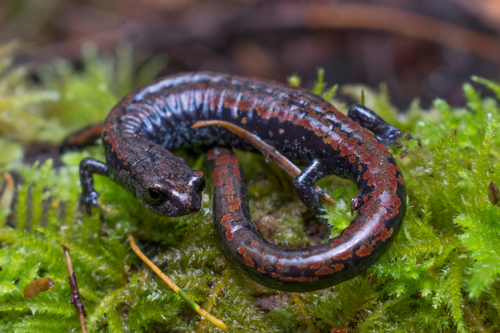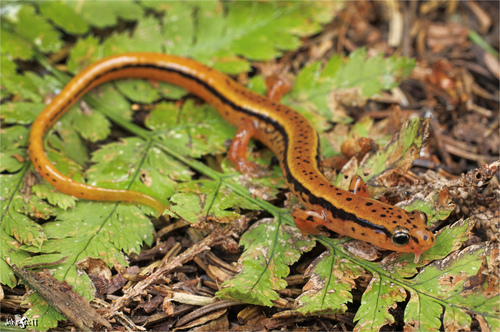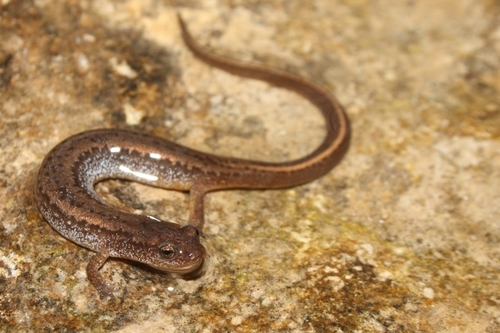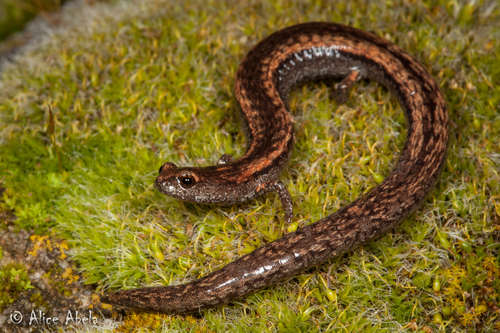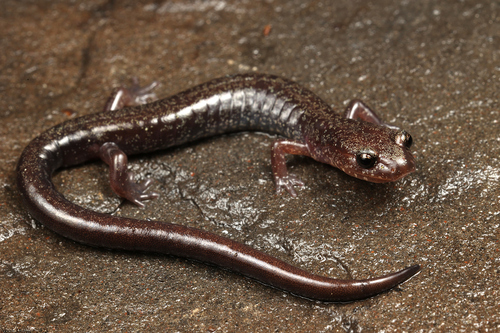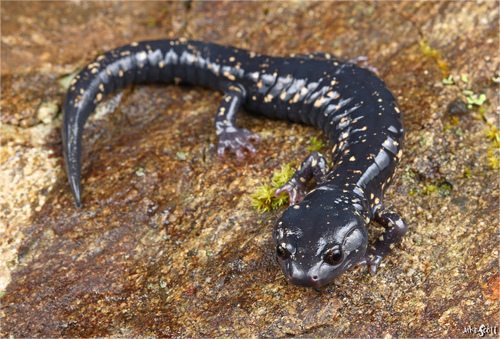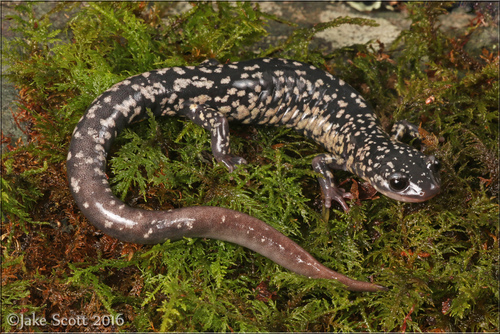
About Plethodon cylindraceus (Harlan, 1825)
Taxonomic Classification
The white-spotted slimy salamander, scientifically named Plethodon cylindraceus (Harlan, 1825), is a salamander species in the family Plethodontidae that is endemic to the Eastern United States. It is one of 55 species belonging to the genus Plethodon, and was among the first of its co-generic species to be formally described.
Preferred Habitats
This species prefers to live under logs and leaf litter in shaded hardwood forests and wooded floodplains, and it often forages on the forest floor during wet nights.
Aggression and Temperature
Research has found that aggression in this species increases as temperatures rise.
Respiratory Structure
Like all species in the genus Plethodon, this salamander has a lungless body structure, meaning nearly all gas and water exchange occurs through its body surface.
Diet Composition
Its diet consists mainly of insects and other small invertebrates, including ants, centipedes, springtails, crickets, millipedes, slugs, snout-beetles, and earthworms.
Known Predators
Common predators of the white-spotted slimy salamander are gartersnakes, copperheads, and birds.
Predator Defense Adaptations
It has two main predator defense adaptations: first, its dorsal granular glands release noxious, sticky substances through the skin, and second, when touched, the salamander freezes and stays immobile to deter predators.
Terrestrial Lifestyle
This species is mostly terrestrial.
Reproductive Traits
It lays direct-developing eggs on land, which skips the aquatic larval stage that is common to most amphibians. Because of this reproductive trait, the species does not need to depend on aquatic habitats for reproduction or dispersal.
Parasites
Like other plethodontid salamanders, Plethodon cylindraceus is frequently parasitized by Trombicula mites.
Distribution Range
In terms of distribution, this species occurs in the Virginia Piedmont and Blue Ridge physiographic provinces of Virginia and North Carolina, stretching west to the French Broad River and south to the northern Piedmont of South Carolina. It is also found in parts of the Valley and Ridge physiographic province of the Appalachian Mountains in western Virginia and extreme eastern West Virginia, as well as in a small area of the Atlantic Coastal Plain of eastern Virginia.
Conservation Status
Its natural habitat is temperate forest, and the species is threatened by habitat loss.