About Batrachoseps wrighti (Bishop, 1937)
Common Name and Body Shape
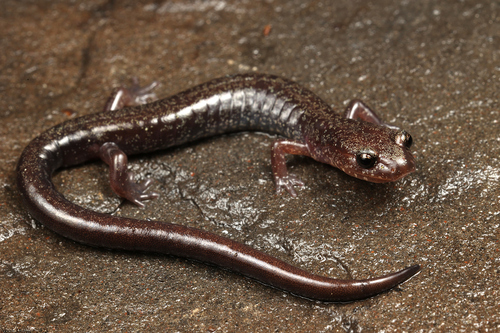
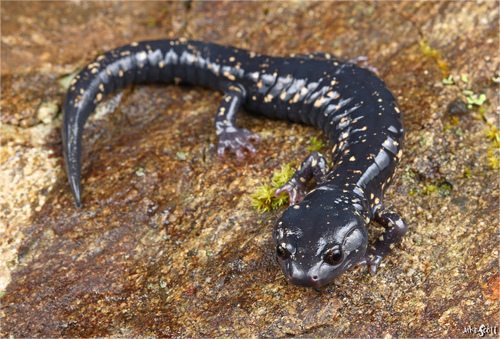
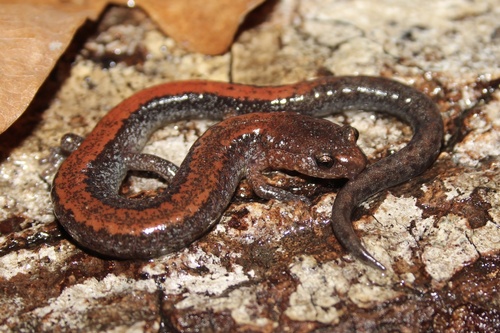
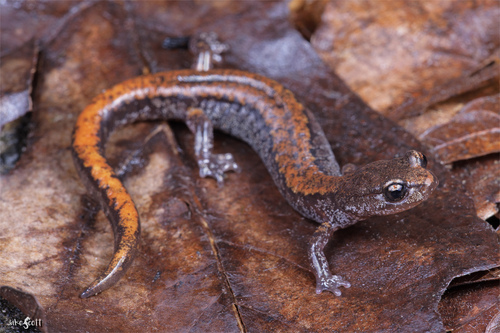
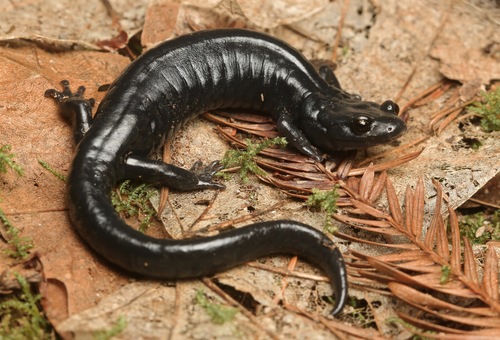
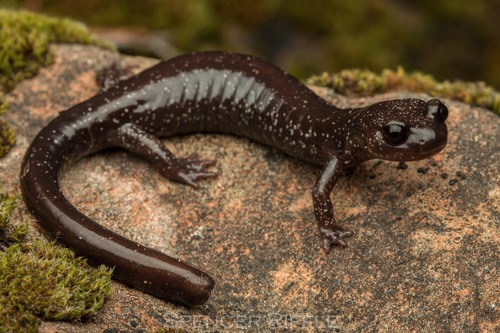
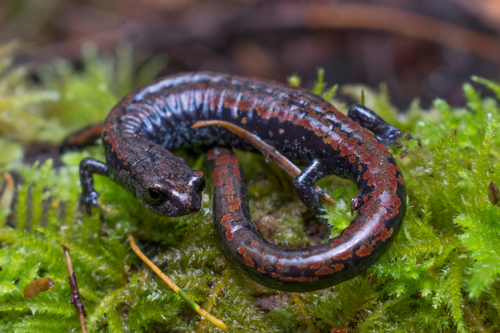
This species, commonly called the Oregon slender salamander, has a long, thin body.
Size Measurements
Adults reach a maximum snout–vent length of 61 mm (2.4 in), and a maximum total length of 120 mm (4.7 in); most individual salamanders are smaller than these maximum measurements.
Hind Foot Toe Count
They have four toes on each hind foot.
Reproductive Clutch Details
Clutch size ranges from 3 to 11 eggs, and each egg measures 4 mm in diameter.
Endemic Range
The Oregon slender salamander is endemic to north-central Oregon.
Cascade Range Distribution
It occurs most often on the western slopes of the Cascade Range, but can also be found at some sites on the eastern slopes of the range.
Natural Habitat Types and Elevation
Its natural habitats are moist temperate forests in Oregon, including Douglas fir, maple, and red cedar woodlands, up to an elevation of 910 metres (3,000 ft).
Old Growth Forest Association
This species is typically associated with old growth, late-successional Douglas fir forest.
Earlier Succession Habitat Occupancy
However, it has also been found in earlier succession forests that host large logs and abundant downed woody debris.
Microhabitat Preferences
It is most often found within large diameter decayed logs, and prefers habitats with a closed canopy.
Suburban Occurrence
The Oregon slender salamander has also been recorded in a suburban landscape.