About Batrachoseps nigriventris Cope, 1869
Adult Body Length
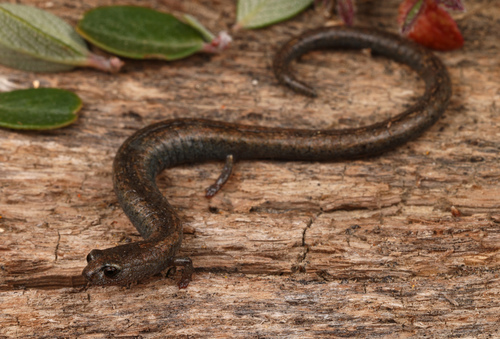
The black-bellied slender salamander (Batrachoseps nigriventris Cope, 1869) has an adult body length of approximately 3.1 to 4.3 centimeters.
Body and Tail Morphology
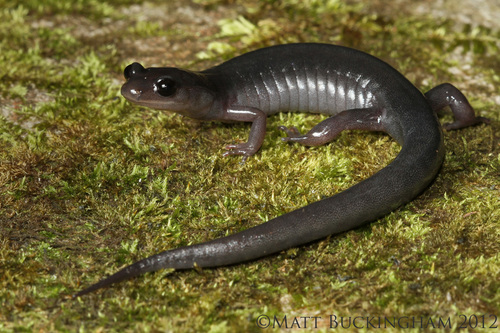
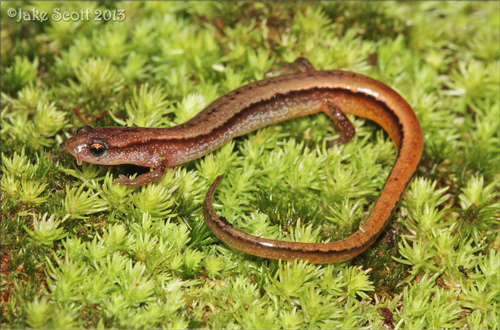
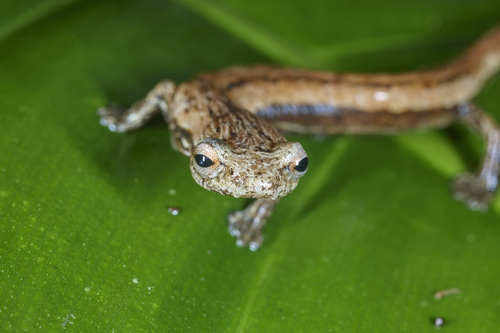
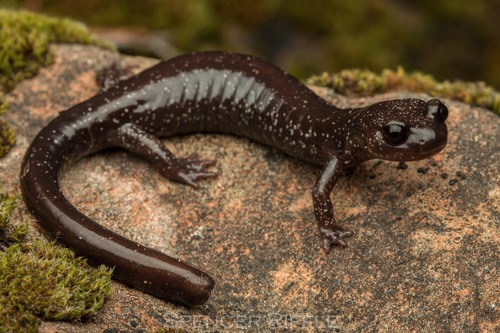
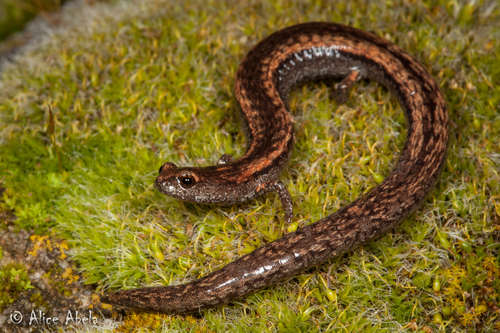
It has a worm-like body shape, small head and small limbs, plus a long, cylindrical tail that is often twice as long as the rest of its body.
Dorsal Coloration
The dorsal side of this species can be black, tan, reddish, brown, or beige, and frequently features a contrasting broad mid-dorsal stripe in a similar shade.
Ventral Coloration
Its ventral side is purplish or black, covered entirely with fine light speckles.
Defensive Behavior and Fragility
When handled, this salamander will coil its body and tail; it is a fragile species that is easily injured.
Similar Congeneric Species
Batrachoseps nigriventris is visually similar to its close relatives Batrachoseps pacificus and Batrachoseps gabrieli.
Preferred Habitat
This species prefers to live in California chaparral and woodlands habitats dominated by Coast live oak (Quercus agrifolia) and California sycamore (Platanus racemosa).
Reproduction
Black-bellied slender salamanders reproduce via egg-laying; their eggs are almost always buried underground, so they are rarely observed.
Diet
The diet of the black-bellied slender salamander is not well documented, but it is thought to be similar to the diet of the garden slender salamander, which includes worms, larvae, small terrestrial arthropods, and mollusks.
Known Predators
Known potential predators of this species include gray foxes, skunks, raccoons, skinks, and ringtails.