About Plestiodon egregius Baird, 1858
Scientific Classification
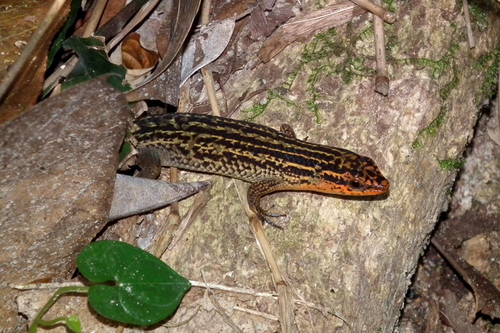
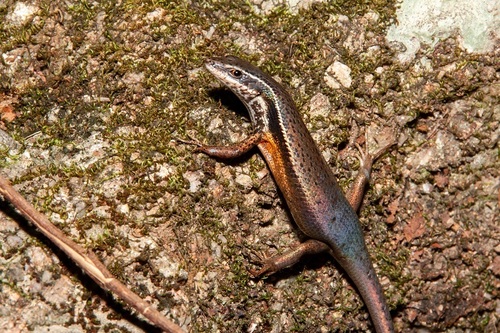
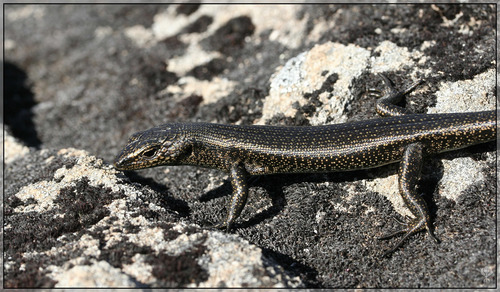
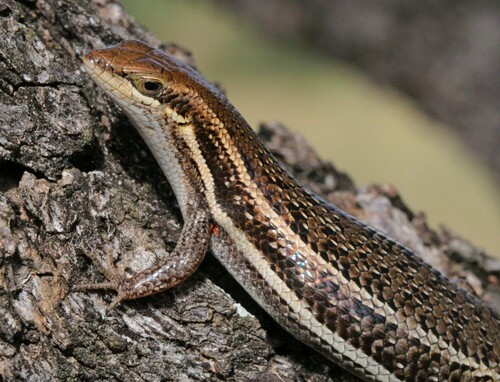
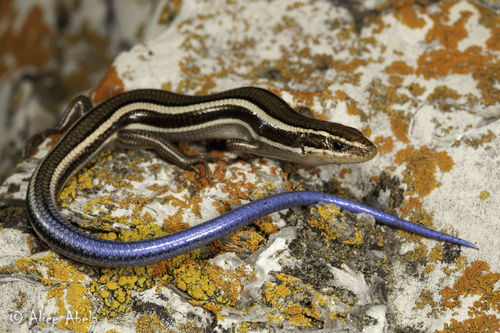
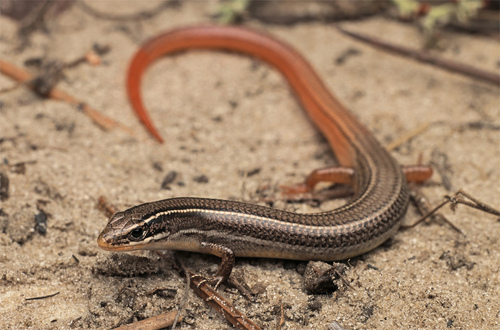
The bluetail mole skink, scientifically named Plestiodon egregius Baird, 1858, is a small, shiny, cylindrical brownish lizard.
Juvenile Tail Coloration
Juveniles usually have a blue tail that makes up slightly more than half of the animal’s total total length.
Adult Tail Coloration
Regenerated tails and the tails of older individuals are typically pinkish.
Limb Structure and Function
Its legs are somewhat reduced in size; they are only used during surface locomotion, and not used when the animal "swims" through the sand (Christman 1992).
Breeding Season Male Coloration
During the breeding season, males develop a colorful orange pattern on their sides.
Total Size
The bluetail mole skink grows to 9 to 15 cm (3.5 to 6 in) in total length.
General Habitat Type
This species occupies sandhill and scrub habitats.
Microhabitat Preference
Individuals are often buried underground, and particularly prefer to bask in the upper layers of Southeastern pocket gopher mounds.
Habitat Coexistence and Niche Partitioning
The bluetail mole skink shares its habitat with the also endangered sand skink, but does not compete with it: the sand skink feeds underground, while the bluetail mole skink hunts on the surface.
Anti-Predator Behavior
When threatened, it first presents its tail, and if that does not deter the threat, it plays dead.
Geographic Range
This species is found in central Florida, with confirmed presence in Seminole and Orange counties, and has also been sighted in Volusia, Brevard, Marion, Sumter, Pasco, and Charlotte Counties.
Sexual Maturity Timeline
Bluetail mole skinks reach sexual maturity after one year.
Reproductive Cycle and Nesting
They mate in winter; in spring, the female lays three to seven eggs in a shallow nest cavity less than 30 cm (12 in) below the surface.
Egg Incubation and Parental Care
The eggs incubate for 31 to 51 days, and the female tends the nest during this incubation period.