About Nyctophilus geoffroyi Leach, 1821
Common Name and Size Category
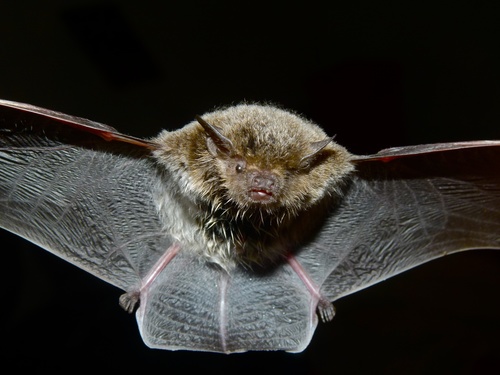
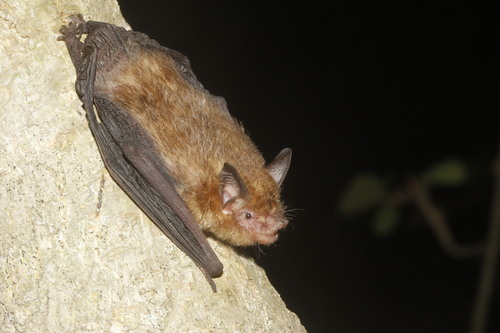
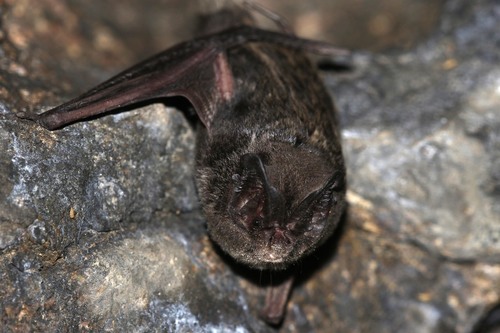
Nyctophilus geoffroyi, commonly called the lesser long-eared bat, is a medium-sized bat species.
Body Measurements
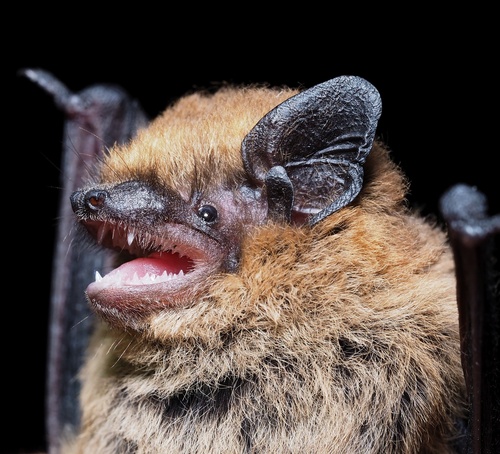
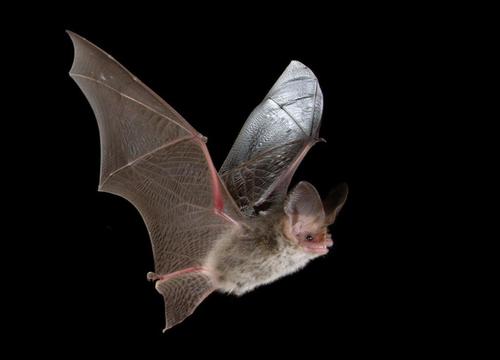
Individuals weigh 6 to 12 grams, have a forearm length between 30.6 and 41.7 mm, and have long ears ranging 17.6 to 25.3 mm in length.
Fur Coloration
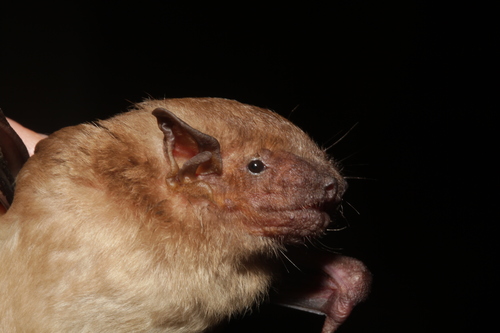
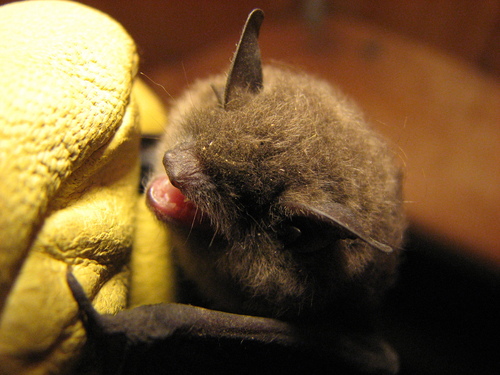
Its back fur is light grey, while its underbelly has lighter to white fur. All fur is bi-colored, dark at the base and light at the tips.
Regional Fur Variation
Fur color varies widely across individuals, with bats from arid regions being notably paler.
Distinguishing Facial Feature
The species' key distinguishing feature is a roughly 1.5 mm high nose ridge, which is split and connected by an elastic skin membrane that forms a Y-shaped groove behind the nostrils.
Habitat Adaptability
This species is highly adaptable to a wide range of habitats, making it one of the most widespread endemic bat species in Australia.
Occupied Habitat Types
It occupies deserts, tropical to alpine woodlands, mangroves, agricultural land, urban areas, wet to dry sclerophyll forests, and rainforests.
Elevation Range
While it has been recorded at elevations up to around 1600 metres above sea level, it is more common at lower altitudes.
Species Distribution
It is the most widely distributed species in the genus Nyctophilus, found across arid to wet regions, though it does not occur on Australia's northeast tropical coasts or Cape York Peninsula.
Arid Region Occurrence
It can survive in Australia's arid regions when water is available, and is commonly recorded at bore wells, pools, and livestock dams.
Arid Region Associated Species
In these arid inland areas, it is found in association with the inland free-tail bat Mormopterus petersi, and the little and inland forest bats Vespadelus vulturnus and Vespadelus baverstocki.
Canberra Region Roosting Habits
It is especially common in agricultural areas near Canberra, where it roosts in both buildings and tree hollows.
Canberra Urban Occurrence
It is one of several bat species that resides within Canberra itself, foraging in nearby parks and reserves.
Kings Park Associated Species
It also occurs at Kings Park near Perth, Western Australia, alongside other microbat species: the wattled bats Chalinolobus morio and Chalinolobus gouldii, and the tiny endemic freetail bat Mormopterus kitcheneri.
Male Spermatogenesis Timeline
For male lesser long-eared bats, spermatogenesis begins in November, peaks in March, and ends in May. After spermatogenesis ends, sperm is stored in the epididymides while the testes retreat.
Mating and Sperm Storage
Mating typically begins in April; over winter, females store retained sperm in the oviduct and uterine lining.
Gestation Timeline
Ovulation and fertilization occur in late August to September, and gestation lasts between 72 and 93 days.
Birth Timing
Births occur from late October through November, occurring later at lower latitudes and lower elevations. Mothers most often give birth to twins.
Juvenile Development Timeline
Young bats are able to fly by December, and lactation ends in early February.
Lactation Variation
Observations of the species in Tasmania have recorded shorter lactation periods.
Reproductive Traits
Mature females do not necessarily give birth every year, and this species exhibits sperm competition.