About Pinus devoniana Lindl.
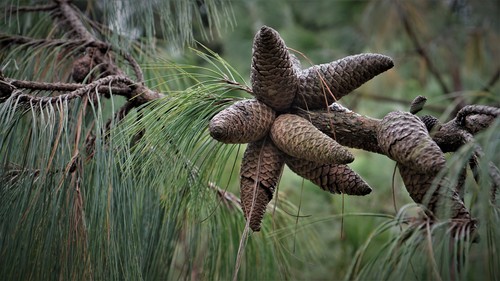
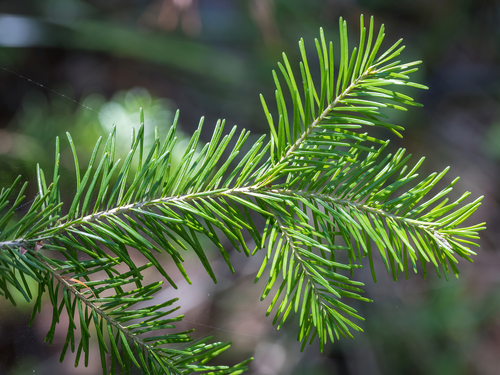
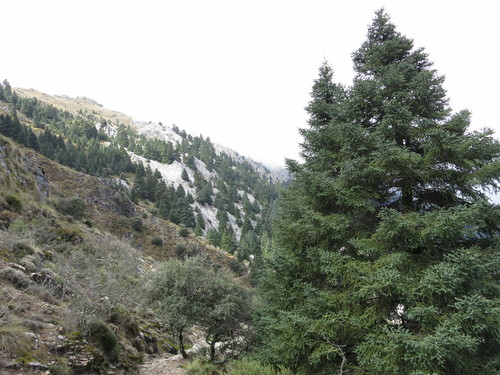
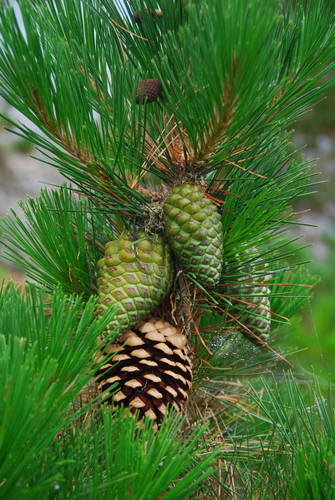
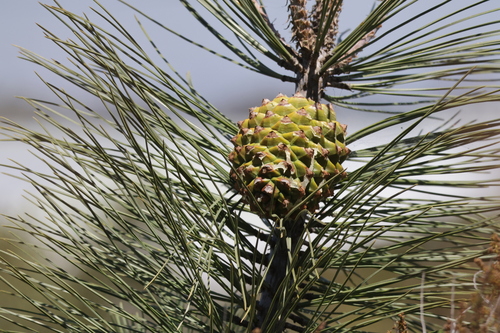
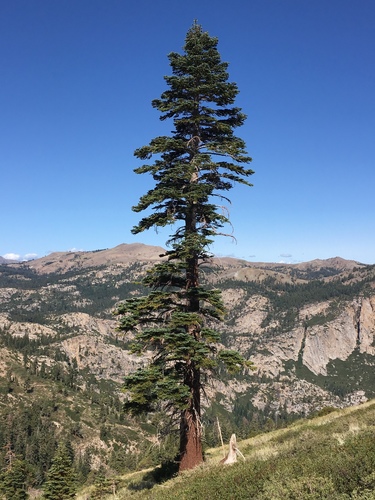
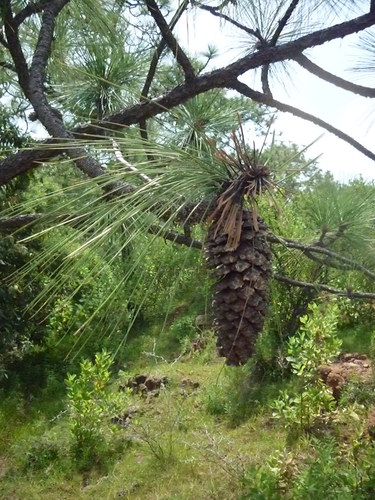
Pinus devoniana Lindl., also known by the synonym Pinus michoacana, is a conifer species in the Pinaceae family. It is distributed across more than 15 states of Mexico, ranging from southern Sinaloa to Chiapas, and also occurs in Guatemala. It grows in montane, relatively open pine or pine-oak forests at altitudes between 900 and 2,500 meters (3,000 to 8,200 feet). Locally, it goes by the common names "pino blanco", "pino lacio", and "pino prieto". This is a medium-sized tree that reaches 20–30 meters (66–98 feet) in height, with a diameter at breast height of 80–100 cm (31–39 inches). Its foliage twigs are curved, and it bears very long needles that typically measure 25–40 cm (9.8–15.7 inches) long, arranged in fascicles of 5. Mirov has recorded specimens with needles reaching up to 50 cm (20 inches) long. Its cones grow either solitary or in whorls of 2 to 4 on thick, short peduncles, and leave a few scales behind on the branch when they fall. The cones are usually large, often curved, and measure 15–35 cm (5.9–13.8 inches) long, and 8–15 cm (3.1–5.9 inches) wide when open. Pinus devoniana is closely related to Pinus montezumae, the Montezuma pine. These two species can sometimes be hard to tell apart, and hybrids are thought to occur. Cones of the species are especially variable in form. Overall, both foliage and cones of Pinus devoniana are larger than those of Pinus montezumae.