About Abies sibirica Ledeb.
Nomenclature
Abies sibirica Ledeb., commonly called Siberian fir, grows 30–35 meters tall, with a trunk diameter of 0.5–1 meter at breast height and a conical crown.
Bark Characteristics
Its bark is grey-green to grey-brown, smooth, and marked with resin blisters, a feature typical of most fir species. Shoots are yellow-grey, resinous, and slightly covered in fine hairs.
Leaf Morphology
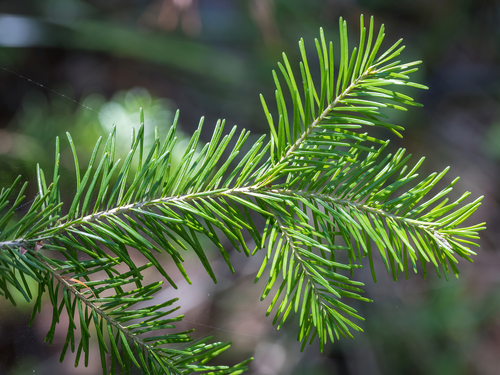
Its leaves are needle-like, averaging 2–3 cm long and 1.5 mm broad. The needles are light green on the upper surface, with two grey-white stomatal bands on the underside; they point upwards along the stem, and are soft, flattened, and strongly aromatic.
Cone Structure
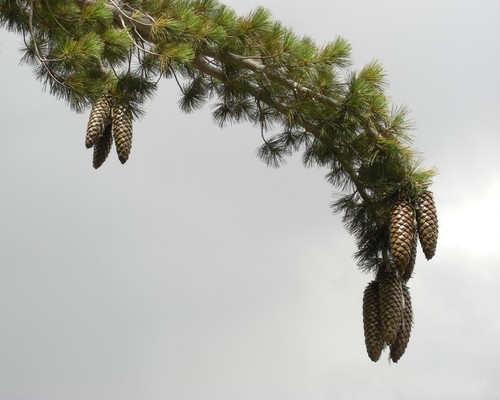
The cones are cylindrical, measuring 5–9.5 cm long and 2.5–3.5 cm broad, with small bracts hidden behind the cone scales. Cones ripen from bluish to brown or dark brown in mid-autumn.
Seed Characteristics
The seeds are 7 mm long, with a triangular wing 0.7–1.3 cm long, and are released when the cone disintegrates after reaching maturity.
Habitat and Distribution
This tree grows in cold boreal climates, on moist soils in mountains or river basins at elevations of 1900–2400 m.
Climate Tolerance
It is very shade-tolerant, frost-resistant, and hardy, able to survive temperatures as low as −50 °C.
Lifespan
It rarely lives longer than 200 years, because its wood is susceptible to fungal decay.
Pathogens
Abies sibirica can be infected by the fungus Delphinella balsameae, which was first reported in Russia in 2003.
Essential Oil Uses
Essential oils extracted from its leaves are used in aromatherapy and perfumes.
Wood Properties and Uses
Its wood is soft, lightweight, and weak, and is used for construction, furniture, and wood pulp.