About Pinus cembra L.
Taxonomic Classification
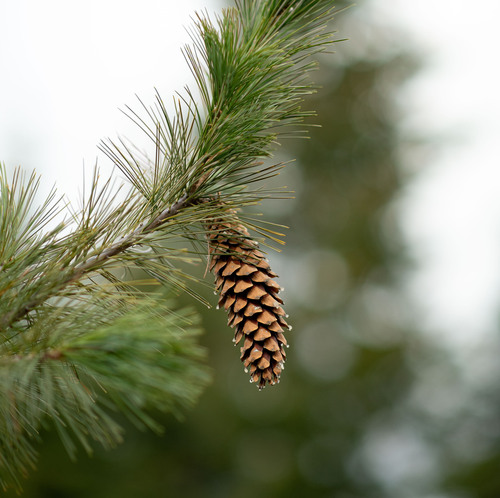
Pinus cembra L., commonly called Swiss pine, belongs to the white pine group, Pinus subgenus Strobus. Like all members of this group, its leaves (known as needles) grow in fascicles (bundles) of five, with a deciduous sheath.
Mature Size
Mature Swiss pines typically reach 25 to 35 metres (82 ft to 115 ft) in height, with trunk diameters up to 1.5 metres (4.9 ft). This species grows very slowly; it may take 30 years for a tree to reach just 1.3 metres (4.3 ft) in height.
Lifespan
It is also long-lived, reaching ages between 500 and 1000 years. In its natural environment, it usually reaches reproductive maturity at 50 years old, and this can extend to 80 years in more extreme growing conditions.
Cone Characteristics
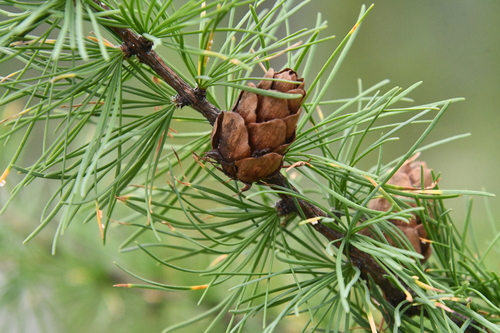
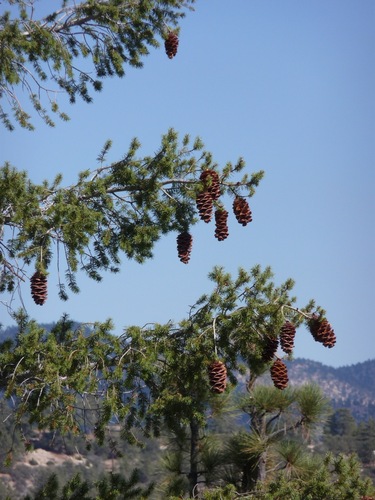
The cones that hold its seeds (or nuts) are 4 centimetres (1.6 in) to 8 centimetres (3.1 in) long, and take 2 years (24 months) to mature. Its seeds are 8 millimetres (0.31 in) to 12 millimetres (0.47 in) long, have only a vestigial wing, and are dispersed by spotted nutcrackers.
Related Species Classification
Some botanists classify the very similar Siberian pine (Pinus sibirica) as a variety or subspecies of Swiss pine. Siberian pine differs from Swiss pine by having slightly larger cones, a more massive growth form (taller height and wider trunk), a faster growth rate, and needles with three resin canals instead of the two resin canals found in Swiss pine needles.
Native Distribution
Swiss pine grows naturally in the Alps and Carpathian Mountains of central Europe, occurring in Poland (Tatra Mountains), Switzerland, France, Italy, Austria, Germany, Slovenia, Slovakia (Tatra Mountains), Ukraine and Romania. It typically grows at altitudes between 1,200 metres (3,900 ft) and 2,300 metres (7,500 ft), and often reaches the alpine tree line in these mountain areas.
Mycorrhizal Associations
From a young age, Swiss pine forms associations with many species of mycorrhizal fungi, most usually from the genus Suillus. This symbiotic relationship improves the tree's growth and survival rate.
Ornamental Use
Swiss pine is a popular ornamental tree grown in parks and large gardens. It grows steadily, though not quickly, on a wide range of sites with cold climates.
Cold and Wind Tolerance
It is very tolerant of severe winter cold, hardy down to at least −50 °C (−58 °F), and also tolerates wind exposure.
Cultivated Cone Production
When cultivated, it usually starts producing cones after 12 years of age — much faster than wild individuals, with timing depending on climate, soil type, mycorrhizal fungi and other factors. Inoculating cultivated trees with ectomycorrhizal fungi such as Suillus luteus, Suillus americanus, and Suillus placidus can speed up cone production, and these species are the most effective for this purpose.
Edible Uses
The tree's seeds are harvested and sold as pine nuts. Sliced pine cones are used to flavor schnapps, which is sold as "Zirbenschnaps" or "Zirbeler" schnapps.
Wood Use
Its wood has been the most commonly used material for carvings in Val Gardena since the 17th century.
Heraldic Use
The cone of the Swiss pine was the field sign of the Roman legion stationed in Rhaetia in 15 BC, so it is used as a heraldic charge (called Zirbelnuss in German) in the coat of arms of the city of Augsburg, the location of the Roman fort Augusta Vindelicorum. It is also a common species used for bonsai.
Ecosystem Role
In the wild, Pinus cembra grows in the uppermost forest belt, where it helps reduce the risk of avalanches and soil erosion. Due to this stabilizing effect, it is valued for use in afforestation projects at high elevations.
Blister Rust Resistance
Like other European and Asian white pines, Swiss pine is very resistant to white pine blister rust (Cronartium ribicola). This fungal disease was accidentally introduced from Europe to North America, where it has caused severe mortality in native North American white pines across many areas, most notably Western white pine and the closely related whitebark pine.
Hybridization Research Value
Swiss pine is very valuable for research into hybridization to develop rust resistance in these North American species.