About Picoides tridactylus (Linnaeus, 1758)
Taxonomy and Size
The Eurasian three-toed woodpecker, scientifically named Picoides tridactylus (Linnaeus, 1758), measures 21–22 cm (8.3–8.7 in) in length, which is only slightly smaller than the great spotted woodpecker.
Adult Plumage Basics
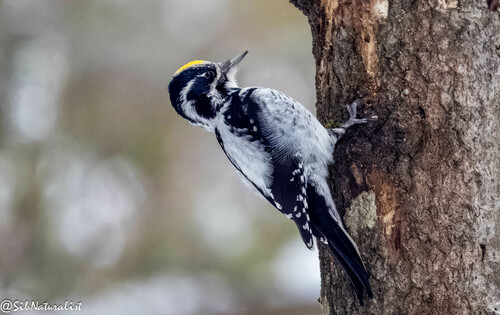
Adult individuals have black and white plumage, with the exception of a yellow crown on males. No red feathers are present in either sex.
Wing, Rump and Underpart Coloration
This woodpecker has black wings and rump, with white coloration from the throat through the belly; its flanks are white with black barring.
Back and Tail Coloration
The back is white with black bars, and the tail is black, with white outer feathers that are barred with black.
Juvenile Plumage
Juveniles of both sexes have a yellow crown.
Vocalization
The voice call of the Eurasian three-toed woodpecker is a kik or chik.
Breeding Habitat Range
Its breeding habitat is coniferous forests across the Palearctic, extending from Norway to Korea. Isolated populations also exist in the Alps and the Carpathian Mountains.
Nesting Site Preferences
Eurasian three-toed woodpeckers nest in cavities carved into dead conifers, and occasionally into live trees or poles. A breeding pair excavates a new nest each year.
Movement Patterns
This species is generally a permanent resident, but populations in northern regions may move south in winter, and populations at high elevations may move to lower elevations during the winter.
Primary Diet
These woodpeckers forage on conifers, searching for wood-boring beetle larvae and other insects. They may also feed on fruit and tree sap.
Foraging Habitat Shifts
They often move into areas with large numbers of trees infested by insects, frequently following a forest fire or flooding event.