About Phoebastria immutabilis (Rothschild, 1893)
Physical Dimensions
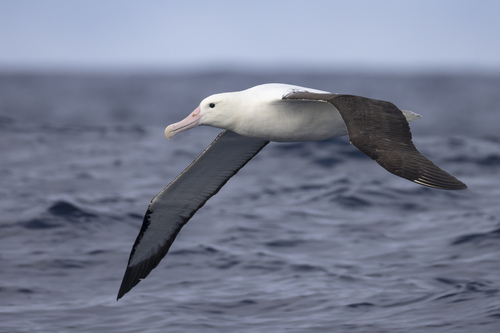
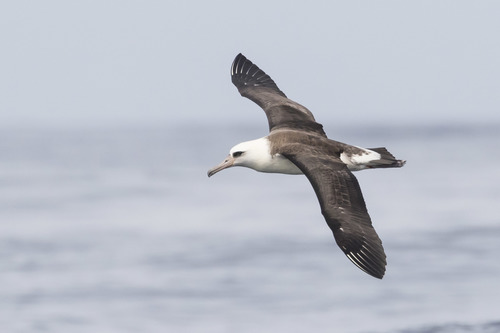
The Laysan albatross, scientifically named Phoebastria immutabilis (Rothschild, 1893), averages 81 cm (32 in) in body length, with a wingspan ranging from 195 to 203 cm (77–80 in). Males are larger than females: males weigh 2.4 to 4.1 kg (5.3–9.0 lb), while females weigh 1.9 to 3.6 kg (4.2–7.9 lb).
Plumage Features
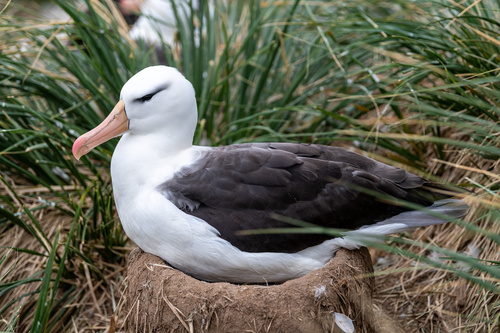
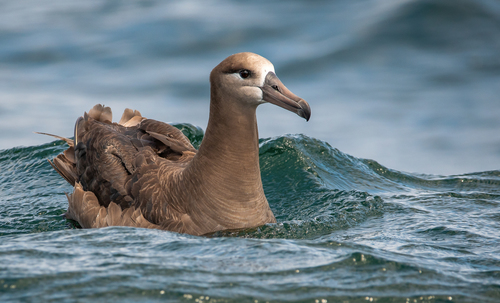
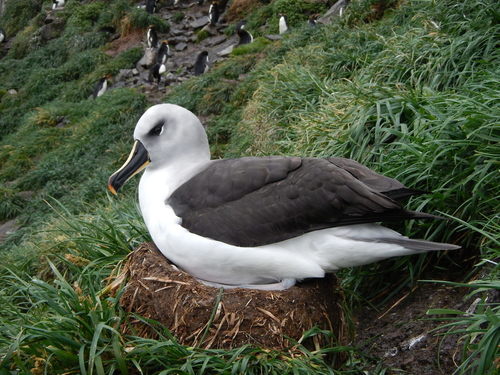
Its plumage features blackish-gray upperwings, mantle, back, upper rump, and tail, while its head, lower rump, and underparts are white. It has a black smudge surrounding the eye, and underwing patterns vary between individuals: some have narrower black margins, and the amount of black on the underwing coverts also varies.
Bill and Age Differences
Its bill is pink with a dark tip. Juveniles have a gray bill and a dark upper rump. This species does not develop a specialized breeding plumage.
General Identification
The Laysan albatross is usually easy to identify. In the North Pacific, it can be easily distinguished from the other relatively common local albatross, the all-black black-footed albatross.
Distinction from Rarer Species
Compared to the very rare short-tailed albatross, it can be told apart by its all-dark back and smaller size. Its two-toned plumage, with dark gray mantle and wings and white underparts and head, has been compared to that of a gull.
Nesting Site Distribution
The Laysan albatross ranges widely across the North Pacific, with 16 known nesting sites. All but 0.3% of the breeding population is located in the Northwestern Hawaiian Islands, particularly on Midway Island and Laysan Island.
Additional Breeding Locations
Small breeding populations exist on the Bonin Islands near Japan, and the species has begun to colonize islands off the coast of Mexico, including Guadalupe Island and other islands in the Revillagigedo Archipelago. It is protected within the Guadalupe Island Biosphere Reserve.
Non-Breeding Range
When not in breeding areas, they range widely from Japan to the Bering Sea, and south as far as 15°N.
Nesting Behaviors
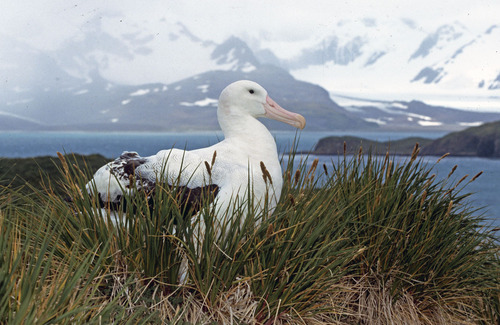
Laysan albatrosses are colonial, nesting on scattered small islands and atolls, often in very large numbers. They build different types of nests according to their surroundings, ranging from simple scoops dug in sand to nests constructed with vegetation.
Breeding Cycle Basics
They have a protracted breeding cycle and breed annually, though some individuals skip breeding in some years. On the Hawaiian Islands, the breeding season typically runs from November to July.
Juvenile Return Timeline
Juvenile birds return to the colony three years after fledging, but do not breed for the first time until they are seven or eight years old. Over the four or five years between returning and first breeding, they form lifelong pair bonds with their mates.
Courtship Displays
Courtship involves particularly elaborate 'dances' that can include up to 25 ritualized movements.
Same-Sex Pair Occurrence
Occasionally, Laysan albatrosses form same-sex pairs consisting of two females. This has been observed in the colony on the Hawaiian island Oahu, where the male-to-female sex ratio is 2:3, and 31% of all pairs are female-female pairs.
Conservation Benefit of Same-Sex Pairs
Paired females can successfully breed if their eggs are fertilized by males. This phenomenon has benefited conservation efforts in the Hawaiian Islands: researchers have successfully swapped unfertilized eggs from female-female pairs with fertile eggs translocated from pairs nesting on military airfields and other unsafe nesting areas. The female-female pairs then hatch and raise the foster chicks.
Egg and Incubation
A Laysan albatross lays a single buff-white egg that may have spots. Both parents take turns incubating the egg, with the male incubating first. Incubation lasts around 65 days, followed by several weeks of brooding.
Chick Rearing Process
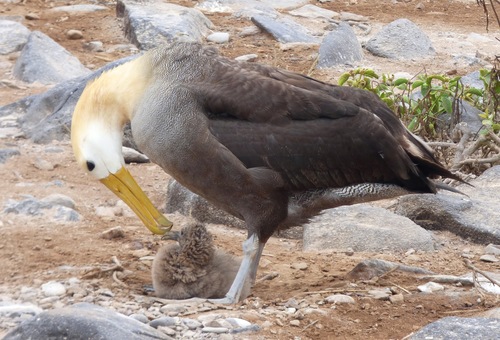
After brooding, both parents travel out to sea to forage to feed the growing chick. The chick takes approximately 160 days to fledge. This large time investment from parents may explain the species' extended courtship period: both parents want to be certain the other is committed to breeding.
Feeding and Hybridization
Parents feed chicks regurgitated meals of very energy-rich "stomach oil", plus partially digested squid and fish. The Laysan albatross is known to hybridize with the black-footed albatross.
Lifespan Records
Like all albatrosses, the Laysan albatross is a long-lived species. As of 2021, the oldest known living individual is a female named Wisdom who is at least 70 years old. In 2014, she hatched a healthy chick believed to be her 36th.
Wild Seabird Lifespan Context
The longest confirmed lifespan for a wild seabird belongs to a breeding male that was banded 53 years before it was recorded. Other albatross species are thought to match or even exceed this lifespan, but there are very few confirmed records of extremely old albatrosses.