About Phlyctimantis maculatus (Duméril, 1853)
Taxonomic Classification
Phlyctimantis maculatus is a species of frog belonging to the family Hyperoliidae.
Coloration
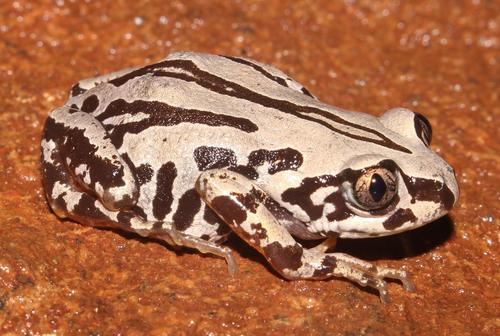
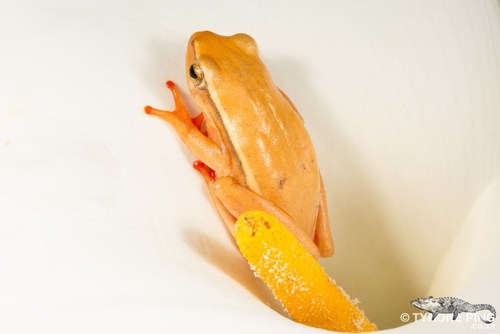
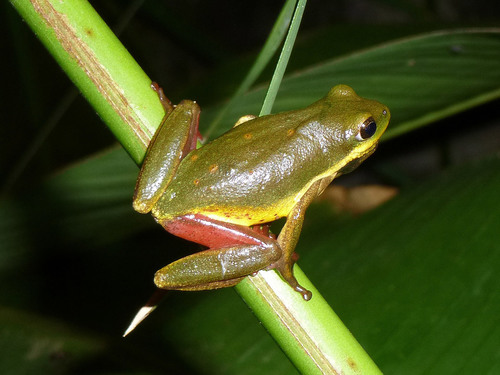
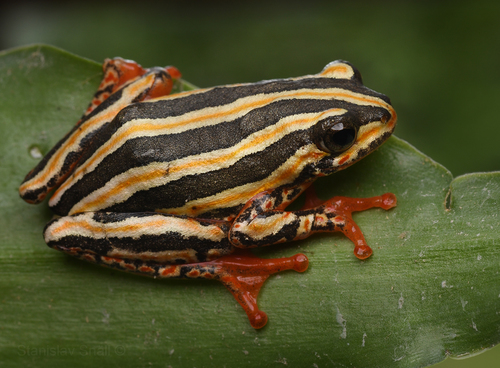
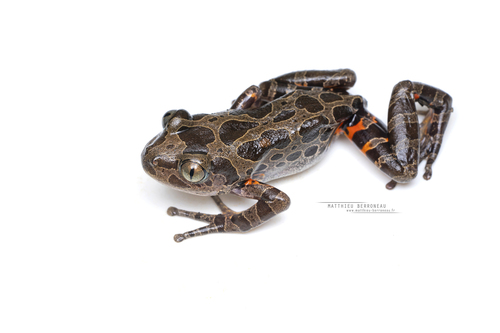
These frogs have a silvery greyish-brown base color marked with dark brown to black spots, and get their common name references from the bright red coloring found on the ventral side of their hind legs.
Adult Size and Morphology
Adult individuals typically reach a body length of 6 to 7.5 centimeters, and they have vertical pupils.
Common Names
Common names for this species include red-legged running frog, brown-spotted tree frog, red-legged Kassina, red-legged pan frog, spotted running frog, tiger leg running frog, and vlei frog.
Geographic Range
Phlyctimantis maculatus is endemic to the tropical and sub-tropical regions of Africa's east coast, where it occurs in Kenya, Tanzania, Malawi, Mozambique, Zimbabwe, South Africa, and Eswatini.
Habitat Requirements
This frog does well in a range of different terrain types including shrubland, grassland, savannah, and forest, as long as a ready source of fresh water or high humidity is available.
Confirmed Natural Habitats
Its confirmed natural habitats include dry savanna, moist savanna, subtropical or tropical dry shrubland, subtropical or tropical moist shrubland, temperate grassland, subtropical or tropical dry lowland grassland, subtropical or tropical seasonally wet or flooded lowland grassland, swamps, intermittent freshwater lakes, freshwater marshes, intermittent freshwater marshes, arable land, pastureland, rural gardens, heavily degraded former forest, water storage areas, and ponds.
Threat Status
This species is currently threatened by habitat loss.