About Hyperolius horstockii (Schlegel, 1837)
Adult Size
Identification: Adult Hyperolius horstockii grow up to 40 mm in length.
Adult Body Color Adaptation
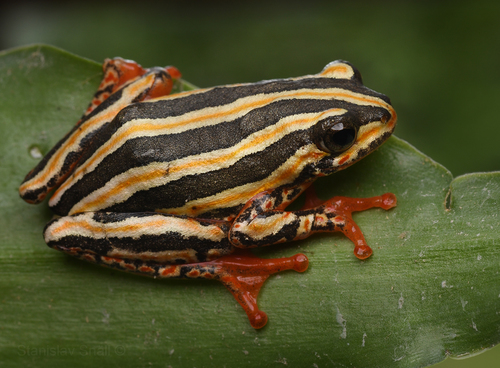
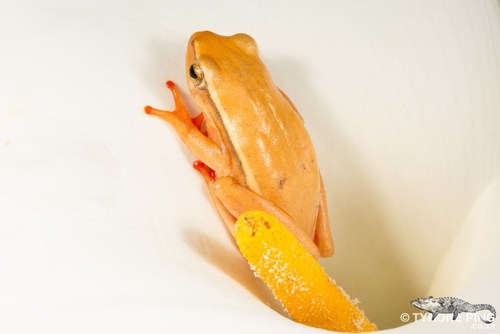
They have bright orange feet and can change their body color for camouflage.
Adult Dorsal Coloration
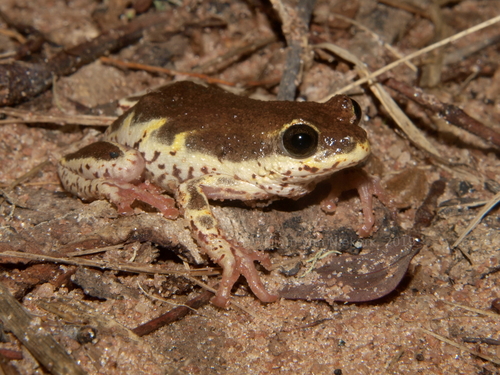
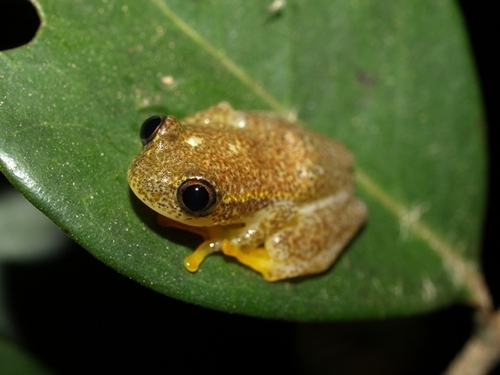
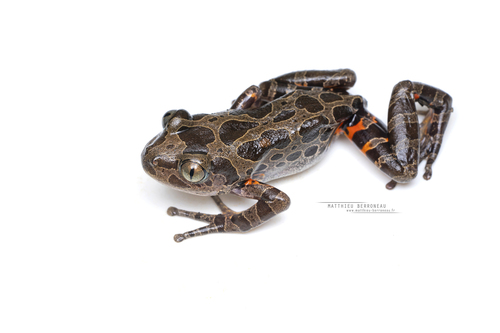
The dorsal surface of their body ranges from cream to brown, and sometimes has small black spots.
Adult Lateral Markings
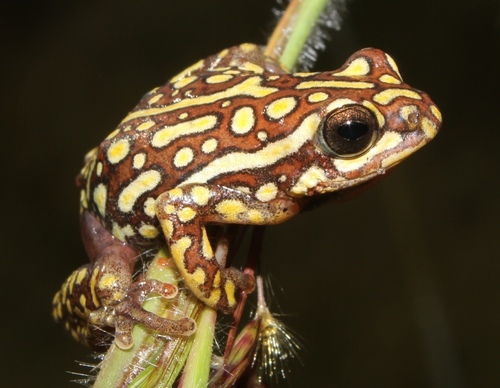
A distinctive pale dorsolateral line runs from the snout along the flanks, with a dark-brown lateral band positioned below this pale line. A fine dark line usually separates the pale dorsolateral line from the dark-brown lateral band.
Adult Limb Coloration
The concealed surfaces of the limbs, webbing, and toe discs are orange to red.
Adult Ventral Surface Traits
The ventral surface of the frog is creamy white with a slightly granular texture.
Adult Male Distinguishing Features
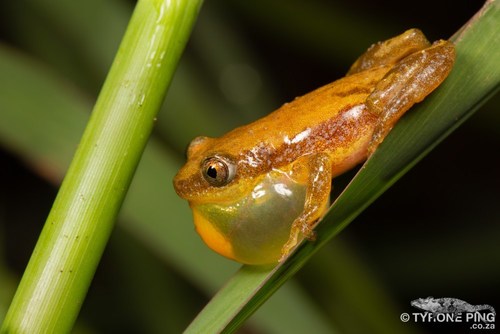
The gular flap of males is a bright ochre color, and their pupils are horizontal.
Tadpole Traits
Tadpoles of this species grow to 40 mm in total length; they are brown, with darker longitudinal bands along their tails.
Geographic Range
Distribution and habitat: This species, commonly called the arum frog, occurs on the southern coastal plain of South Africa, ranging from Cape Town in the Western Cape to Port Elizabeth in the Eastern Cape.
Natural Habitat Types
Its natural habitats include Mediterranean-type shrubby vegetation, rivers, swamps, intermittent freshwater lakes, freshwater marshes, intermittent freshwater marshes, and ponds.
Microhabitat and Feeding
It is frequently found resting at the base of arum lilies (Zantedeschia aethiopica), where it hunts pollinating insects.
Conservation Status and Local Threats
The species is classified as Least Concern, but some local populations are threatened by habitat loss caused by invasive alien vegetation and wildfire.
Non-Threat Factors
Contrary to common belief, the species is not threatened by the collection and sale of arum lilies.