About Phelsuma standingi Methuen & Hewitt, 1913
Common Name and Size Rank
Phelsuma standingi, also called Standing's day gecko, is one of the largest living species of day geckos.
Total Length
It reaches a maximum total length (including tail) of 20 to 25.4 cm (8 to 10 inches), though larger individuals may occur.
Adult Body Coloration
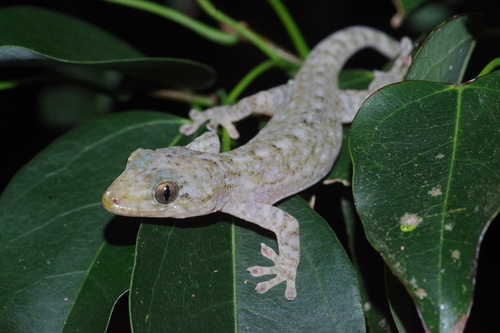
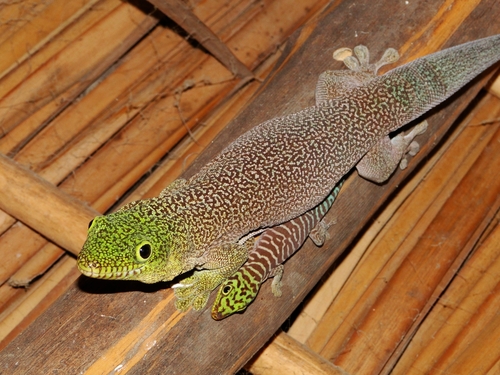
Its body color varies considerably based on light intensity, and can range from brownish grey to bright green or turquoise, with grey to blue reticulated markings across its body and head.
Head and Tail Coloration
The head and tail are often turquoise.
Hatchling Coloration
Hatchlings have a yellowish green head and distinct light bands and bars on their backs.
Sexual Dimorphism
This species is sexually dimorphic.
Male Secondary Sexual Traits
Males have very pronounced preanal pores in the cloacal area, plus a bulge in the hemipenis region.
Endolymphatic Sac Dimorphism
Most females have well-developed endolymphatic chalk sacs on each side of the neck, while these sacs are usually barely visible in males.
Endolymphatic Sac Function
These sacs store calcium needed to form egg shells.
Geographic Range
Phelsuma standingi is found only in the arid southwest of Madagascar, specifically in the area around Andranolaho and Sakaraha, and within Zombitse-Vohibasia National Park.
Habitat Type
Its habitat is the region's unique thorn forest vegetation.
Daytime Habitat Temperatures
In this habitat, daytime temperatures never drop below 20 °C (68 °F), and can reach as high as 40 °C (104 °F) in shade throughout the year.
Winter Night Temperatures
Night temperatures in July and August can drop to 13 °C (55 °F).
Reproductive Mode
This gecko is oviparous.
Egg Incubation Period
At a constant temperature of 28 °C (82 °F), eggs hatch after approximately 60 to 70 days.
Juvenile Size and Maturation
Newly hatched juveniles measure 80 mm, and reach sexual maturity after one year.
Captivity Lifespan
When properly cared for in captivity, Standing's day geckos can live 15 to 20 years.